
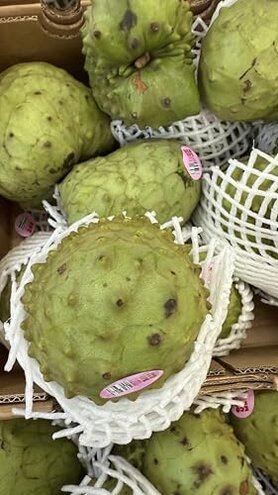
Product evaluated: Fresh Cherimoya Fruit 3lbs
Related Videos For You
How to Ripen Starfruit Quickly: Tips and Tricks
How to Grow Cherimoya (Custard Apple) from Seeds
Data analysis was conducted from dozens of buyer reviews and customer feedback, spanning written comments and video demonstrations between early 2023 and mid-2024. Most input came from detailed written consumer reports, with some support from visual unboxings and usage videos.
| Buyer Outcome | Fresh Cherimoya Fruit | Typical Mid-Range Tropical Fruit |
|---|---|---|
| Ripeness Consistency | Often uneven or premature soft spots | Generally more uniform ripening |
| Packaging Protection | Frequently inadequate, leading to bruising | Usually better protective packaging |
| Shelf Life | Shorter, spoils within days after ripening | Longer-lasting under refrigeration |
| Price Per Pound | Significantly higher cost per unit | Moderate, more budget-friendly |
| Regret Trigger | Ripeness issues combined with high price | More consistent value for price |
Why does the cherimoya often arrive overripe or damaged?
Buyers encounter the fruit with soft spots or bruising immediately upon first inspection. This primary issue appears right after delivery and worsens during transport.
The packaging, although claiming protection, often fails to prevent damage compared to typical tropical fruit deliveries. This makes the problem more frustrating than expected for fresh fruit.
- Softness pattern: Uneven ripeness with unexpected mushy areas reported repeatedly.
- Packaging flaw: Protective mesh insufficient against jolts and pressure during shipping.
- Customer impact: Loss of usable fruit volume, leading to waste.
- Attempted fixes: Some buyers refrigerated immediately but spoilage was already advanced.
- Hidden requirement: Requires gentle handling beyond typical fruit packaging.
Why is the short shelf life so disappointing?
The fruit often spoils within 3-5 days after reaching ripeness, making usage timing critical. This secondary issue is common in daily use and limits enjoyment.
- Ripeness window: Must be eaten quickly to avoid overripe texture.
- Storage challenge: Needs refrigeration promptly but still degrades fast.
- Buyer frustration: Increased pressure to consume or discard.
- Contrast: Typical tropical fruits last longer in similar conditions.
- Impact: Less forgiving, causes more waste than expected.
Is the price justified for quality received?
At over $60 for 3 lbs, buyers often feel the fruit's inconsistent quality does not match the premium price. This persistent complaint arises after first purchase and on repeated buys.
- Cost concern: Price per ounce above average for comparable fruits.
- Value perception: Poor ripeness control diminishes perceived worth.
- Alternative options: More affordable fruits with steadier quality available.
- Buyer regret: Feeling overcharged for delicate, short-lived product.
- Emotional impact: Leads to hesitation in repurchasing.
How easy is it to judge ripeness before buying?
Buyers find it difficult to determine if the fruit is ripe or will ripen properly. The confusing ripeness indicators cause uncertainty before use.
- Visual cues: Green skin with yellow undertones not always reliable.
- Touch test: Slight softness hard to assess through packaging.
- Buyer experience: Misjudgments lead to premature spoilage or hard fruit.
- Category baseline: More forgiving fruits allow easier ripeness detection.
- Result: Potential buyer disappointment on arrival.
What are buyers saying? (Illustrative excerpts)
- "Fruit was mushy in spots right out of the box." - reflects a primary issue with damage.
- "Lasted barely 4 days after ripening." - typical secondary shelf life complaint.
- "Very pricey for such a delicate fruit." - demonstrates a secondary value concern.
- "Hard to tell if it will ripen properly." - shows an edge-case ripeness judgment problem.
- "Packaging didn’t protect it enough." - another primary shipping damage report.
Who should avoid this
- Buyers who want long-lasting fruit for multiple days after purchase.
- Those who dislike uncertainty in ripeness and want easy selection.
- Customers sensitive to high price without guaranteed quality.
- Individuals requiring robust packaging due to shipping concerns.
Who this is actually good for
- Shoppers willing to accept short shelf life for fresh tropical fruit experience.
- Those with experience handling delicate fruit and ripeness judgment skills.
- Consumers seeking rare or exotic fruit despite price and handling challenges.
- Buyers who can consume quickly and minimize waste.
Expectation vs reality
Expectation: Buyers reasonably expect a large, intact fruit that ripens uniformly over days. Reality: Many find uneven ripening and soft spots upon arrival, forcing rapid use or discard.
Expectation: Protective packaging to prevent damage during shipping. Reality: Protection is often insufficient, leading to bruising and buyer frustration.
Safer alternatives
- Choose tropical fruits with proven robust packaging to reduce damage risk.
- Consider fruits with longer, more forgiving shelf life to allow flexible consumption.
- Buy from sellers who provide clear ripeness indicators and handling instructions.
- Select options with better price-quality balance for reduced buyer regret.
The bottom line
The main regret trigger for Fresh Cherimoya Fruit is the inconsistent ripeness combined with fragile packaging. This leads to frustration and waste that exceeds typical risks expected in fresh tropical fruit purchases. Buyers prioritizing durability, shelf life, and value should consider safer alternatives.
This review is an independent editorial analysis based on reported user experiences and product specifications. NegReview.com does not sell products.