
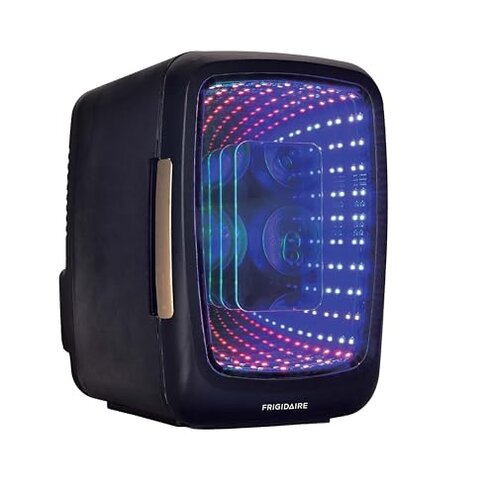
Product evaluated: Frigidaire EFMIS179 Gaming Light Up Mini Beverage Refrigerator, Stealth
Related Videos For You
✅ How To Use Magic Chef Mini Fridge 3.5 Cubic Feet Review
Thermoelectric cooling: it's not great.
Data basis: This report summarizes dozens of buyer comments collected from written ratings and short video-style feedback posted between 2023 and 2026. Most feedback came from written impressions, with added support from photo and demo-based posts, which helps show how this mini fridge behaves during setup and daily room use.
| Buyer outcome | This mini fridge | Typical mid-range alternative |
|---|---|---|
| Cooling result | Less predictable, because performance depends heavily on room temperature and appears more limited during normal indoor use. | More consistent cooling for drinks in standard room conditions. |
| Noise comfort | Mixed risk, with recurring complaints that fan noise becomes noticeable on desks and nightstands. | Usually steadier background noise for bedroom or office placement. |
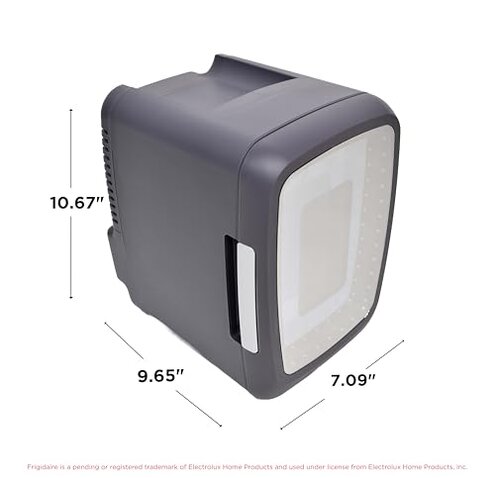
| Small-space fit | Good footprint, but the compact 4L size can feel restrictive faster than buyers expect. | Often similar size, but interior layouts are sometimes more forgiving. |
| Heat sensitivity | Higher-than-normal risk, since cooling drops off more sharply as the room gets warmer. | Lower sensitivity to common room changes in this category. |
| Regret trigger | Looks better than it cools when bought mainly for reliably cold drinks. | Usually regret starts later, not on the first few days of use. |
Why does it feel cold-ish instead of actually cold?
This is the primary issue. The biggest regret moment shows up after setup, when buyers expect chilled drinks and get only mildly cooled cans instead. That trade-off feels more disruptive than expected because cooling is the whole point.
The pattern appears repeatedly, especially during daily use in bedrooms, offices, and gaming setups. It gets worse in warmer rooms because the unit is described as cooling below room temperature, not to a fixed fridge-like temperature.
Category contrast: Small thermoelectric fridges already cool less aggressively than full compressors, but this one is often described as less forgiving than typical mid-range options when the room is not cool.
Illustrative: “My drinks never got truly cold, just cooler than the room.”
Pattern: This reflects a primary complaint.
Illustrative: “Cute on the desk, but not doing real fridge work.”
Pattern: This reflects a primary complaint.
Will the noise start bothering you after a few days?
- Pattern tier: This is a secondary issue, but it appears repeatedly enough to matter for bedroom and desk use.
- When it hits: The annoyance usually starts after setup, once the unit runs continuously near where you sit or sleep.
- What buyers notice: Instead of fading into the room, the sound can become more noticeable during quiet gaming, studying, or nighttime use.
- Why it stings: In this category, some fan sound is normal, but buyers often find this unit more distracting than expected for such a small cooler.
- Impact: The noise issue feels worse when the fridge is placed on a desk or nightstand, where the sound is close to ear level.
- Attempts: Some buyers try moving it farther away, but that adds extra space limits and reduces the convenience of a compact personal cooler.
- Fixability: This is not easily fixable if your room is quiet and you are sensitive to steady fan noise.
Is the tiny capacity more limiting than it looks?
- Intensity: This is a secondary issue, less frequent than cooling complaints but common enough to drive disappointment after first use.
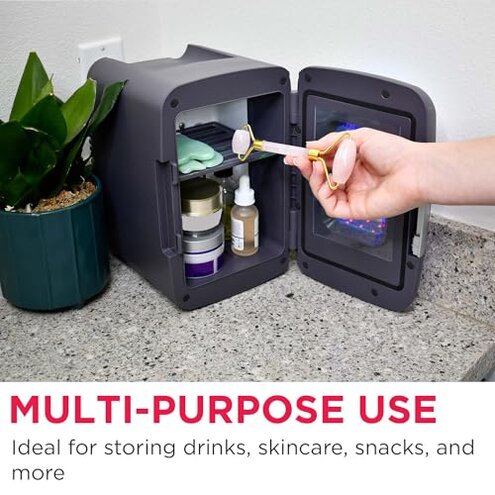
- Reality check: The unit is listed at 4L and up to 6 cans, which sounds fine until buyers try mixing drinks with taller items or skincare products.
- When it shows up: The limitation appears during loading, especially when buyers want more than a few small items at once.
- Hidden requirement: You need to be very selective about item size and arrangement, which is an extra step many buyers do not expect.
- Why it feels worse: Other compact fridges in this price band can still be tight, but some are less awkward to organize inside.
- Daily impact: Small storage means more frequent swapping of cans, snacks, or skincare, which reduces the convenience factor.
- Trade-off: The compact shape helps portability, but buyers wanting true grab-and-go storage often feel shortchanged.
Illustrative: “It fits a few things, but I kept rearranging everything.”
Pattern: This reflects a secondary complaint.
Could it stop feeling useful once the room gets warmer?
- Frequency: This is a primary issue because it compounds the cooling complaint rather than standing alone.
- When it happens: The drop in usefulness shows up during warmer days, longer run times, or rooms without strong climate control.
- Condition trigger: Cooling performance becomes less dependable when ambient temperature rises, which the product notes already hint at.
- Why buyers regret it: A personal fridge should still feel dependable in normal room use, yet this one appears more environment-sensitive than many expect.
- Category contrast: Temperature sensitivity exists in this category, but here it seems more frustrating than normal because capacity is already small.
- Practical effect: Buyers may end up using it more for slight cooling than true beverage chilling.
- Fix attempts: The usual workaround is keeping it in a cooler room, which creates a hidden placement requirement.
- Bottom impact: If your room runs warm, this issue is more damaging than the noise problem because it undercuts the core job.
Illustrative: “It worked better in winter than in my warm office.”
Pattern: This reflects a primary complaint.
Does the gaming look distract from the practical downsides?
- Pattern: This is an edge-case issue, but it appears persistently among buyers who chose it for the light-up style first.
- Regret moment: The mismatch hits after the novelty fades, when appearance matters less than cooling and quiet operation.
- Buyer trade-off: The design can look great on a setup, but that does not offset weak day-to-day utility for everyone.
- Why it feels worse: In a decorative mini fridge, buyers still expect baseline fridge performance, not just a nice accessory.
- Who notices most: This is more frustrating for buyers paying for both function and aesthetics, not just one.
Illustrative: “The lights were fun, but the fridge part was the letdown.”
Pattern: This reflects an edge-case complaint.
Who should avoid this
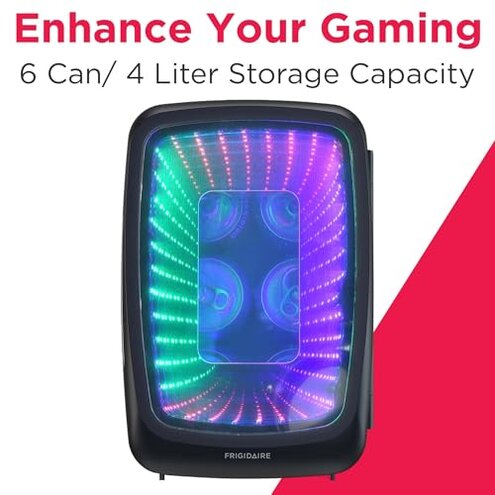
- Avoid it if you want reliably cold drinks, because weak cooling is the main regret trigger and appears repeatedly during normal room use.
- Avoid it for bedroom or study placement if you are sensitive to fan sound, since recurring noise complaints matter more in quiet spaces.
- Avoid it if your room gets warm, because this unit seems less tolerant of ambient heat than many shoppers expect in this category.
- Avoid it if you need flexible storage, since the 4L interior can require frequent rearranging and more item swapping than expected.
Who this is actually good for
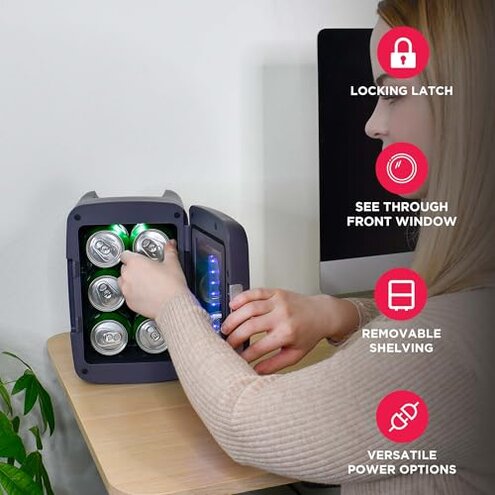
- It fits buyers who mainly want a small gaming-room accessory and can tolerate modest cooling instead of true fridge-cold drinks.
- It fits skincare users keeping a few small items slightly cool in a consistently cool room, where the limited capacity is less of a problem.
- It fits people who value portability and light weight at 3 pounds, and are willing to accept weaker performance for easy movement.
- It fits occasional-use buyers who understand the hidden requirement of placing it in a cooler environment for better results.
Expectation vs reality
Expectation: A mini fridge should make a few cans feel properly cold after several hours.
Reality: Commonly reported feedback suggests this one often lands in the “cooler than room temperature” range instead.
Expectation: Some fan noise is reasonable for this category.
Reality: The sound can feel worse than expected when the unit sits close to you on a desk or nightstand.
Expectation: A 4L unit should still handle a simple daily stash without much thought.
Reality: Buyers often discover a hidden organization chore, because item size and arrangement matter more than expected.
Safer alternatives
- Choose a model with stronger stated cooling expectations for beverages, which helps avoid the “cool but not cold” disappointment.
- Prioritize ambient tolerance if your room runs warm, because that directly reduces the heat-sensitivity problem seen here.
- Look for quieter placement use notes if you need bedroom or desk use, which helps neutralize the recurring fan-noise complaint.
- Buy for interior shape, not just listed can count, so you avoid the hidden requirement of constant rearranging.
- Treat lights as extra, not the reason to buy, unless you are comfortable trading away some practical performance.
The bottom line
The main regret trigger is simple: it often looks more capable than it cools. That exceeds normal category risk because the unit appears especially sensitive to room conditions, while small capacity and noticeable noise add extra friction.
Verdict: If you need a dependable beverage fridge, this is one to skip. It makes more sense as a style-first personal cooler for buyers who already accept limited performance.
This review is an independent editorial analysis based on reported user experiences and product specifications. NegReview.com does not sell products.