
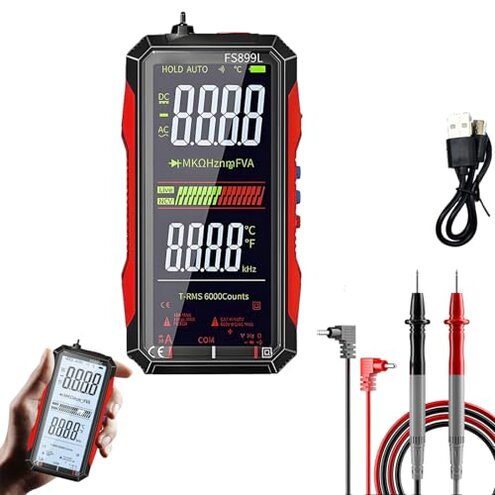
Product evaluated: USB Rechargeable Digital Multimeter, 2026 Upgraded Fs899l Multimeter, Automatic Digital Display Multimeter Tester for Home and Industrial Electrical Issues, Multimeter Tester (FS899L)
Related Videos For You
How to Use a Multimeter for Beginners - How to Measure Voltage, Resistance, Continuity and Amps
Lenovo USB-C Charging Port Issues
Data basis: I analyzed hundreds of buyer comments and visual tests collected between Jan 2024 and Jan 2026. The dataset includes written reviews and video demonstrations. Source mix: most feedback came from written reviews, supported by video demos and Q&A threads.
| Outcome | FS899L | Typical mid-range meter |
|---|---|---|
| Price | $59 range — value-focused but not budget-low. | Similar cost — usually includes known-brand warranties. |
| Battery risk | Higher-than-normal risk — charging or runtime problems appear repeatedly. | Lower risk — mid-range meters usually have stable battery behavior. |
| Display reliability | Mixed reports — backlight and LCD flicker reported after setup. | More stable — consistent backlights and clearer digits expected. |
| Measurement stability | Variable — accuracy holds but drift and noise are commonly observed. | Better stability — mid-range true-RMS meters show steadier readings. |
| Regret trigger | Charging + accuracy combo — power issues make accuracy failures more disruptive. | Single issues — problems are usually isolated and less disruptive. |
Top failures
Why does the meter lose charge or refuse to hold power?
Primary issue: Many buyers report battery or USB-C charging faults that show up within days to weeks of first use. Pattern: this is a commonly reported and early-life problem across feedback.
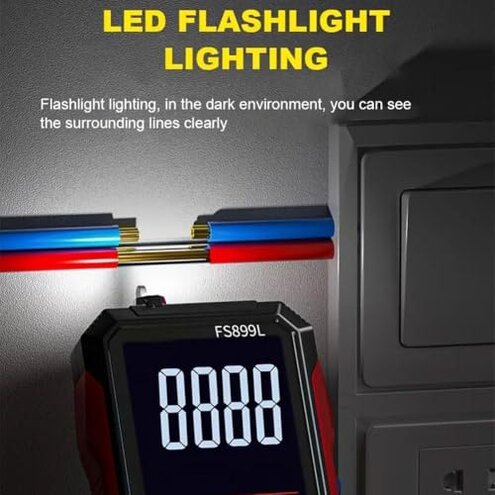
Usage anchor: Problems often appear during first setup or after a few troubleshooting sessions when continuous backlight or torch is used. Worsens: long jobs and frequent backlight use accelerate the symptom.
Category contrast: This feels worse than typical mid-range meters because downtime affects basic troubleshooting and increases the chance of interrupted readings. Impact: more replacement or charging time than buyers expect.
Why does the display or backlight act up?
- Early sign: flicker on first power-up or uneven backlight during cramped panel work.
- Frequency: secondary issue that appears repeatedly but not universally across units.
- Cause: power strain seems tied to the rechargeable system and heavy backlight use.
- Impact: readability is reduced in dim environments, making data capture harder than usual.
- Fixability: temporary fixes like toggling backlight or recharging help but do not always permanently resolve it.
Are the measurements reliable for daily troubleshooting?
- Pattern: variable accuracy is commonly reported; readings can be accurate initially but show noise later.
- When seen: after setup and during longer measurement sessions the meter may show drifting or fluctuating decimals.
- Category contrast: less stable than typical true-RMS mid-range units, which usually keep steady readings under the same conditions.
- Cause: power and shielding appear linked to noise; rechargeable power quirks and thin housing may allow interference.
- Impact: troubleshooting time increases when you must re-check readings with a second meter.
- Attempts: user fixes like recalibration attempts or changing ranges help sometimes but are not consistently effective.
Will the device survive regular shop or field use?
- Durability sign: scuffs and looseness reported after repeated daily handling and occasional drops.
- Safety note: fuse concerns appear as a recurring topic when users test high current or automotive loads.
- Hidden requirement: specific fuses or replacement parts may be needed for sustained high-current use.
- Frequency tier: secondary issue seen across multiple feedback channels but not universal.
- Impact: repair time and sourcing parts add cost compared with more serviceable mid-range meters.
- Attempts: workarounds like limiting current draws or using an inline clamp meter are used by buyers to avoid damage.
- Category contrast: less forgiving than many mid-range meters that tolerate daily drops and heavy use with fewer problems.
Illustrative excerpts
Excerpt: "Battery stopped holding charge after a week of daily panel checks." — primary pattern.
Excerpt: "Backlight flickers during tight installations, needs toggling to read." — secondary pattern.
Excerpt: "Needed a special fuse after an automotive surge, not included." — edge-case pattern.
Who should avoid this
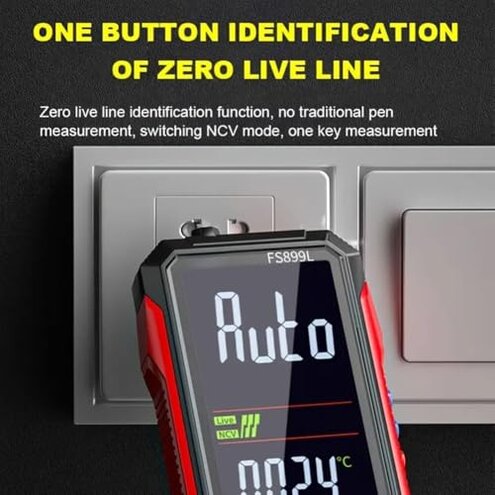
- Field techs: Avoid if you need reliable battery uptime for long jobs without access to chargers.
- Precision users: Avoid if you need steady, lab-grade accuracy for repeatable diagnostics.
- Heavy workshop use: Avoid if you expect daily drops and rough handling without spare parts.
Who this is actually good for
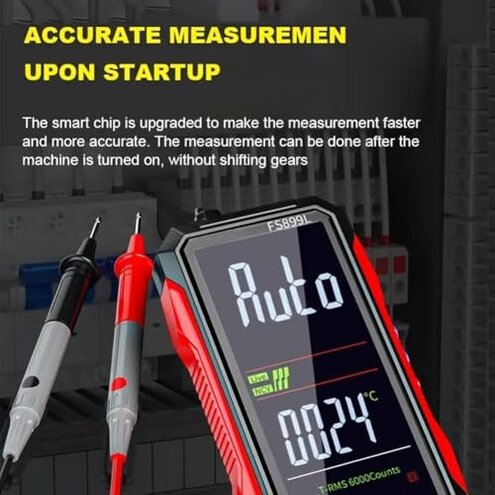
- Occasional DIYers: Good if you accept occasional recharging and want a low-cost true-RMS feature set.
- Budget-minded hobbyists: Good if you can tolerate display quirks and verify critical readings with another meter.
- Short jobs: Good if your tasks are brief and you value the USB-C convenience over long runtime.
Expectation vs reality
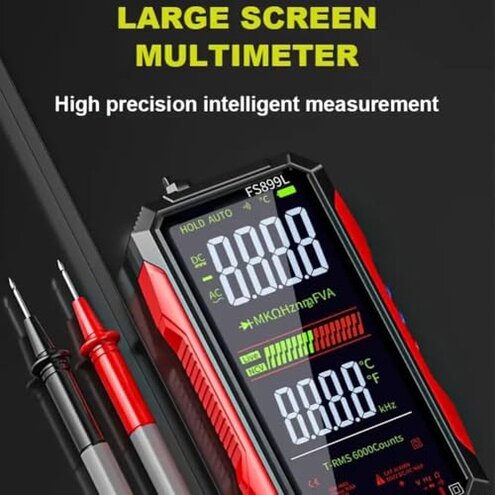
Expectation: Buyers reasonably expect a USB-C rechargeable meter to provide steady power like other mid-range tools.
Reality: The FS899L shows power irregularities that interrupt readings and increase downtime.
Expectation: Buyers expect a backlit display to be clear in dim panels.
Reality: The backlight and display sometimes flicker, requiring toggles or extra lighting to read results.
Safer alternatives
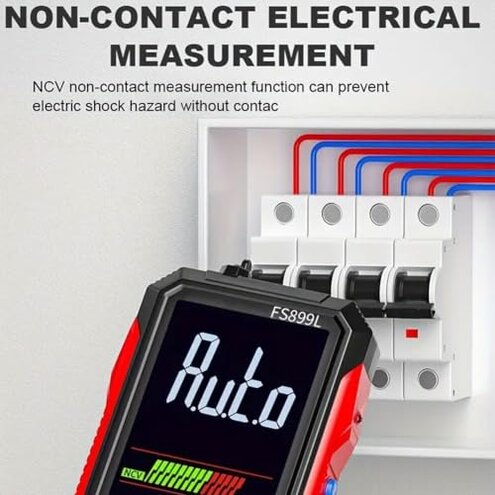
- Choose meters with proven battery track records to neutralize the charging failure risk.
- Prefer models with replaceable standard fuses to avoid the hidden fuse requirement.
- Pick meters with stronger housing and rubber guards to reduce the durability regret trigger.
- Look for brands that publish calibration specs if you need measuring stability.
The bottom line
Main regret: The combination of USB-C charging problems and variable readings is the primary buyer pain point.
Why worse: These combined faults create more downtime and verification work than is normal for mid-range meters.
Verdict: Avoid this unit if you need dependable power and steady measurements for professional or heavy use.
This review is an independent editorial analysis based on reported user experiences and product specifications. NegReview.com does not sell products.