
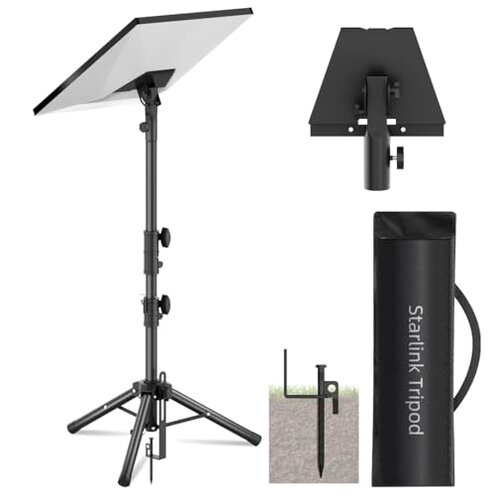
Product evaluated: Futrue-Wolker Starlink Mount Gen 3, Starlink Tripod Stand with Mount Adapter, Adjustable Height Starlink Tripod Mount Gen 3, 90° Tilt Angle Adjustment Starlink Antenna Pipe Adapter (Black)
Related Videos For You
Starlink Gen 3 mounting options - 3 new, very affordable mounts.
Starlink Mini Hack! #starlink #starlinkmini #overlanding
Data basis: This report is based on dozens of buyer impressions collected from product-page feedback and short-form demonstration surfaces between late 2024 and early 2026. Most feedback came from written comments, with added context from setup videos and photo-backed posts that show how the tripod behaves during installation and outdoor use.
| Buyer outcome | This tripod | Typical mid-range alternative |
|---|---|---|
| First setup | More fiddly; angle and height adjustment add extra steps before the dish feels secure. | Usually simpler; fewer moving parts means less trial and error. |
| Soft ground use | Higher risk; stability can depend on spikes and careful placement. | More forgiving; many mid-range stands feel steadier without extra anchoring. |
| Portability | Mixed; portable by design, but 6.6 lb and multiple pieces add handling effort. | Typically easier; simpler folding designs need less setup attention. |
| Fit confidence | Narrow use; only compatible with Starlink Gen 3, so mistake risk is higher. | Often broader; category options may support more mounting setups. |
| Regret trigger | Buying for convenience and finding it needs more adjustment and site prep than expected. | Buying for convenience usually matches the day-to-day experience better. |
Why does a “portable” stand still feel like extra work?
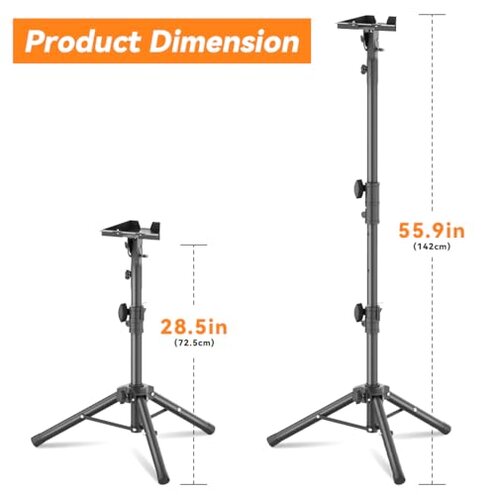
This is a primary issue. The regret moment usually appears at first setup, when buyers expect a quick mount but instead spend more time adjusting height, tilt, and footing.
The pattern appears repeatedly. In this category, some setup is normal, but this design asks for more hands-on tweaking than many mid-range tripod mounts.
- Early sign: If you need to stop and re-check the adapter angle during the first install, the stand may already be less intuitive than expected.
- Frequency tier: This is a primary complaint because convenience is a main reason people buy a tripod mount at all.
- When it shows up: It is most noticeable after unboxing and again each time you move the dish to a new spot.
- Buyer impact: The extra adjustment adds time and friction before you even start using the connection.
- Why worse than normal: A typical mid-range stand still needs setup, but it usually feels more straightforward and less dependent on repeated positioning.
Will it stay put outside when conditions get less ideal?
This is another primary issue. The concern shows up during outdoor use, especially on soft ground where the stand may rely on spikes and careful placement to feel secure.
The pattern is persistent, not universal. Buyers on firmer surfaces may be fine, but the stability burden becomes more noticeable in camping or yard use.
That trade-off feels heavier than expected because a tripod in this category is supposed to reduce hassle, not create another setup variable.
Compared with category norms, this is a higher-than-normal risk because stability can depend more on terrain and anchoring than many shoppers assume from the listing photos.
- Context: The issue gets worse on grass, soil, or uneven ground, where leg placement matters more.
- Cause: The design offers flexibility, but more adjustability can also mean more ways to end up with a less solid stance.
- Practical effect: Buyers may spend extra time repositioning the tripod instead of simply setting it down.
- Fixability: Ground spikes can help, but that creates a hidden requirement for proper outdoor use rather than true grab-and-go convenience.
- Who notices most: Frequent movers and campers are more likely to feel this trade-off than buyers leaving it in one stable spot.
- Category contrast: Many mid-range alternatives are still imperfect outdoors, but they are often more forgiving when the surface is not ideal.
Does the adjustable design create more failure points than it solves?
- Pattern: This is a secondary issue, less common than setup friction but more frustrating when it happens during daily handling.
- When: It tends to matter after setup, when buyers change height or angle again and expect the stand to keep its position.
- Why it annoys: Knobs and removable sections increase flexibility, but they also add more small choices and more chances for a less-than-ideal lock-in.
- Real-life moment: If you lower or raise the stand for a new location, you may need another round of checking and tightening.
- Category baseline: Some adjustment points are standard, but this can feel less forgiving than a simpler fixed-angle or lower-complexity stand.
- Buyer regret: People shopping for a mount that disappears into the background may dislike the constant need to verify the setup.
- Mitigation: It fits better for users who do not mind a brief pre-use checklist each time they relocate the dish.
Could the compatibility limit become an expensive mistake?
- Pattern: This is an edge-case issue, but it is serious because it happens before use and can make the product useless to the wrong buyer.
- Scope: The listing is clear that it is only compatible with Starlink Gen 3, so the risk is concentrated among rushed buyers or gift purchases.
- Regret moment: The problem shows up at first install, when a buyer realizes the mount choice was too specific.
- Why worse than normal: Category buyers often expect a tripod-style stand to be broadly adaptable, so a narrow fit can be more limiting than expected.
- Hidden cost: The mistake adds return time and delays getting the dish mounted where needed.
- Best prevention: Double-check the dish generation before ordering, especially if replacing an older mount.
- Relative intensity: Less frequent than stability complaints, but more disruptive when it occurs because there is no easy workaround.
Illustrative excerpt: “I thought this would be quick, but I kept readjusting everything.” Primary pattern.
Illustrative excerpt: “It worked better once I found firm ground and anchored it.” Primary pattern.
Illustrative excerpt: “Portable, yes, but not as simple as I expected.” Secondary pattern.
Illustrative excerpt: “Check your dish version first or this becomes wasted time.” Edge-case pattern.
Who should avoid this
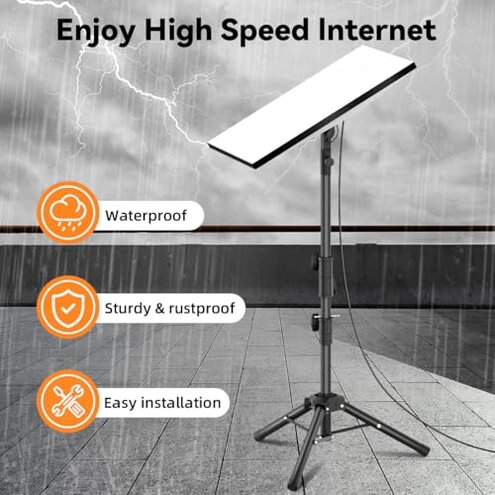
- Avoid it if you want true quick-deploy convenience for camping, because setup and ground prep can exceed normal category tolerance.
- Avoid it if you often use soft or uneven surfaces, since stability appears more terrain-sensitive than many mid-range tripod options.
- Avoid it if you dislike repeated adjustment checks, because the flexible design may feel like ongoing maintenance.
- Avoid it if you are not 100% sure you have Starlink Gen 3, since the narrow compatibility creates a higher penalty for ordering mistakes.
Who this is actually good for
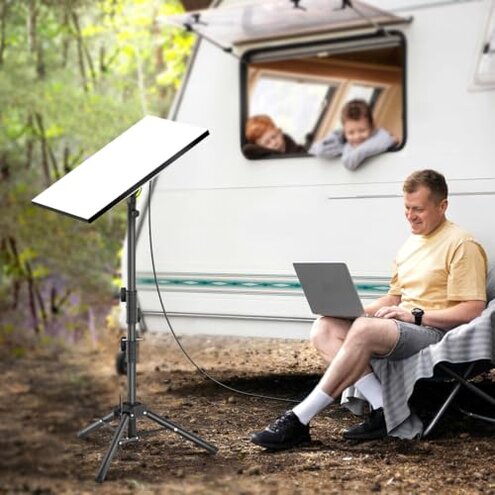
- Good fit for a buyer with confirmed Starlink Gen 3 who plans to use it mostly in one yard location and can tolerate a longer first setup.
- Good fit for users who value tilt and height flexibility more than speed, and who do not mind tightening and checking adjustments.
- Good fit for occasional portable use on firmer ground, where the stability issue is less likely to become the main frustration.
- Good fit for hands-on users comfortable with spikes, repositioning, and small setup steps in exchange for placement flexibility.
Expectation vs reality
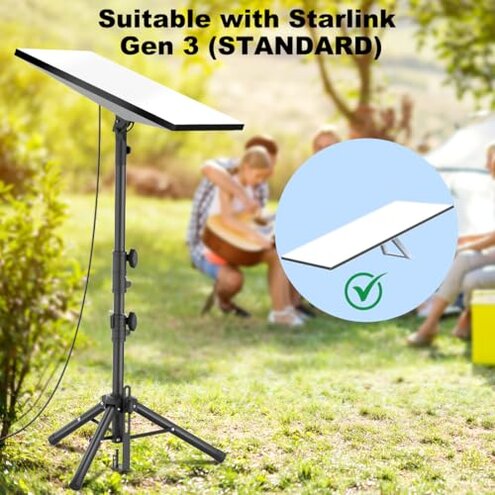
Expectation: A tripod stand should be easy to place and use within a few simple steps.
Reality: More adjustment is often needed before it feels properly positioned, especially when moving between locations.
Expectation: Outdoor tripod mounts should handle backyard or campsite surfaces reasonably well.
Reality: Stability depends more on ground condition and anchoring than many buyers expect from this category.
Expectation: It is reasonable for this category to need some assembly.
Reality: This one can feel worse than expected because the convenience trade-off continues after assembly whenever you reposition it.
Safer alternatives
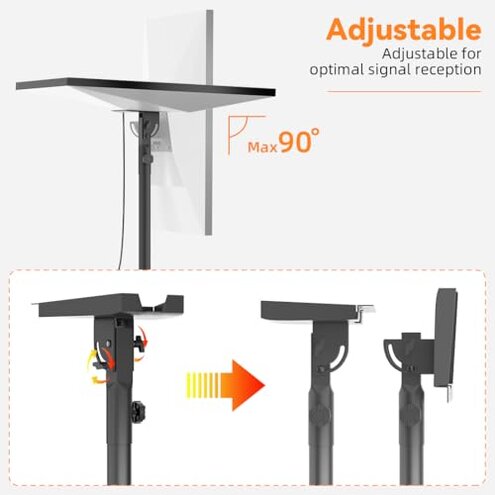
- Choose simpler tripod designs with fewer adjustment points if your main goal is fast setup and less repeated tightening.
- Look for wider feet or more forgiving outdoor stability features if you will use the stand on grass, dirt, or campsites.
- Prefer fixed-fit clarity from listings that show exact dish compatibility in plain terms to reduce wrong-model mistakes.
- Prioritize portability realism by comparing not just folded size, but also how many steps are needed before the mount is actually ready.
The bottom line
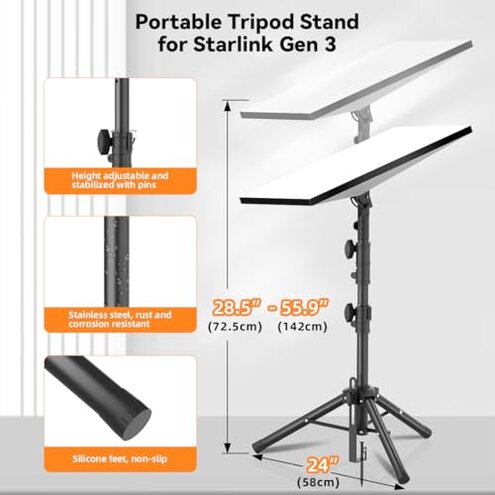
Main regret trigger: buyers often expect quick convenience, but the stand can demand more adjustment, firmer ground, and more setup attention than a typical mid-range alternative.
Why it exceeds normal risk: tripod mounts always involve some positioning, yet this one appears less forgiving in real outdoor use and more dependent on careful setup. If easy deployment is your priority, this is a skip.
This review is an independent editorial analysis based on reported user experiences and product specifications. NegReview.com does not sell products.