
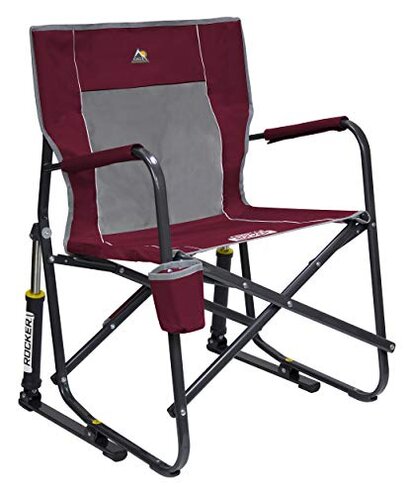
Product evaluated: GCI OUTDOOR Freestyle Rocker Camping Chair | Portable Folding Rocking Chair with Solid, Durable Armrests, Drink Holder & Comfortable Backrest — Cinnamon
Related Videos For You
Compact Folding Rocking Chair for Camping and Bushcraft
Which GCI Rocker is the Best! Watch the full review.
Data basis: This report reflects dozens of aggregated buyer comments collected from written ratings and Q&A-style feedback surfaces spanning 2019–2026. Most signals came from short written complaints about real use, with supporting detail from longer explainers that describe setup and long sitting sessions.
| Buyer outcome | GCI Freestyle Rocker | Typical mid-range chair |
| Stability feel | Higher wobble risk during rocking and shifting weight | Lower wobble risk, but less “movement” features |
| Long-session comfort | Mixed comfort; some report pressure points after longer sits | More predictable comfort, fewer moving parts to notice |
| Carry effort | Heavier feel for a “grab-and-go” chair at 11.8 lbs | Usually lighter for simple folding camp chairs |
| Setup reality | Quick fold-out, but recurring “fussy” moments when closing or aligning | Simple open/close with fewer alignment steps |
| Regret trigger | Rocking feature feels less stable than expected for the price | No rocker, but fewer surprises in basic use |
“Why does it feel wobbly when I just want to relax?”
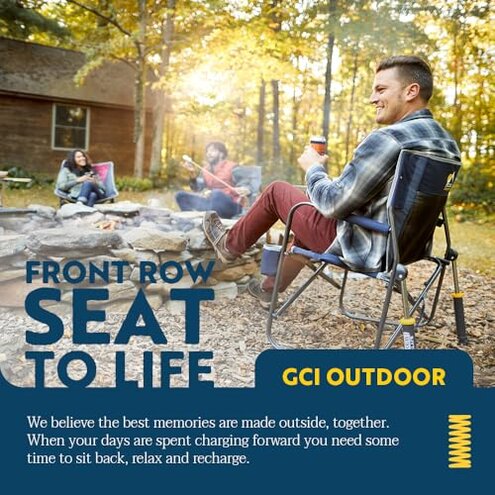
Regret moment shows up when you finally sit down at a game or campfire and the rocker feels less planted than expected.
Primary issue signals appear repeatedly, and they’re more disruptive here because rocking chairs are bought for calm motion, not “micro-balance” work.
Recurring pattern is that it’s not universal, but it persists across many “first day” and “after a few outings” stories.
Category contrast: A normal folding chair can feel a bit flexy, but a rocker that adds motion can feel worse than typical when the base isn’t confidence-inspiring.
- When it hits is during rocking, leaning back, or shifting to reach the drink holder.
- Intensity cue places this among the most common comfort-and-safety complaints for this model.
- Worse conditions include uneven ground, soft soil, or long sessions where you stop “bracing” without thinking.
- What you notice is side-to-side play, a “tippy” feel, or a surprise jolt as the chair settles.
- Fix attempts often involve repositioning legs, choosing flatter ground, or limiting rocking range.
- Mitigation works best when you treat it like a “gentle sway” chair, not a full rocker.
- Illustrative: “It rocks, but I never feel fully stable.” Primary pattern reflecting repeated stability concern.
“Is it comfortable for more than 30 minutes?”
Regret moment is realizing the chair is fun for short sits, then becomes distracting once you’re stuck in it for a full game.
Secondary issue appears repeatedly, especially from buyers using it as a sideline chair or backyard “main seat.”
- When it shows is after a longer sit, when pressure points build and you start shifting often.
- Not universal reports suggest body size and sitting style change the experience a lot.
- Seat feel complaints focus on support that doesn’t match expectations from the “rocker” concept.
- Back support can feel better at first, then less supportive as you relax deeper.
- Category contrast: Many mid-range camp chairs feel “fine,” but this one can feel more noticeable because the rocking motion highlights posture issues.
- Workarounds include adding a small cushion or using it as a short-break chair, not an all-day seat.
- Illustrative: “Great at first, then my back wants out.” Secondary pattern tied to long-session use.
“Why is closing it so annoying in the parking lot?”
Regret moment happens when you’re trying to pack up quickly and the close feels less smooth than the promise of easy fold suggests.
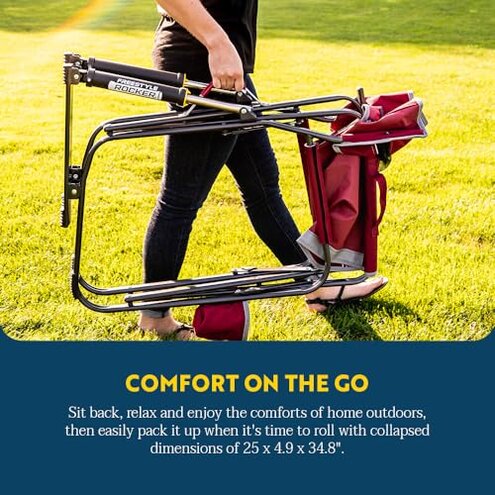
Hidden requirement shows up here: buyers often need a specific pull-and-foot placement technique to avoid fighting the frame.
- When it hits is right after use, when you’re tired and trying to fold it one-handed.
- Recurring frustration appears repeatedly, though some buyers report it becomes easier after practice.
- Extra steps can include lining up the base, stepping on a leg area, then pulling the closure handle just right.
- Pinch risk concerns come up around moving parts when you rush the fold.
- Carry annoyance follows if it doesn’t fold tightly and feels awkward to manage.
- Category contrast: Basic folding chairs are usually “mindless,” while this can feel more finicky due to the rocker mechanism.
- Mitigation is to practice at home and avoid folding on uneven ground where alignment is harder.
- Illustrative: “I need both hands and my foot to close it.” Secondary pattern showing the technique requirement.
“Is it really portable, or just ‘portable-ish’?”
Regret moment is when “grab-and-go” turns into a noticeable haul from the car to the field.
Secondary issue shows up repeatedly in feedback comparing it to simpler camp chairs.
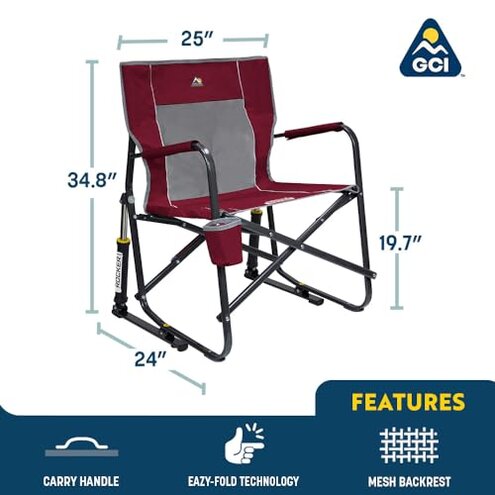
- Weight reality is a chair mass of 11.8 lbs, which some buyers feel quickly over distance.
- When it hurts is long walks across lots, carrying extra gear, or juggling kids’ items.
- Awkward carry can feel worse if the fold isn’t tight or the chair swings into your legs.
- Category contrast: Mid-range non-rocking chairs are often lighter, so this can feel more work than expected.
- Mitigation is treating it like a “car-camping” chair, not a hike-in chair.
- Illustrative: “Amazing at the campsite, miserable from the parking lot.” Secondary pattern tied to transport distance.
Who should avoid this
- Stability-sensitive buyers who dislike any wobble during relaxing, because stability is a primary recurring complaint.
- All-day sitters who need predictable comfort for full games, since long-session comfort is a secondary repeated issue.
- Walk-far carriers who park far away, because 11.8 lbs can feel like too much for “portable” use.
- One-hand packers who want a truly effortless fold, because closing can have a hidden technique requirement.
Who this is actually good for
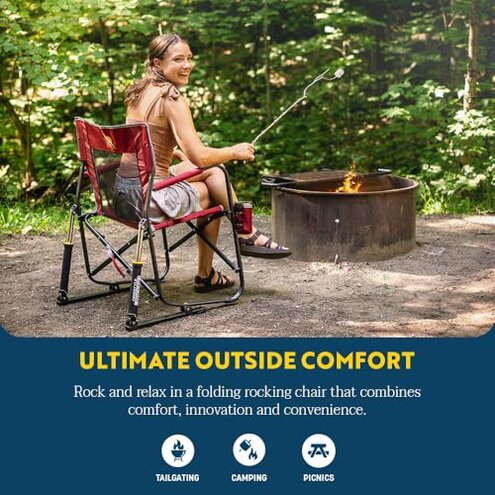
- Short-session loungers who want gentle motion and will tolerate some wobble for the rocking feel.
- Drive-up users who carry it a short distance and accept the 11.8 lbs trade-off.
- Patients with setup who don’t mind learning the fold technique and can pack slowly on flat ground.
- Backyard keepers who store it nearby and avoid frequent carry and rapid folding, reducing the friction points.
Expectation vs reality
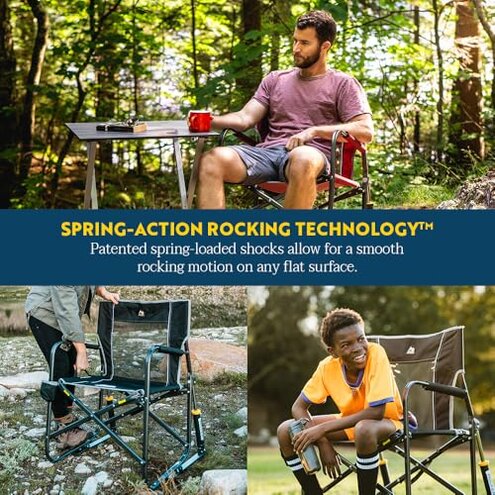
Expectation: A rocker should feel planted and calm when you shift your weight.
Reality: A recurring stability complaint is wobble during rocking and repositioning, especially on uneven ground.
Expectation: It’s reasonable for this category that a folding chair has a little flex.
Reality: The added rocking motion can make flex feel more disruptive than typical mid-range non-rocking chairs.
- Expectation is fast pack-up after a game.
- Reality is a repeated need for a specific foot-and-pull technique to close it cleanly.
Safer alternatives
- Prioritize stability by choosing a non-rocking mid-range chair if wobble is your main regret trigger.
- Test folding by picking a design with simpler close steps if you often pack up in a rushed parking-lot moment.
- Go lighter if you walk far, since carry comfort can matter more than features like rocking.
- Match session length by selecting a chair known for long-sit comfort if you routinely sit through full events.
The bottom line
Main regret centers on stability feel, because wobble during rocking is among the most common disruptive complaints.
Why it exceeds category risk is that a rocker’s core promise is relaxed motion, and repeated instability reports make it feel less forgiving than typical mid-range chairs.
Verdict: Avoid it if you want predictable stability, long-session comfort, and effortless folding without learning a technique.
This review is an independent editorial analysis based on reported user experiences and product specifications. NegReview.com does not sell products.