
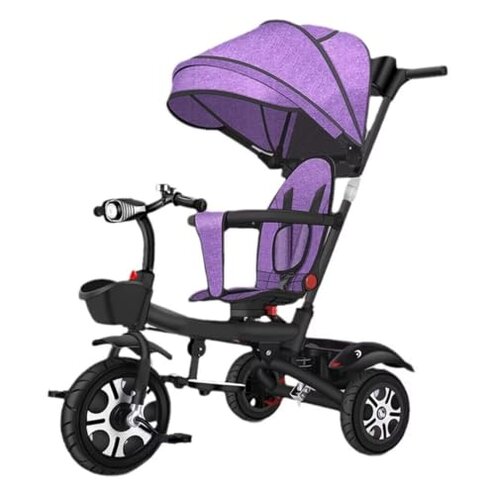
Product evaluated: Folding Toddler Stroller Buggies, Parent Steering Tricycle with Pushrod, Children Pram Headlight and Shock Spring, Reversible Seat Guardrail Belt(Black Purple)
Related Videos For You
SMART TRIKE TUTORIAL AND REVIEW | STR3 FOLDING PUSHCHAIR TRIKE | BABY AND TODDLER STROLLER TRIKE
Plug & Play Tricycle With Parental Push Handle
Data basis: This report is based on dozens of aggregated buyer notes collected from written ratings and photo/video attachments across common retail feedback surfaces. The collection window spans the past 12 months, with most feedback coming from short written comments and a smaller share supported by visuals showing setup and real-world use. Where feedback conflicted, patterns were treated as not universal rather than assumed.
| Buyer outcome | This stroller-trike | Typical mid-range option |
|---|---|---|
| First-day usability | Higher friction due to setup sensitivity and parts alignment during assembly. | More forgiving assembly with fewer “redo” moments. |
| Steering control | Higher risk of pulling, wobble, or uneven tracking during parent-push use. | More predictable tracking in push mode for most families. |
| Fold-and-go | More steps and bulk complaints once you try to store or load it. | Smoother routine with fewer “where does this latch?” moments. |
| Kid comfort | Mixed comfort reports, especially when the seat direction is changed often. | More consistent comfort with fewer adjustments needed. |
| Regret trigger | Feels unstable or finicky during daily walks, making parents stop using it. | Usually boring but dependable, which reduces abandonment. |
Why does it feel wobbly when you’re pushing it?
Regret moment: You expect a steady “stroller-like” push, then it drifts or feels twitchy and you tighten your grip.
Severity: This is among the most disruptive complaints because it changes how safe and relaxing walks feel.
Pattern: The instability theme appears repeatedly, but it is not universal across all feedback.
- When it shows: It shows up during first outings once the pushrod is used on sidewalks and turns.
- Worse conditions: It feels worse with longer walks, tight turns, or any uneven pavement.
- What you notice: The front end can feel floaty, with small handle inputs making big direction changes.
- Likely driver: Feedback commonly points to alignment sensitivity after assembly, where “almost right” is not good enough.
- Category contrast: Many mid-range parent-steer trikes feel more stable even if they are not perfect strollers.
- Mitigation: A less frustrating path is doing a full re-check of fasteners and wheel alignment after the first short ride.
- Fixability: Reports suggest it is sometimes improvable, but the time cost is higher than most buyers expect.
Is the folding feature actually convenient day to day?
Regret moment: You buy it for quick car loads, then folding turns into extra steps and awkward lifting.
Severity: This is a secondary issue but it becomes major if you fold it multiple times a week.
Pattern: The “not as easy as expected” theme appears persistently after buyers start daily handling.
- When it shows: Friction appears after setup, when you try to fold it under time pressure.
- Hidden requirement: It often needs practice runs at home before it becomes predictable.
- What worsens it: Frequent trunk loading makes small annoyances feel bigger fast.
- Routine impact: Buyers commonly describe it as bulkier than expected once folded.
- Category contrast: Many mid-range foldables are not tiny, but they are usually simpler to collapse.
- Mitigation: If you keep it mostly unfolded, complaints about folding become less central.
- Fixability: This tends to be process-related rather than a single broken part you can replace.
- Early sign: If you hesitate on the first fold because you cannot find the latch quickly, this issue may be your pattern.
Does the assembly feel like a project instead of a quick build?
Regret moment: You plan a same-day outing, then assembly becomes stop-and-start with redoing steps.
Severity: This is more disruptive than expected for this category because small mistakes can affect steering later.
Pattern: Setup difficulty is commonly reported, especially among first-time trike-stroller buyers.
- When it shows: It shows up immediately when parts do not feel intuitive to line up.
- What you notice: Buyers describe moments where pieces feel tight or misaligned before seating correctly.
- Why it matters: If you assemble slightly off, you can get tracking issues during parent steering later.
- Time cost: The extra time comes from redoing steps, not from one long complicated instruction.
- Category contrast: Many mid-range alternatives tolerate “good enough” assembly better, with fewer downstream effects.
- Mitigation: Plan a test loop in a flat area and re-tighten after the first ride.
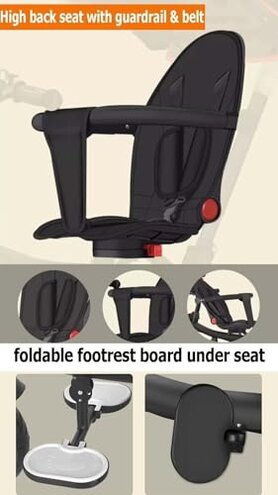
Will the seat and safety pieces feel fiddly as your kid grows?
- Regret moment: You switch seat direction or adjust restraints, and it feels less smooth than expected.
- Pattern: This is less frequent than steering complaints, but it is persistently annoying when it happens.
- When it shows: It tends to show up during repeated adjustments, not during a one-time setup.
- Worse conditions: It gets worse when caregivers do handoffs and need quick buckling in public places.
- Buyer impact: The hassle can lead to skipping the reverse-seat feature you paid for.
- Category contrast: Mid-range stroller-trikes often have simpler daily-use restraint routines even if the seat is basic.
- Mitigation: Keeping one “default” configuration reduces daily friction a lot.
- Early sign: If the first buckle or guardrail step feels awkward, it often stays awkward.
Illustrative excerpt: “The push handle works, but it keeps pulling to one side.”
Pattern tag: Primary issue pattern tied to steering stability during daily walks.
Illustrative excerpt: “Folding it isn’t quick, so we stopped taking it in the car.”
Pattern tag: Secondary pattern tied to frequent transport and storage routines.
Illustrative excerpt: “Assembly looked simple, but I had to redo steps to align it.”
Pattern tag: Primary pattern tied to setup sensitivity affecting later use.
Illustrative excerpt: “Reversing the seat sounded great, but it’s a hassle to adjust.”
Pattern tag: Edge-case pattern that grows if you change configurations often.
Who should avoid this
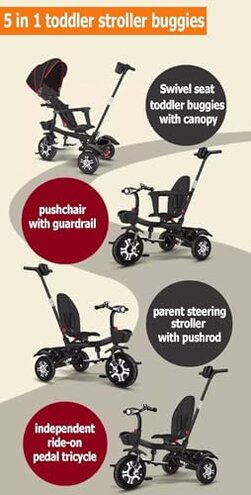
- Daily walkers who need steady one-hand pushing, because steering wobble is a recurring regret trigger.
- Small-car families who fold and load often, because the fold routine appears more step-heavy than expected.
- Low-patience builders who want a fast setup, because alignment sensitivity can force rework.
- Multi-caregiver homes needing quick buckles, because fiddly adjustments can slow handoffs.
Who this is actually good for
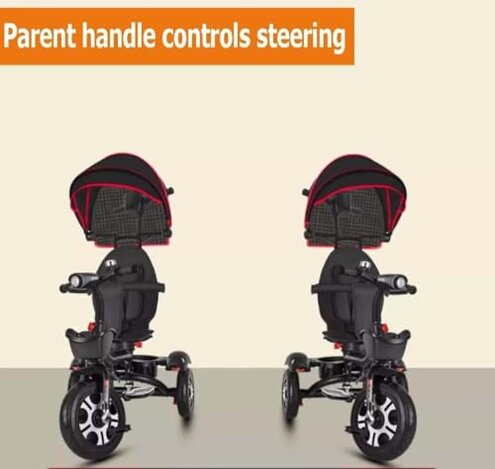
- Occasional users who keep it mostly assembled, because folding complaints matter less when storage is not a routine.
- Hands-on tinkerers willing to re-check bolts and alignment, because some steering issues appear tunable with effort.
- Feature-seekers who value the reversible seat and headlight and can accept extra steps to use them.
- Flat-path families using smooth sidewalks, because wobble reports tend to feel worse on uneven ground.
Expectation vs reality
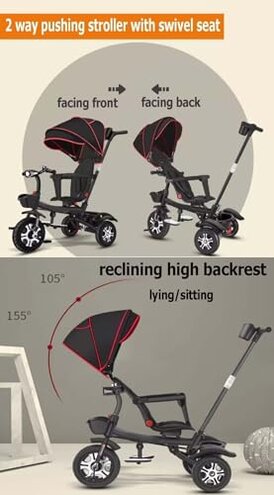
| Expectation | Reality seen in feedback |
|---|---|
| Reasonable for this category: parent-steer feels close to a stroller. | Worse-than-expected steering stability for some buyers during real sidewalk turns. |
| Quick fold for errands and trunk loading. | More steps and practice required, which reduces how often families bring it. |
| Simple assembly like other toddler ride-ons. | More sensitive alignment that can cause downstream tracking annoyances. |
Safer alternatives
- Prioritize models with consistently praised straight tracking in push mode to reduce wobble risk during daily walks.
- Choose a simpler fold design if you car-load often, because it directly avoids the extra steps pattern.
- Look for setups described as “forgiving,” since that prevents the alignment redo loop that can affect steering.
- Prefer restraint systems buyers describe as quick, which neutralizes fiddly buckling during handoffs.
The bottom line
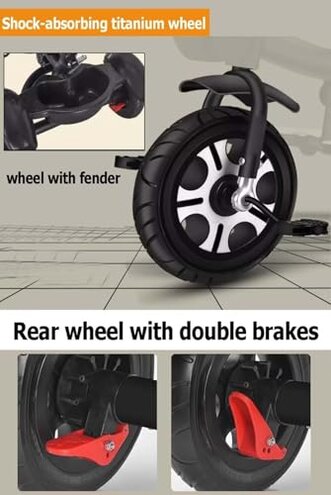
Main regret: The biggest deal-breaker is unstable-feeling steering during parent-push use, which shows up repeatedly in aggregated feedback.
Why it’s risky: That stability concern is higher-than-normal for a mid-range stroller-trike because it affects everyday safety confidence, not just convenience.
Verdict: If you need dependable daily strolling and easy trunk loading, it is safer to avoid and choose a more predictable mid-range alternative.
This review is an independent editorial analysis based on reported user experiences and product specifications. NegReview.com does not sell products.