
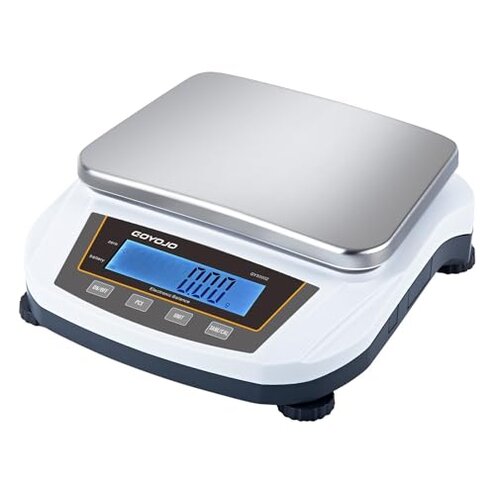
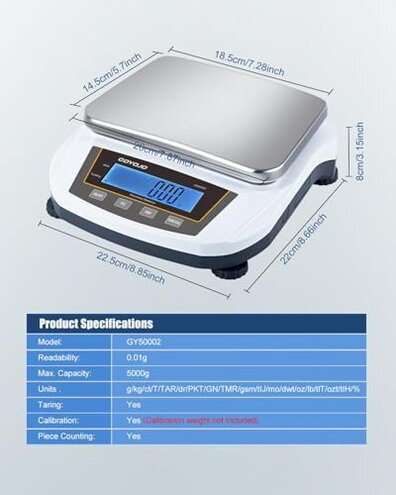
Product evaluated: GOYOJO Digital Analytical Balance and Lab Scale, 5000g Capacity, 0.01g Precision, Stainless Steel, Multi-Unit (g/oz/ct/lb) for Jewelry, Kitchen, and Lab – Reliable, Accurate, Easy to Use, Black Panel
Related Videos For You
Lab balance | AND Weighing GF3000 | setup lab scale
How to Check if Your Scale is Accurate Without Calibration Weights (Using Coins)
Data basis: This report uses dozens of aggregated buyer comments collected from written feedback and video demonstrations between late 2024 and early 2026. Most input came from short written impressions, with lighter support from setup clips and usage walk-throughs that helped confirm where frustration shows up during everyday weighing.
| Buyer outcome | GOYOJO scale | Typical mid-range alternative |
|---|---|---|
| First-use confidence | Lower; setup can feel incomplete because calibration weights are not included. | Better; many include enough to verify accuracy right away. |
| Small-item precision | Riskier; very fine readings can feel less trustworthy during careful measuring. | More predictable; usually less fussy for routine detail work. |
| Daily convenience | Mixed; readable display helps, but extra verification can add steps. | Smoother; less checking is usually needed. |
| Category risk | Higher-than-normal; hidden setup needs are more frustrating than expected at this price. | Normal; some setup is expected, but fewer surprises. |
| Regret trigger | Buying for precision and then needing accessories or repeated checks to trust the numbers. | Usually lower; less chance of second-guessing every reading. |
Do you want lab-like precision without extra setup?
This is the main regret point. A primary pattern in aggregated feedback is that buyers expect ready-to-trust precision, then discover the scale does not include calibration weights.
The problem shows up at first use, especially when buyers want to verify the claimed 0.01g sensitivity before cooking, jewelry work, or hobby measuring. That feels worse than a normal category nuisance because many mid-range scales make verification easier out of the box.
- Pattern: This appears repeatedly and is among the most common complaints tied to confidence, not just convenience.
- Usage moment: It hits right after unboxing when a buyer tries to confirm readings before trusting a recipe or small-item measurement.
- Hidden requirement: You may need separate calibration weights, which adds cost and delays use.
- Impact: The scale can become a “maybe accurate” tool instead of a ready-to-use one.
- Why worse: Most mid-range alternatives still need care, but they are often less demanding on day one.
Illustrative: “I bought precision, but I still had to buy tools to trust it.” Primary pattern.
Will the tiny numbers feel stable when you need exact results?
- Frequency tier: This is a primary issue, less universal than missing weights but more frustrating when it occurs.
- What buyers notice: Readings for very small items can feel fussy or harder to trust than expected.
- When it appears: It tends to matter during careful tasks like jewelry, gemstones, powders, or small ingredient portions.
- Why it stings: A scale sold on 0.01g precision creates a higher expectation than a normal kitchen-focused model.
- Trade-off: The large display is easy to read, but readable numbers do not always remove doubt about true precision.
- Buyer response: People often re-weigh the same item or switch units, which adds time and breaks workflow.
- Category contrast: Mid-range alternatives are not perfect either, but they are often more forgiving for repeated small measurements.
Illustrative: “The number looked clear, but I kept checking it again.” Primary pattern.
Are you expecting one scale to handle kitchen and detail work equally well?
This sounds convenient, but the broad use promise creates a secondary pattern of mismatch. Buyers who want one device for heavy kitchen jobs and tiny-detail jobs can end up feeling the scale is stretched across too many roles.
The frustration shows up during daily switching between use cases, especially when expectations rise from the multi-unit list and the 5000g capacity. That is more disruptive than expected because a typical mid-range alternative is often clearer about whether it favors kitchen tasks or fine-detail work.
- Scope: Seen across multiple feedback types, this is a secondary issue rather than a universal failure.
- Mismatch: High capacity and very fine sensitivity look ideal on paper, but real satisfaction depends on what you weigh most often.
- Usage anchor: It becomes obvious after setup when you switch from larger containers to tiny items needing high confidence.
- Impact: Buyers can end up tolerating compromises at both ends instead of excelling at one job.
- Fixability: This is only partly fixable because the issue is about role fit, not just settings.
- Why worse: In this category, “does everything” claims often mean more compromise than buyers expect.
Illustrative: “Good for broad weighing, but not the exact tool I pictured.” Secondary pattern.
Do you want a low-hassle scale for constant everyday use?
- Pattern: A persistent secondary issue is that this scale can ask for more checking and more careful handling than some shoppers expect.
- When it shows up: The hassle builds during daily use, especially if you weigh often and need quick confidence each time.
- Early sign: If you find yourself double-checking readings in the first few sessions, that habit may continue.
- Cause: The product promises reliable accuracy at an affordable price, but trust depends on setup discipline and use conditions.
- Impact: Small extra steps become annoying fast in kitchens, classrooms, and hobby spaces.
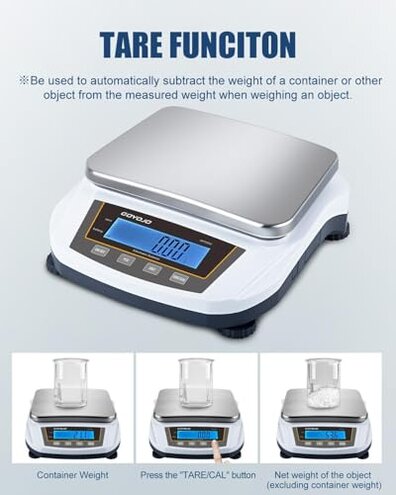
- Attempted workaround: Users often lean on tare, repeated measurements, or cross-checking with another scale.
- Fixability: Some of this improves with careful setup, but not enough for buyers who want grab-and-go simplicity.
- Category contrast: That upkeep is more frequent than typical for a mid-range option marketed as easy to use.
Illustrative: “It works, but it asks for more babysitting than I wanted.” Secondary pattern.
Who should avoid this
- Avoid it if you need immediate precision without buying anything extra, because the missing calibration weights create a hidden first-use hurdle.
- Skip it if your main job is tiny-item weighing, since small-measurement trust is among the more sensitive complaint areas.
- Not ideal for busy kitchen users who want quick repeatable readings without second-guessing.
- Pass if you expect one scale to replace both a broad kitchen scale and a dedicated fine-detail scale with no compromise.
Who this is actually good for
- Better fit for buyers who already own calibration weights and do not mind verifying accuracy before serious use.
- Reasonable choice for occasional weighing where the large display matters more than maximum trust in tiny increments.
- Works better for shoppers who mainly weigh larger items, then only sometimes need finer measurements.
- Acceptable for budget-minded users willing to trade some convenience and certainty for a lower upfront cost than specialized gear.
Expectation vs reality
Expectation: A 5000g scale with 0.01g precision should feel ready for exact work right away.
Reality: The missing calibration weights make first-use trust weaker than expected.
Expectation: A multi-unit display should mean simple all-purpose use.
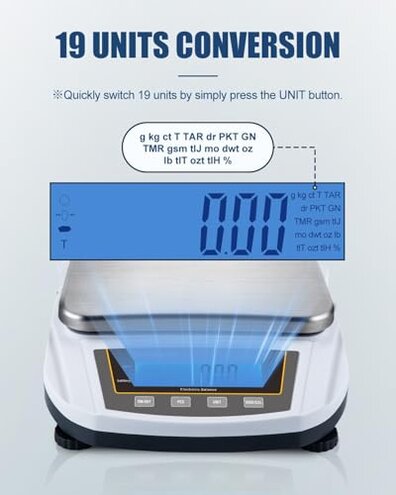
Reality: Broad unit support does not remove the need to verify consistency in real tasks.
Reasonable for this category: Some setup and careful placement are normal.
Worse here: The extra effort to confirm precision can feel higher than normal for a mid-range alternative.
Safer alternatives
- Choose a model that includes calibration weights if first-use trust matters more than saving a little upfront.
- Pick a scale designed mainly for fine-detail weighing if jewelry or tiny portions are your main use case.
- Prefer simpler specs if you mostly cook, because a kitchen-focused scale can be more reliable in daily use.
- Look for proof of stable repeat measurements in real-world demonstrations, not just feature lists.
The bottom line
Main regret comes from buying this for precision, then needing extra verification before trusting the numbers. That exceeds normal category risk because the hidden setup burden and small-reading uncertainty cut against the product’s biggest promise. Verdict: avoid it if confidence in exact measurements matters more than getting a feature-rich budget scale.
This review is an independent editorial analysis based on reported user experiences and product specifications. NegReview.com does not sell products.