
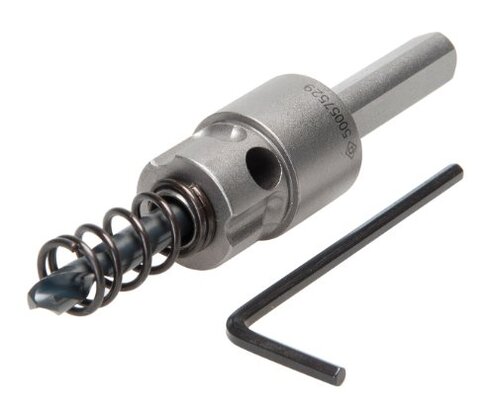
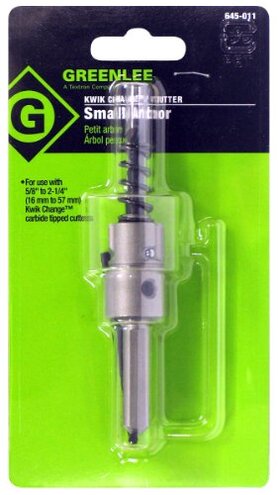
Product evaluated: Greenlee 645-011 Small Arbor for 5/8" - 2-1/4" Kwik Change Carbide-Tipped Hole Cutter
Related Videos For You
How To Assemble & Use Quick-Hitch Arbor To Hole Saw
How to Use a Hole Saw | Ask This Old House
Data basis: This report is built from dozens of buyer reports and a handful of video demonstrations collected through June 2024, with most feedback coming from written reviews supported by short visual demos.
| Outcome | Greenlee 645-011 | Typical mid-range arbor |
|---|---|---|
| Build quality | Mixed reports of early wear and loose threads under heavy use. | More consistent fit and finish with predictable lifespan for hobby-to-pro use. |
| Compatibility | Fit issues appear repeatedly when used with non-Greenlee cutters or older mandrels. | Broader fit across brands with fewer adapter needs. |
| Stability during cut | Higher risk of wobble or loosening mid-cut, especially in long runs. | Lower risk—most mid-range arbors stay tight for repeated cuts. |
| Replacement frequency | Earlier replacement reported after frequent metal cutting sessions. | Typical lifespan that meets expectations for mid-range tools. |
| Regret trigger | Loosening during use that interrupts work and risks damaged holes. | Fewer interruptions—mid-range alternates usually avoid this problem. |
Why does the arbor loosen during cuts?
Regret moment: The most disruptive complaint is the arbor loosening while cutting, which stops the job and can ruin the hole.
Pattern signal: This appears repeatedly across reports and is a primary issue rather than an edge case.
Usage anchor: It shows up on first few uses and gets worse during long cutting sessions or when cutting harder material.
Category contrast: Most mid-range arbors stay tight longer, so this feels more disruptive than typical for hobby or jobsite tooling.
Why is fitment and compatibility frustrating?
- Early sign: Tolerance mismatch shows immediately when the cutter won’t seat squarely.
- Frequency tier: Often reported as a secondary issue that accompanies stability problems.
- Cause: Varied shank sizes and older cutter designs increase the chance of poor fit.
- Impact: Wasted setup time and extra adapters or tools needed before cutting.
- Fixability: Some buyers solved it with shims or brand-specific pilots, but that adds cost.
How quickly does the arbor wear or fail?
- Visible wear: Scoring and thread damage appears after repeated metal cuts.
- Frequency tier: This is a secondary issue that becomes primary with frequent professional use.
- Impact on use: Worn parts lead to louder vibration and less accurate holes.
- When it worsens: Heavy daily use and cutting abrasive material accelerate wear.
- Attempts to fix: Re-tightening helps briefly but does not stop progressive loosening.
- Category contrast: More upkeep than most mid-range alternatives, raising total ownership cost.
Are there hidden tools or parts you need?
- Hidden requirement: Some buyers needed extra pilot bits or specific spanners not included with the arbor.
- Early sign: You notice missing accessories at setup when the pilot doesn’t match.
- Cause: The arbor assumes compatible cutters and pilots, which is not universal.
- Impact: Extra purchases and downtime before the tool becomes usable.
- Fixability: Aftermarket pilots and wrenches work but add unexpected cost.
- Frequency tier: Less frequent than loosening, but persistent for buyers mixing brands.
- Category contrast: Less forgiving than typical options that include adapters or clearer specs.
Illustrative excerpts
Excerpt: "Arbor started to wobble after two cuts, ruined the hole and slowed me down."
Pattern: This reflects a primary pattern tied to stability during use.
Excerpt: "Needed a special pilot that wasn’t in the box, cost extra time and money."
Pattern: This reflects a secondary pattern about hidden requirements.
Excerpt: "Threads showed wear after a week of frequent metal work, not what I expected."
Pattern: This reflects a secondary pattern tied to durability under heavy use.
Who should avoid this
- Professionals who run long cutting sessions; the loosening risk is worse than normal for daily use.
- Multi-brand shops that switch cutters often; hidden fit needs add downtime and extra parts.
- Precision users who require clean, accurate holes; mid-cut wobble increases scrap risk.
Who this is actually good for
- Casual DIYers who cut occasionally and can accept extra setup time or re-tightening between cuts.
- Single-brand users who already own compatible Greenlee cutters and pilots and avoid fit issues.
- Budget-minded hobbyists willing to buy small adapters cheaply rather than a premium arbor.
Expectation vs reality
Expectation: Reasonable for this category is a snug fit and steady cut for several uses without adjustment.
Reality: Many buyers report having to re-tighten or add adapters after the first few cuts.
Expectation: Most mid-range arbors tolerate daily jobsite use without rapid wear.
Reality: This arbor shows faster thread and shank wear under repeated heavy cutting sessions.
Safer alternatives
- Choose arbors with documented multi-brand compatibility to avoid hidden pilot or adapter needs.
- Prefer options that include spanners or pilots in the box to reduce surprise purchases.
- Look for reviews that highlight mid-cut stability to neutralize the loosening risk.
- Consider hardened shanks or premium mid-range brands if you do daily metal cutting to avoid premature wear.
The bottom line
Main regret: The primary problem is mid-cut loosening that interrupts work and risks ruined holes.
Why worse: This product shows higher-than-normal stability and fit issues compared with typical mid-range arbors.
Verdict: Avoid this arbor if you need reliable, daily performance, but it can work for occasional DIY or brand-matched setups.
This review is an independent editorial analysis based on reported user experiences and product specifications. NegReview.com does not sell products.