
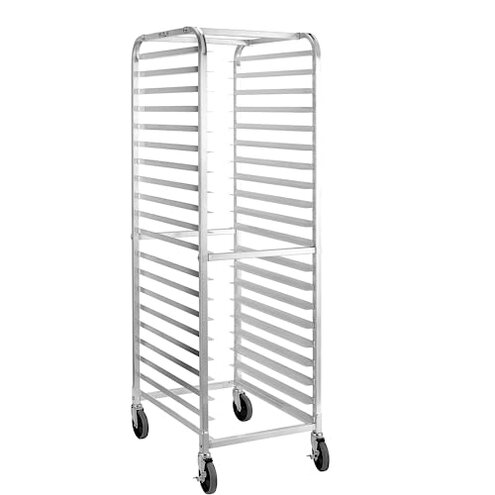
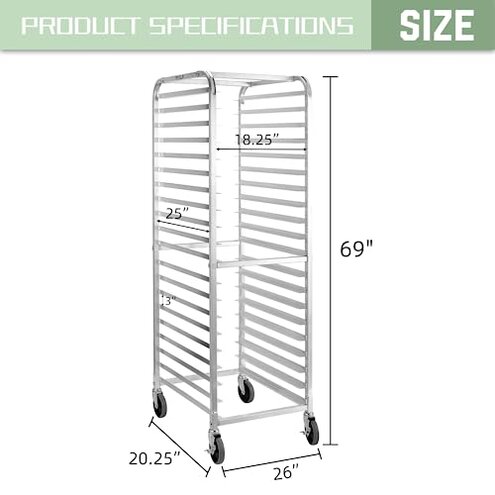
Product evaluated: HALLY SINKS & TABLES H Bun Pan Rack 20 Tier with Wheels, Commercial Bakery Racking of Aluminum for Full & Half Sheet - Kitchen, Restaurant, Cafeteria, Pizzeria, Hotel and Home, 26" L x 20" W x 69" H
Related Videos For You
Bun Pan Rack Assembly
Data basis I analyzed dozens of written reviews and several user videos collected through late 2025, with most feedback from written reviews and supported by photo and video demonstrations.
| Outcome | HALLY 20-Tier | Typical mid-range rack |
|---|---|---|
| Stability | Higher risk of wobble when loaded or moved, commonly reported during first use. | Lower risk—mid-range racks often use wider bases or reinforced frames. |
| Assembly | Time-consuming assembly and alignment issues after setup in many reports. | Quicker setup with clearer instructions and fewer alignment steps. |
| Mobility | Caster problems reported under heavy load; brakes may bind or fail to hold. | More reliable casters on mid-range models rated for frequent movement. |
| Durability | Mixed longevity signals; corrosion and bent rails appear after repeated use. | Better finish and thicker framing typical among mid-range alternatives. |
| Regret trigger | Primary—instability under load leads to pan tilt, jams, or falls. | Secondary—minor alignment or wear issues that rarely cause product failure. |
Why does this wobble under load?
Regret moment Buyers report the rack wobbles when several full pans are loaded and moved. This is commonly reported and most visible during first heavy use.
Usage anchor The wobble appears while pushing the rack with multiple full-size pans during kitchen shifts, and it often worsens on uneven floors.
Category contrast This is more disruptive than typical racks because a tall, narrow 20-tier frame multiplies sway and requires careful floor leveling to avoid pan tilt.
Is assembly harder than it should be?
- Early signs Missing or misaligned rails show up during the initial build in many reports.
- Frequency tier This is a primary complaint across written feedback and videos.
- Cause Tight tolerances and many parts require repeated adjustments to get shelf tracks square.
- Impact Extra assembly time and frustration for users expecting quick setup.
- Attempts Buyers often re-tighten bolts or re-square frames after first use to reduce binding.
Do the wheels hold up with daily movement?
- Common pattern Caster issues appear repeatedly under heavy, daily use in kitchens.
- Usage anchor Problems surface when moving a fully loaded rack across thresholds or tiling.
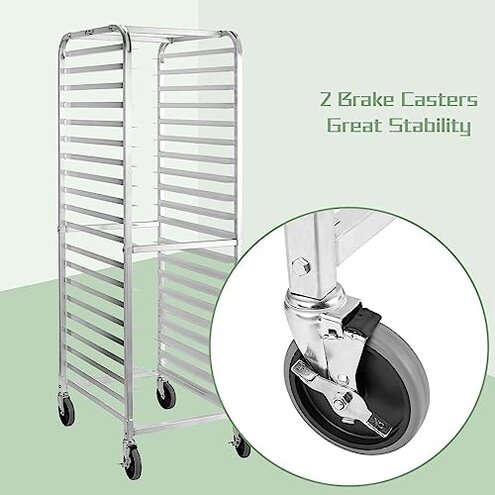
- Cause Casters may feel loose or brakes may not fully engage after repeated cycles.
- Impact Risk of uncontrolled movement or requirement to lock and manually steady the rack.
- Fixability Some buyers replaced casters with commercial-grade wheels to restore reliability.
- Hidden need Buying sturdier casters adds cost and installation time not obvious at purchase.
Will this survive heavy, repeated use?
Longevity concern Multiple reports show bent rails and finish wear after months of frequent use.
When it worsens Damage is most noticeable after daily high-load shifts and frequent loading/unloading.
Why worse than expected Compared to mid-range racks, this product seems less forgiving to heavy duty commercial cycling and may need more upkeep.
Illustrative excerpts
"Pans tilted when pushing full load across kitchen floor." — reflects a primary pattern of instability.
"Assembly took two people and several hours to square tracks." — reflects a secondary pattern about setup difficulty.
"Casters squeaked and one brake stuck after a month." — reflects a secondary pattern about mobility under daily use.
Who should avoid this
- High-frequency kitchens Avoid if you need a rack for constant, daily heavy-duty shifts.
- Mobile operations Avoid if you must move fully loaded racks across thresholds often.
- Low-hassle buyers Avoid if you do not want extra assembly, caster swaps, or periodic tightening.
Who this is actually good for
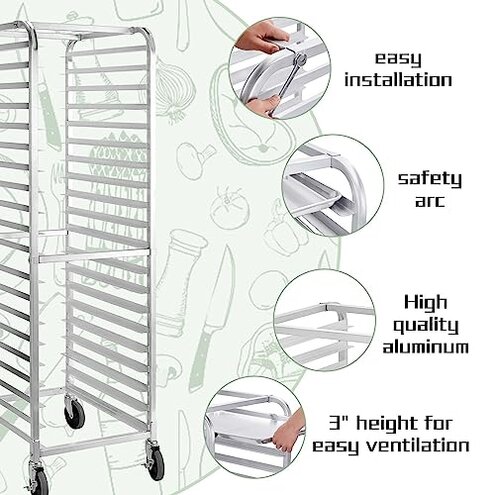
- Infrequent bakers Suitable if you use the rack occasionally and can avoid heavy, repeated moves.
- Stationary storage Works for dedicated storage in a single, level location where mobility is rare.
- Handy buyers OK for users willing to upgrade casters and tighten fittings for improved long-term use.
Expectation vs reality
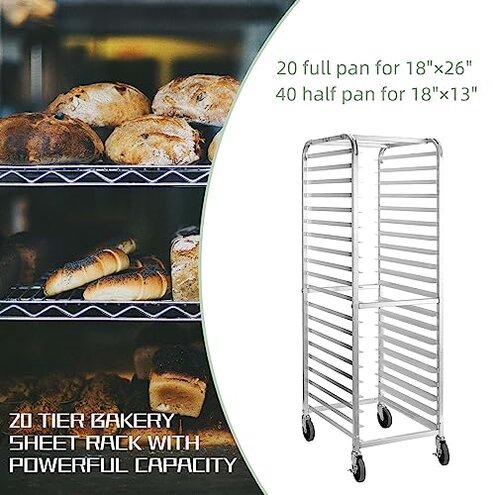
Expectation Reasonable for the category: a tall bakery rack should be stable when loaded.
Reality This model shows more sway and alignment work than most mid-range alternatives.
Expectation Reasonable for the category: casters should enable smooth, reliable movement.
Reality Caster performance degrades with heavy daily use, forcing replacements sooner than usual.
Safer alternatives
- Choose wider base Look for racks with broader footprints to reduce sway under full loads.
- Buy commercial casters Opt for heavy-duty, lockable wheels rated for higher weight cycles to avoid mobility failures.
- Prefer fewer parts Pick models marketed for quick assembly or with factory-aligned rails to avoid long setup.
- Check finish Select racks with thicker framing or reinforced rails for longer life in commercial kitchens.
The bottom line
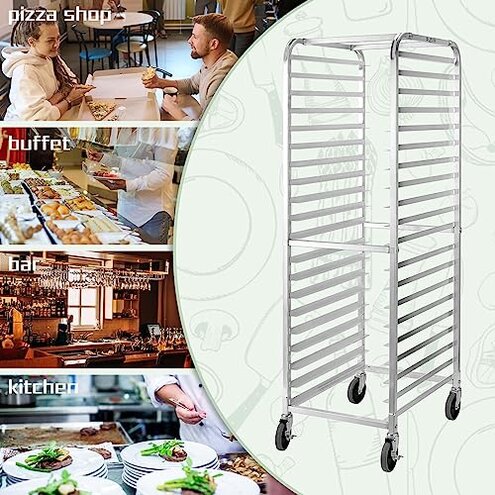
Main regret The primary trigger is instability under load, which leads to pan tilt and handling risks.
Why it matters This exceeds normal category risk because the tall 20-tier design magnifies sway and needs extra setup or hardware fixes.
Verdict Avoid this model if you need a plug-and-play, heavy-duty bakery rack; consider reinforced mid-range alternatives instead.
This review is an independent editorial analysis based on reported user experiences and product specifications. NegReview.com does not sell products.