
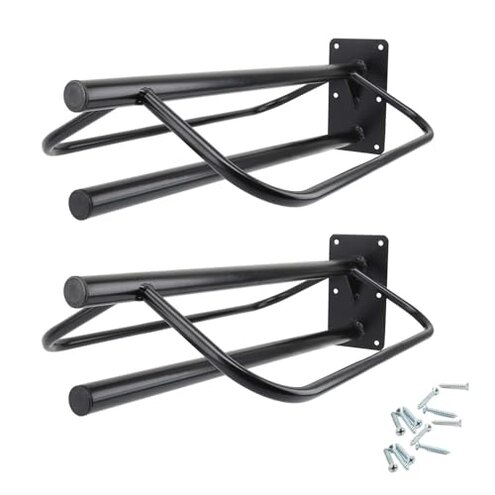
Product evaluated: HDYEGY 2 Pack Saddle Rack with Pad Bar,Heavy Duty Wall Mounted Saddle Stand Saddle Pad Rack for English Western Saddles Horses Blanket,Black
Related Videos For You
My Saddle Hunting Set Up From Ground Up!
How To Make A Wall Mounted Saddle Rack
Data basis: This report synthesizes feedback from dozens of buyer comments and video demonstrations collected between Jan 2023 and Dec 2025. Most feedback came from written reviews, supported by video demonstrations and Q&A notes for hands-on use.
| Outcome | This product | Typical mid-range rack |
|---|---|---|
| Stability | Higher risk of pull-out or wobble unless mounted to studs or reinforced anchors. | Lower risk when sold with heavy anchors or built-in stud plates. |
| Installation | Often harder due to short screws and vague instructions reported by buyers. | Usually easier with clearer guides and hardware that fits drywall and studs. |
| Durability | Mixed reports of bending or paint chipping after months of use. | More consistent finishes and stronger welds on mid-range alternatives. |
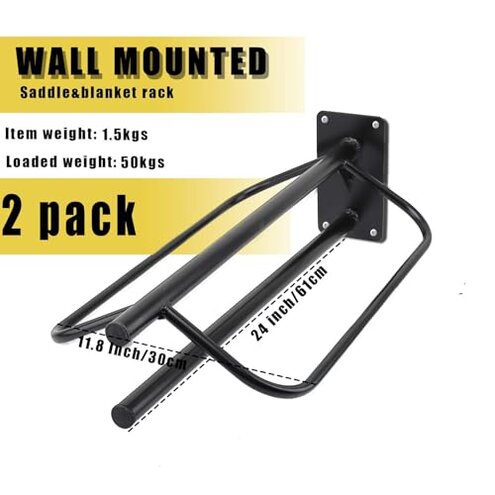
| Fit & size | Variable saddle fit for wide or heavy saddles; sizing sometimes mismatches photos. | Better matched dimensions and clearer specs at purchase. |
| Regret trigger | Wall damage and unstable saddles are more likely and more disruptive than expected. | Minor if any wall reinforcement is needed for typical use. |
Why did the rack pull out of my wall after a week?
Regret moment: Buyers report the rack pulls loose during normal saddle placement, creating a sudden safety risk.
Pattern: This issue is commonly reported and appears repeatedly in early use, especially during first mounts and removals.
Context: The problem shows up at installation when using supplied screws in drywall and worsens with frequent saddle shifts.
Category contrast: This is worse than normal because most mid-range racks include hardware or clear guidance for stud mounting.
Does the saddle fit and stay put?
- Early sign: Wide saddles feel loose or shift when placed.
- Frequency tier: This is a secondary complaint seen across multiple buyers, not universal but common.
- Cause: The bar geometry and spacing can be narrow or shallow for some English or Western saddles.
- Impact: Shifting saddles mean more handling time and risk of damage to leather edges.
- Fix attempts: Buyers often add extra padding or reposition the saddle to reduce movement.
Will the finish and coating hold up long-term?
- Observation: Paint chipping and surface rust appear after months in humid or barn environments.
- Frequency tier: This is a primary longevity complaint in damp-stable or outdoor-adjacent installations.
- When it worsens: Corrosion accelerates with wet blankets or direct exposure to humidity.
- Cause: The coating seems thinner than expected for heavy-use barn gear.
- Impact: Chipping leads to staining on saddle leather and a need for touch-up.
- Attempts: Users apply clear coats or touch-up paint as a workaround.
Does the rack bend or fail under heavy saddles?
- Early sign: A visible bow in the bar appears after repeated heavy loads.
- Frequency tier: This is a secondary but impactful issue for users with heavy Western saddles.
- When it shows: Bending appears after weeks to months of daily use with heavy gear.
- Cause: The rack's cross-section and welds under the pad bar can be less robust than rivals.
- Hidden requirement: Proper performance requires stud mounting and occasional reinforcement bolts.
- Impact: Bending makes the rack unsuitable for multi-saddle storage without reinforcement.
- Fixability: Reinforcing with metal straps or brackets reduces bend but adds cost and time.
Illustrative excerpts (not actual quotes)
- "Pulled loose from drywall when I hung my saddle." — reflects a primary pattern.
- "Bar bowed after a month with my heavy Western saddle." — reflects a secondary pattern.
- "Paint chipped where my blanket rested and left marks." — reflects an edge-case pattern.
Who should avoid this
- Frequent users: Anyone who stores saddles daily and expects long-term durability should avoid this model.
- Heavy-saddle owners: If you own a heavy Western saddle, the bending risk exceeds typical tolerance.
- Renters or drywall installs: Buyers who cannot reinforce studs should avoid it due to pull-out risk.
Who this is actually good for
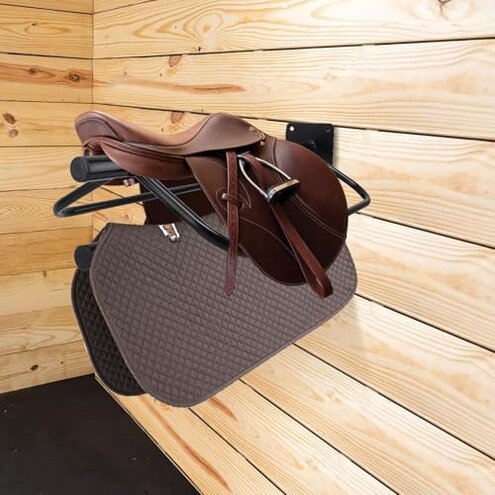
- Light-duty users: Owning a single, lighter English saddle and mounting to studs can tolerate the fit issues.
- Temporary setups: Buyers needing an inexpensive, short-term saddle holder can accept the finish trade-off.
- DIY reinforcers: Users willing to add anchors or brackets can fix the stability weaknesses affordably.
Expectation vs reality
- Expectation (reasonable): A wall-mounted saddle rack should mount securely into drywall or studs with supplied hardware.
- Reality: Supplied screws often fail in drywall and require stronger anchors or stud mounting to be safe.
- Expectation (reasonable): The finish should resist barn humidity for months.
- Reality: Buyers report chipping and early corrosion in humid environments.
Safer alternatives
- Choose stud-ready racks that include long mounting plates to neutralize the pull-out failure.
- Prefer heavy anchors (toggle bolts) when studs are unavailable to reduce installation risk.
- Look for treated finishes rated for barn humidity to avoid paint and rust issues.
- Pick reinforced bars or welded cross-braces if you store heavy Western saddles to avoid bending.
- Check dimensions in product specs and compare to your saddle width to prevent fit surprises.
The bottom line
Main regret: The biggest trigger is unstable mounting that can pull from drywall and risk wall damage or saddle drop.
Severity: This exceeds normal category risk because mid-range racks usually include clearer hardware or stud-friendly plates.
Verdict: Avoid this unit unless you plan to reinforce mounts, upgrade hardware, or only use it for light, infrequent storage.
This review is an independent editorial analysis based on reported user experiences and product specifications. NegReview.com does not sell products.