
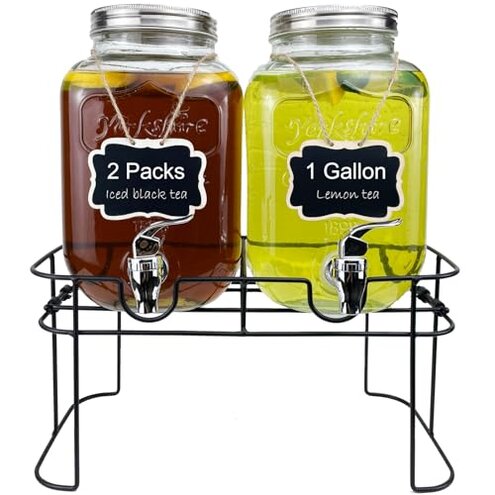
Product evaluated: 1 Gallon Glass Drink Dispenser for Parties, 2 Packs Juice Lemonade Ice Tea Water Dispenser with Stand, HENABLE Beverage Dispensers with Spigot for BBQ, Picnic, Party
Related Videos For You
How to fix a dripping water dispenser - refrigerator repair Kenmore Whirlpool Supco
10L Ceramic Water Dispenser with Desktop Wooden Stand
Data basis: This report is based on dozens of aggregated buyer feedback items collected from written reviews and photo/video attachments spanning a recent 12-month window. Most signals came from longer written breakdowns, supported by shorter “quick update” notes and occasional visual proof of problems during setup and serving.
| Buyer outcome | This HENABLE set | Typical mid-range alternative |
|---|---|---|
| Leak likelihood during serving | Higher-than-normal risk tied to spigot sealing and re-tightening | Moderate risk, usually fixed once and stays put |
| Stability on a table | More finicky due to stand alignment and two-jug layout | More forgiving with a single base and fewer contact points |
| Setup time and retries | Extra steps for gasket placement, thread feel, and test filling | Quicker one-and-done assembly is more common |
| Cleanup after events | More cleanup if drips happen around the spigots | Less mess when the valve stays sealed consistently |
| Regret trigger | Unexpected puddles right when guests start self-serving | Occasional drips that are easier to predict and contain |
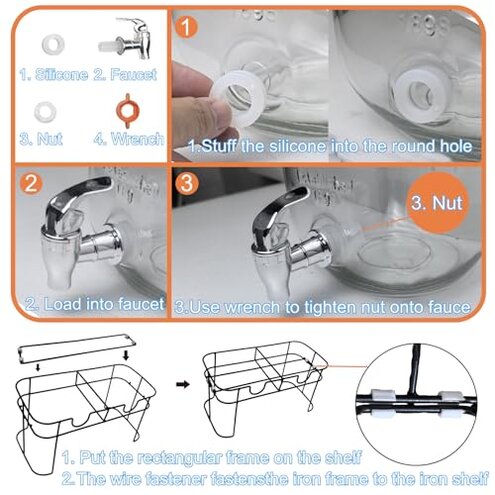
Why is it leaking even after you “installed it right”?
Regret moment usually hits after setup, when the jar is full and the first few pours begin. This is a primary issue in the feedback mix, and it is more disruptive than expected because leaks show up at the exact time you need “hands-off” serving.
- Recurring pattern: Leakage appears repeatedly in feedback, but it is not universal across all buyers.
- When it shows: Drips often start after installation and get worse during long serving sessions.
- Where it leaks: Complaints most often center on the spigot area, not the jar body.
- Hidden requirement: Many buyers report you must test-fill and re-tighten before an event to avoid surprises.
- Why it feels worse: Mid-range dispensers often need a first tightening, but this set is described as less forgiving if the gasket and threads are even slightly off.
- What people try: Common attempts include re-seating the gasket, re-orienting parts, and tightening until “snug,” which adds extra time.
- Fixability: Some reports say it becomes manageable after careful reassembly, while others describe persistent seeping that never fully stops.
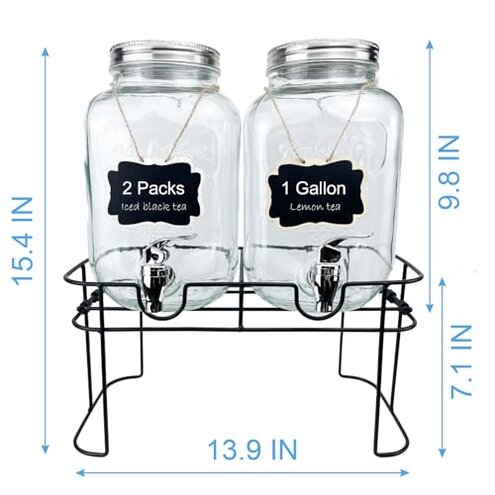
Does the stand wobble or feel sketchy once both jars are filled?
Regret moment is when you lift a full jar onto the stand and notice rocking or uneven contact. This is a secondary issue, but it can be more anxiety-inducing than expected because it affects confidence around guests and countertops.
Pattern note: The wobble concern shows up less often than leaks, but it is persistent in the comments that mention it. It tends to show up during placement and worsens when the table surface is slightly uneven.
Category contrast: Most mid-range party dispensers are imperfect, but they usually have a simpler single base. A two-dispenser stand can look nicer, yet it is often described as more sensitive to alignment and small bumps.
- Early sign: You notice tilt before pouring, especially after repositioning the stand.
- Surface sensitivity: The issue worsens on folding tables and textured outdoor surfaces.
- Serving impact: Some buyers describe needing a steadying hand while guests use the spigot.
- Workaround: A common mitigation is adding a mat or shim under the stand feet, which is extra prep.
Is the spigot hard to use without splashing or slow pours?
Regret moment is when guests try to self-serve and you get dribbles, a slow stream, or awkward handle movement. This is a secondary issue that becomes more noticeable as the event gets busy.
- Pattern strength: Usability complaints appear regularly, but are less dominant than the leak theme.
- When it appears: Problems show up during the first event, not months later.
- User-visible cause: Feedback often links it to valve feel and needing a careful angle under the spout.
- Mess factor: Drips can require a constant napkin under the spigot area.
- Why it’s worse: Many mid-range dispensers still drip a bit, but buyers describe this one as needing more babysitting to keep it tidy.
- Mitigation: Using smaller cups and placing a drip tray reduces mess, but adds table clutter.
- Event suitability: The issue is more frustrating at self-serve parties than at staffed drink stations.
- Fixability: Some buyers report it improves after re-tightening, while others still see occasional dribble.
Did you receive scratches or defects that ruin the “nice table” look?
Regret moment is unboxing and seeing cosmetic flaws that stand out under lights. This is an edge-case issue, but it is extra annoying because the whole point of clear dispensers is the display.
- Pattern: Cosmetic complaints are less frequent than performance issues, but they appear across multiple feedback styles.
- When it appears: It is noticed at first unboxing, before you even wash or assemble.
- Impact: Visual defects can make the set feel cheap on a wedding or buffet table.
- Category contrast: Small imperfections happen in mid-range glassware, but buyers expect fewer flaws on items marketed for events.
- Mitigation: Some buyers keep them for casual use and avoid close-up table placement.
Illustrative excerpt: “I tightened it twice and still found a wet ring under it.” Primary pattern reflecting repeated leak setup retries.
Illustrative excerpt: “Looks great empty, but once filled the stand didn’t feel steady.” Secondary pattern tied to stability confidence.
Illustrative excerpt: “The spout dribbles, so I had to keep paper towels underneath.” Secondary pattern about messy self-serve use.
Illustrative excerpt: “One jar arrived with marks that showed up on the buffet table.” Edge-case pattern focused on cosmetic presentation.
Who should avoid this
Busy hosts who want true self-serve should skip it, because leak risk and spout dribble can demand constant monitoring.
Formal-event planners should avoid it if presentation is critical, since cosmetic defects and wobble reports can undermine a polished setup.
Outdoor entertainers should pass, because stand sensitivity on uneven tables can increase wobble and spill anxiety.
Anyone who hates tinkering should avoid it, since the hidden requirement is test-filling and re-tightening before guests arrive.
Who this is actually good for
Casual gatherings where you can place a tray under the spouts can work, because you are willing to tolerate extra cleanup.
Staffed drink stations fit better, because one person can manage the finicky pouring and stop drips fast.
Light-use households that only bring it out occasionally may be fine, if you accept setup checks as part of the routine.
Budget-focused buyers who mainly want the look of a two-jar setup may accept the more sensitive stand in exchange for price.
Expectation vs reality
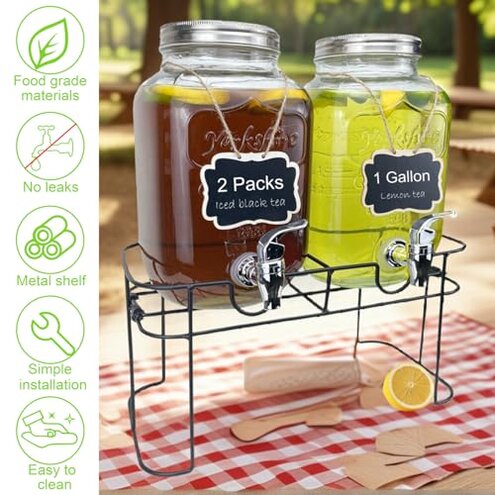
- Expectation: A reasonable mid-range dispenser needs one careful install and then stays sealed.
- Reality: Feedback suggests this set can need reassembly and re-tightening, especially before long events.
- Expectation: A stand should feel stable on typical party tables.
- Reality: The two-jug layout is described as more sensitive to uneven surfaces than many simpler alternatives.
Expectation: Guests can self-serve without coaching. Reality: Some buyers report needing paper towels and reminders to avoid dribbles.
Safer alternatives
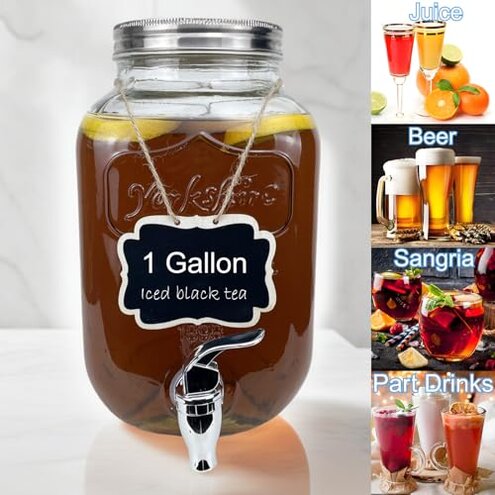
- Choose metal spigots with proven seals to reduce the specific spigot leak risk described in feedback.
- Prefer a single-dispenser base if stability matters, since it is typically less sensitive than a two-jar stand.
- Look for replacement parts availability, so a bad spigot or gasket does not force a full return.
- Buy for your surface by picking wider feet or a non-slip base if you host outdoors, which helps avoid wobble.
- Prioritize drip control features like smoother valve action when you want true self-serve, to cut down paper-towel duty.
The bottom line
Main regret comes from leaks and drips that show up after setup when the dispensers are finally full and in use. The risk feels higher-than-normal for the category because it can demand extra testing, re-tightening, and cleanup during events. If you need reliable self-serve, it is a skip, and a sturdier, better-sealing mid-range option is safer.
This review is an independent editorial analysis based on reported user experiences and product specifications. NegReview.com does not sell products.