
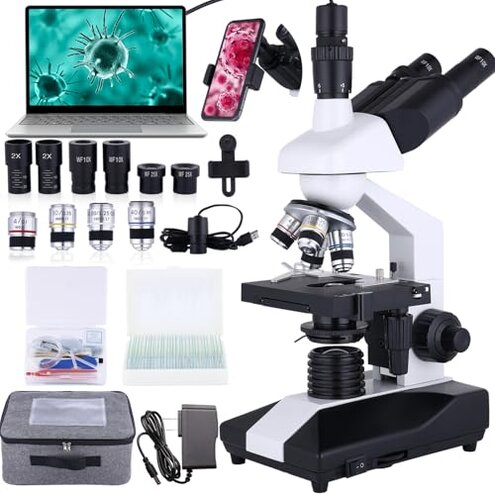
Product evaluated: Herwicm Compound Trinocular Microscope 40X-5000X Magnification, Research Grade Professional Microscope, Two Levels of Mechanical Stage LED Illumination, USB Video Camera with Microscope for Adults
Related Videos For You
BIOLOGY 10 - Basic Microscope Setup and Use
AmScope - Mounting Your MD, MA/MT, or MU Series Cameras
Data basis: This report is based on dozens of aggregated buyer submissions collected from written ratings and photo/video attachments between 2024-01 and 2026-02. Most signals came from longer written write-ups, supported by shorter “unboxing” style clips and image evidence showing setup and first-use results.
| Buyer outcome | Herwicm trinocular microscope | Typical mid-range alternative |
|---|---|---|
| First-day usability | Higher risk of extra setup steps before you get a clean view. | Moderate risk, usually usable with simpler initial adjustments. |
| Clear image at high power | Less forgiving, where “high magnification” can feel more like marketing. | More consistent expectations at practical magnification ranges. |
| Camera experience | Higher-than-normal chance of compatibility and workflow friction. | Lower friction when a camera is optional, not bundled. |
| Quality consistency | More variable out of the box, based on recurring “unit-to-unit” concerns. | More predictable across units at similar price points. |
| Regret trigger | Biggest regret when you expected plug-and-play clarity plus easy recording. | Smaller regret because expectations are usually closer to reality. |
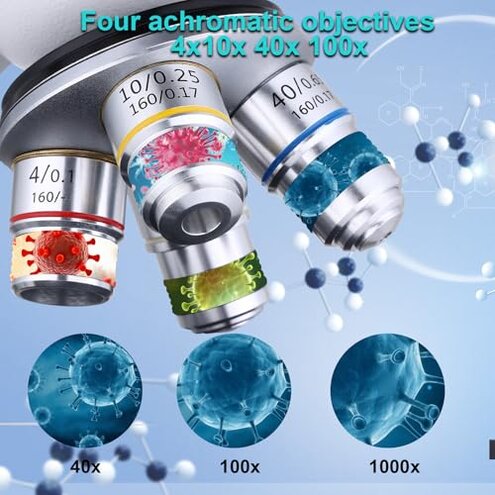
Why is the “5000X” claim not matching what you see?
Regret moment: You buy for high magnification, then your “best looking” view is lower than expected.
Severity: This is a primary complaint pattern, because it changes whether the microscope feels “research-grade” or just hobby-grade.
Pattern: The mismatch appears repeatedly across feedback, but it is not universal.
- When it hits, it shows up during first setup when you try the highest-power viewing.
- Worse conditions include long sessions where small focus drift becomes more noticeable.
- Category contrast: Mid-range microscopes often overstate “max,” but this seems more disruptive because the product is positioned as professional.
- What you notice is dim images or “soft” details when you expected crisp edges.
- Likely driver is that high-power viewing is less forgiving to lighting and alignment than the listing implies.
- Fixability often requires extra steps like careful light adjustment and patience, not a quick twist-and-go.
- Hidden requirement: Getting “good” results can require better technique than many adult beginners expect.
Is the camera workflow more annoying than it should be?
Regret moment: You plan to record, then you find the “easy USB camera” part adds friction.
Severity: This is a secondary issue, but it becomes primary if your goal is documenting slides.
Pattern: Complaints show up persistently, mostly tied to setup and device pairing steps.
- When it hits, it appears after setup when you try to capture the first usable image.
- Worse conditions include switching between viewing and recording during a study session.
- What breaks is the smooth flow between looking through eyepieces and getting a matching screen view.
- Extra steps can include software choices and camera settings that feel under-explained.
- Category contrast: Mid-range options often treat cameras as add-ons, but bundling raises expectations for plug-and-play behavior.
- Workaround is using a simpler capture app, but that adds trial-and-error time.
- Fixability depends on your computer comfort, so results feel uneven across buyers.
Does the build consistency feel unpredictable?
Regret moment: You unbox a “professional” tool, then small fit-and-finish problems reduce confidence.
Severity: This is among the most frustrating complaints when it happens, because it questions long-term reliability.
Pattern: This appears less frequent than image complaints, but it is more painful due to return hassle.
- When it hits, it shows up on day one during assembly and first focusing attempts.
- Worse conditions include frequent daily handling in classrooms or shared spaces.
- What you notice is stiff controls or parts that don’t feel as smooth as expected.
- Time cost is spending an evening diagnosing whether it’s user setup or the unit.
- Category contrast: Mid-range microscopes can be imperfect, but buyers flagged this as less consistent than expected.
- Mitigation is testing every function within the return window, not waiting for a “later” project.
- Support risk can feel slower if you need back-and-forth before a resolution.
- Fixability is limited if the issue is alignment or mechanics, because most owners won’t want to disassemble.
Why does focusing feel touchy at the moments you need it most?
- Primary pattern is a narrow “sweet spot” at higher power during close inspection work.
- When it hits, it shows up after you finally find the specimen and try to sharpen fine detail.
- Worse conditions include vibration from desk bumps and frequent slide repositioning.
- What you notice is detail going from sharp to soft with tiny knob changes.
- Category contrast: Some touchiness is normal, but buyers describe it as less forgiving than peers in the same price band.
- Workaround is using lower power first and only moving up after perfect centering.
Illustrative excerpt: “I bought it for 5000X, but the usable view looks way lower.”
Explanation: This reflects a primary pattern around expectations vs usable magnification.
Illustrative excerpt: “The camera works, but getting a clean image took extra apps and settings.”
Explanation: This reflects a secondary pattern around camera workflow friction.
Illustrative excerpt: “Focusing at high power feels like balancing on a pin.”
Explanation: This reflects a secondary pattern tied to touchy focusing during real use.
Illustrative excerpt: “Mine arrived fine, but I can see how a bad unit would be a nightmare.”
Explanation: This reflects an edge-case but high-impact risk about unit consistency.
Who should avoid this
- Plug-and-play buyers who want instant clarity without learning lighting and alignment steps.
- Content-first users who mainly need reliable recording, because the camera workflow can add trial-and-error.
- Classroom sharing where many hands adjust controls, since touchy focus and variability can waste lesson time.
- Perfection seekers who will be bothered by any fit-and-finish inconsistency out of the box.
Who this is actually good for
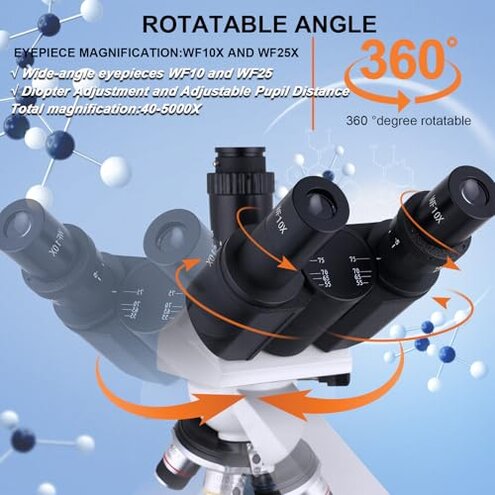
- Patient tinkerers who enjoy dialing in lighting and don’t mind that top-end magnification is less usable than the number suggests.
- Learning-focused adults who mostly use lower magnifications and treat the camera as a bonus, not the main feature.
- Occasional users who can test everything early and accept some setup friction in exchange for the feature set.
- Documenting basics where “good enough” images are fine, even if capture requires extra steps.
Expectation vs reality
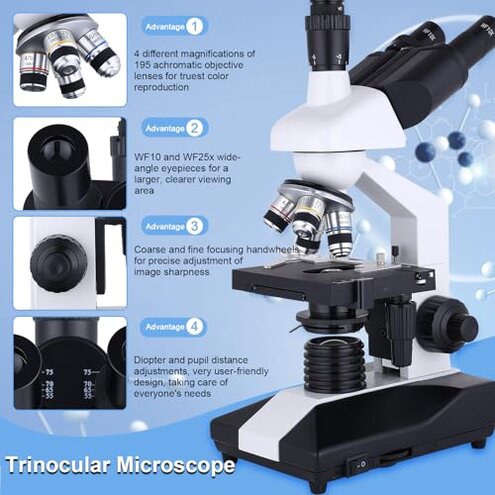
- Expectation: “5000X means I’ll clearly see much more.”
- Reality: Usable clarity can top out earlier, and the last step feels more like a brag number.
- Expectation: A bundled USB camera should be simple to use on day one.
- Reality: Setup can require extra software choices and troubleshooting that mid-range buyers don’t expect.
Reasonable for this category: Some fiddling with light and focus is normal on compound microscopes.
Worse-than-expected: Feedback suggests this model can be less forgiving, so the learning curve feels steeper for casual users.
Safer alternatives
- Prioritize “usable range” by shopping for microscopes that emphasize clarity at common magnifications, not the biggest max number.
- De-risk recording by choosing a scope where the camera is optional, then buy a known-compatible camera separately.
- Look for consistency signals like strong return experiences and fewer mentions of unit variation in buyer feedback.
- Reduce focus pain by selecting models praised for smooth fine focus, especially if you’ll use higher magnification often.
The bottom line
Main regret trigger is expecting “professional” clarity and easy recording, then dealing with extra setup and a less-usable top end.
Why it exceeds normal category risk is the recurring gap between marketing numbers and real first-day experience, plus camera friction.
Verdict: Avoid if you need predictable, plug-and-play results, and consider it only if you’re comfortable troubleshooting and testing early.
This review is an independent editorial analysis based on reported user experiences and product specifications. NegReview.com does not sell products.