
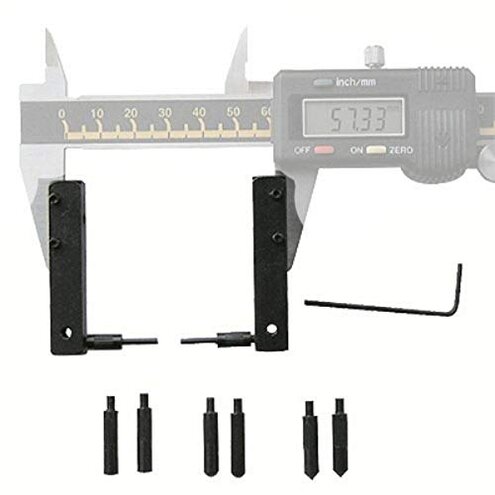
Product evaluated: HHIP 4100-0044 Caliper Accessory Kit
Related Videos For You
How to Use a Brake Caliper Tool
I wish i’d known this sooner, How to use calipers like a pro
Data basis: This report synthesizes dozens of buyer experiences collected from written ratings and Q&A-style feedback spanning a multi-year window up to 2026. Most usable signals came from short written notes about compatibility and day-to-day measuring, with supporting detail coming from longer troubleshooting explanations. Patterns below focus on recurring, buyer-visible problems rather than one-off defects.
| Buyer outcome | HHIP 4100-0044 | Typical mid-range alternative |
|---|---|---|
| Fit on your caliper | Higher risk of not fitting without trial-and-error. | Moderate risk, usually fits common caliper jaws. |
| Time to first use | More setup and re-checking before reliable measurements. | Quicker “install and go” for most buyers. |
| Measurement confidence | Less consistent results if parts sit slightly off-center. | More forgiving alignment in typical accessory sets. |
| Hardware frustration | More frequent complaints about tiny screws loosening or stripping. | Lower odds of fasteners becoming the main problem. |
| Regret trigger | “Doesn’t fit my caliper” after the kit arrives. | “Not perfect, but usable” is more common. |
“Why won’t these parts fit my caliper like the listing implied?”
Regret moment: You unbox it, try to slide the attachments on, and the kit either won’t seat or feels wobbly. Severity is high because a measuring tool accessory that doesn’t mount securely is effectively dead-on-arrival for many shoppers.
Pattern: This shows up repeatedly and is a primary issue, but it is not universal. It usually happens on first setup, before you even take a measurement.
Worse than normal: Some fit-checking is expected with caliper add-ons, but buyers describe this kit as less compatible than typical mid-range sets that “just work” with common jaw shapes.
- Early sign: The attachment binds in the slot or won’t sit flush on the jaw.
- Primary frequency: Compatibility trouble appears among the most common reasons for dissatisfaction.
- Condition trigger: The mismatch is more obvious with non-HHIP calipers or jaws with slightly different thickness.
- Impact: A loose fit creates tilted contact, so inside or outside readings can feel unreliable.
- Fix attempt: Buyers often try repositioning and re-tightening, which adds extra steps every session.
- Fixability: If the slot sizing is off for your tool, it’s hard to salvage without modifying parts.
- Hidden requirement: You may need to measure your jaw and compare to the kit’s slot width before buying.
“Why do the readings feel inconsistent after I install the points?”
Regret moment: You get the parts on, but the first few measurements don’t match your expectations, especially when you repeat the same check. Severity is more disruptive than it sounds, because the whole point is trust in the number.
- Recurring: This is a secondary issue that shows up persistently once buyers start measuring real parts.
- When it hits: It tends to appear during use, after tightening and taking several measurements in a row.
- Worsens with: Long sessions and frequent swapping between points can lead to re-alignment drift.
- Category contrast: Mid-range alternatives are usually more self-centering, so small mounting errors don’t punish you as much.
- Root cause feel: Buyers describe a subtle off-angle seating that changes contact on edges.
- Buyer impact: You spend extra time double-checking with other tools or repeating measurements.
- Mitigation: Careful zeroing and consistent pressure helps, but it adds discipline most casual users won’t maintain.
- Not for: Anyone relying on quick checks for tight tolerances may find this frustrating.
“Why are the tiny screws and clamps such a hassle?”
Regret moment: The kit includes multiple points and screws, but the hardware becomes the thing you fight. Severity is moderate, but it’s a time sink that makes the kit feel fussy.
- Commonly reported: Hardware annoyance is a primary-to-secondary complaint depending on the buyer’s caliper.
- When it appears: It shows up after repeated changes between configurations, not just once.
- Worsens with: Frequent point swaps and carrying the kit around increases the chance of loosening or misplacing parts.
- More disruptive: Many mid-range kits have fasteners that feel more forgiving, so you don’t dread adjustments.
- User-visible cause: Small screws can feel easy to strip if you over-tighten even slightly.
- Impact: You lose confidence because a barely loose clamp can change contact geometry.
- Workaround: Some buyers resort to careful torque and re-checking, which adds extra steps to every measurement.
“Why does ‘fits many brands’ still feel like a gamble?”
Regret moment: You bought it expecting broad compatibility, then learn that “many” still excludes your specific tool. Severity is high because it turns into a return-or-modify decision.
- Persistent: This is an edge-case-to-secondary issue, but it appears across multiple buyer contexts.
- When it hits: The gap shows up at purchase time and becomes obvious on first installation.
- Hidden requirement: Buyers effectively need a compatibility checklist and jaw measurements before ordering.
- Category contrast: A typical mid-range set may still need fit checks, but this one is described as less predictable.
- Impact: The time cost is in diagnosing whether the problem is your caliper or the kit.
- Mitigation: If you already own HHIP calipers or a known-matching model, the risk is lower.
Illustrative excerpt: “It said it fits, but it won’t slide onto my jaws.”
Pattern note: This reflects a primary compatibility pattern tied to first setup.
Illustrative excerpt: “I can mount it, but my numbers change when I re-check.”
Pattern note: This reflects a secondary consistency pattern during repeated measuring.
Illustrative excerpt: “The screws are tiny, and I’m constantly re-tightening.”
Pattern note: This reflects a secondary hardware-friction pattern after repeated swaps.
Illustrative excerpt: “Works only after fiddling, which defeats the point of a quick caliper.”
Pattern note: This reflects a primary usability regret trigger during real workflow use.
Who should avoid this
- First-time caliper owners who want plug-and-play accessories, because fit risk is a primary complaint on first setup.
- Anyone measuring for repeatability in production-like tasks, because inconsistent readings are a persistent secondary pattern during sessions.
- Buyers who hate fiddly hardware, because tiny screws and frequent re-tightening are commonly reported after swapping points.
- Shoppers buying blind for “many brands,” because the hidden requirement is measuring jaw/slot compatibility before purchase.
Who this is actually good for
- Owners of a known-compatible caliper who can tolerate a fit check and minor adjustment time.
- Hobbyists doing occasional measurements where re-checking is acceptable, because the consistency burden is manageable at low frequency.
- Users comfortable handling small fasteners who won’t mind hardware upkeep between configurations.
- Shops that can verify the slot/jaw match before ordering, because that removes the biggest regret trigger.
Expectation vs reality
| Expectation | Reality buyers report |
|---|---|
| Reasonable for this category: minor setup, then stable measuring. | Worse-than-expected setup friction, with recurring re-seating and re-tightening during use. |
| Fits many brands means most common calipers will work. | Less predictable compatibility, with first-use discoveries that it doesn’t mount securely. |
| Accessory kit speeds up inside/outside measuring. | Extra steps appear, like repeat checks and alignment discipline to trust readings. |
Safer alternatives
- Confirm fit by measuring your caliper jaw thickness and comparing to accessory slot sizing, to neutralize the primary compatibility risk.
- Choose a mid-range accessory set marketed to your caliper brand/model, to reduce the gamble implied by “fits many brands.”
- Prioritize kits with more secure, easier-to-handle fasteners, to avoid recurring re-tightening and stripped-screw frustration.
- Look for designs that self-center on jaws, to reduce inconsistent readings when you re-measure in the same session.
The bottom line
Main regret is buying an accessory kit that doesn’t mount securely on your specific caliper, which is a primary and more disruptive-than-normal risk for this category. Second, even when it mounts, buyers commonly report extra effort to keep readings consistent due to alignment and hardware fuss. Verdict: If you can’t verify compatibility ahead of time, it’s safer to avoid this kit and pick a more predictable mid-range option.
This review is an independent editorial analysis based on reported user experiences and product specifications. NegReview.com does not sell products.