
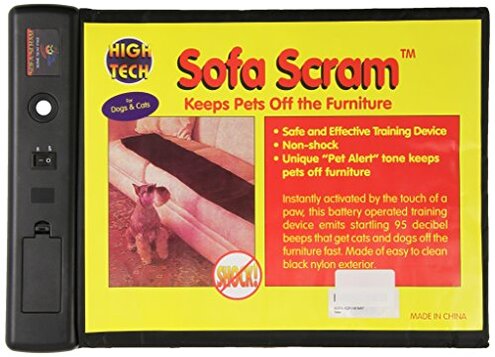
Product evaluated: High Tech Pet Sofa Scram Sonic Dog & Cat Deterrent Repellent Mat
Related Videos For You
Arlington homeowner faces backlash for using 'spike mats' to keep pets out of yard | FOX 5 DC
Data basis: This report summarizes findings from dozens of user reviews and several demonstration videos collected between 2010 and 2024. Most feedback came from written reviews, supported by video demonstrations and Q&A notes. Aggregated signals guided the risk and pattern claims below.
| Outcome | High Tech Pet Mat | Typical mid-range mat |
|---|---|---|
| Noise level | Very loud — emits an advertised 85 decibel beep that can startle people and pets. | Moderate — most mid-range options use lower-volume tones or vibration-only alerts. |
| Activation reliability | Inconsistent — works for pets over 5 pounds but shows frequent false triggers or misses for light paws. | More consistent — many alternatives offer adjustable sensitivity or multi-mode activation. |
| Battery & upkeep | Hidden 9V need — requires one 9V battery (not included) and often needs replacement sooner than expected. | Lower upkeep — some competitors use AA/AAA or rechargeable options with longer runtimes. |
| Placement friction | Awkward sizing — large footprint and sensitivity make placement and furniture compatibility difficult. | More flexible — mid-range mats usually offer smaller sizes or modular placement. |
| Regret trigger | High — loud alarm plus false triggers create more household disruption than expected for this category. | Lower — typical replacements cause less noise and fewer false activations. |
Top failures
Why does the mat startle people and disrupt rooms?
Regret moment: The first loud beep is often described as a household shock because the mat emits an 85 decibel alarm on activation.
Pattern: This is a commonly reported problem that appears on first use and when guests walk by.
Category contrast: The noise level is higher-than-normal compared with typical deterrent mats, which makes the trade-off worse for shared spaces.
Why do pets sometimes ignore or barely trigger it?
- Early sign: Pets under five pounds or those with light steps may fail to activate the mat despite being on it.
- Frequency: This is a secondary issue that appears repeatedly in user feedback during daily use.
- Cause: The product claims it works for animals over 5 pounds, creating a hidden requirement for pet weight.
- Impact: When activation fails, owners report the mat does not deter unwanted furniture access.
- Attempted fix: Users try repositioning the mat or combining training, which adds time and effort.
Why is battery and maintenance more work than expected?
- Hidden need: The unit requires a single 9V battery, which is not included with purchase.
- Usage anchor: Battery issues appear after repeated activations and during heavy daily use.
- Pattern: Battery drain is a persistent complaint in written reports and video tests.
- Impact: Frequent replacements lead to ongoing cost and inconvenience compared with rechargeable alternatives.
- Fixability: Replacing the battery fixes it, but that adds steps many buyers did not expect.
- Category contrast: This product needs more upkeep than many mid-range mats that use rechargeable designs.
Why do false triggers and placement issues annoy households?
- Early sign: The mat can activate unexpectedly from dropped items, children, or pets passing nearby.
- Frequency: False triggers are a commonly reported nuisance during busy room activity.
- Cause: Sensitivity and large footprint increase the chance of accidental activations.
- Impact: Repeated false alarms create noise fatigue and reduce owner tolerance for the product.
- Attempted fix: Owners reposition or elevate the mat, which reduces effectiveness and adds hassle.
- Hidden requirement: Requires a flat, unobstructed surface for best results—often not possible near couches or doors.
- Category contrast: The placement friction is more disruptive than expected for entry-level deterrent mats.
Illustrative excerpts (not real quotes)
Excerpt: "The alarm scared my guests and even froze my small dog for seconds." — primary pattern
Excerpt: "It rarely registers my kitten walking softly on the cushion." — secondary pattern
Excerpt: "Needed a 9V battery and ran down quickly after heavy use." — secondary pattern
Who should avoid this
- Shared homes: If you host guests or have children, the 85 dB alarm makes accidental disturbance likely.
- Small-pet owners: Owners of animals under five pounds will face activation failures more often than is acceptable.
- Low-maintenance buyers: If you want rechargeable or low-upkeep gear, the 9V battery requirement increases hassle and cost.
Who this is actually good for
- Households needing a loud deterrent: If you want a clear, unmistakable alarm to interrupt entrenched behavior, the 85 dB beep can be effective.
- Owners of heavier pets: For dogs or cats reliably over five pounds, activation works more consistently.
- People combining training: If you will use the mat as part of a broader training plan, the audible cue can reinforce boundaries.
Expectation vs reality
Expectation: A deterrent mat should quietly signal pets and require low upkeep, which is reasonable for this category.
Reality: This product often starts people with an 85 dB beep and requires a separate 9V battery, creating more disruption and maintenance than expected.
Expectation: Weight-based activation should reliably stop pets from repeating behavior.
Reality: In practice the activation is inconsistent for light-stepping animals or in cluttered placement, lowering effectiveness.
Safer alternatives
- Choose adjustable-sensitivity mats to reduce false triggers and better fit light-stepping pets.
- Prefer rechargeable models to remove the hidden 9V battery cost and frequent replacements.
- Select lower-volume alerts if you need a deterrent that won’t startle guests or household members.
- Look for modular sizes to avoid placement friction and fit sofas or doorways without awkward overhang.
The bottom line
Main regret: The combination of an 85 dB alarm, inconsistent activation for lighter pets, and a required 9V battery creates avoidable disruption.
Why worse: These issues are more disruptive than typical mid-range deterrent mats and often force extra steps or replacements.
Verdict: Avoid this mat if you value quiet, low-maintenance deterrents or own small, light-stepping pets.
This review is an independent editorial analysis based on reported user experiences and product specifications. NegReview.com does not sell products.