
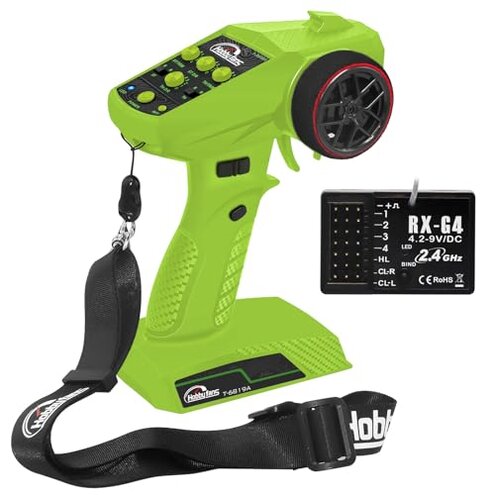
Product evaluated: Hobby Fans RC Radio System 4CH 2.4G RC Transmitter with Receiver and Lanyard Anti-Jamming Remote Controller for RC Car Crawler Boat, Green & Black
Related Videos For You
FlySKY FS- i6 Basic 4ch Setup
How does an RC car work? Hobby Electronics Explained for Beginners!
Data basis: This report aggregates feedback from dozens of customer-written reviews and video demonstrations collected between 2023-10 and 2025-12. Most feedback came from written reviews, supported by a smaller set of video demos, with product Q&A and photos used to confirm patterns.
| Outcome | This product | Typical mid-range alternative |
|---|---|---|
| Connection stability | Intermittent signal drops reported under normal range | Stable link across normal operating distance |
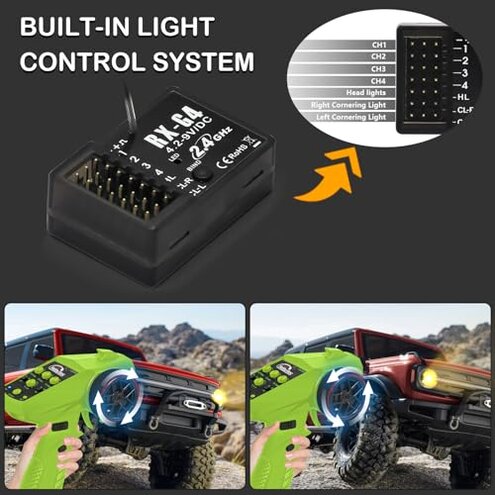
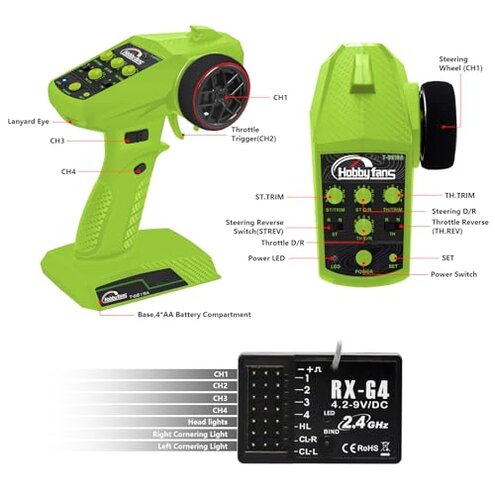
| Compatibility | Limited to the bundled receiver only (hidden requirement) | Interchangeable receivers common in mid-range kits |
| Setup friction | Confusing mixing modes and light controls add extra steps | Simpler setup and clearer controls are typical |
| Durability | Reports of control drift or loose parts after repeated use | More robust fit and finish in comparable models |
| Regret trigger | Signal drops during driving make the product higher risk | Interference issues are less frequent with alternatives |
Top failures
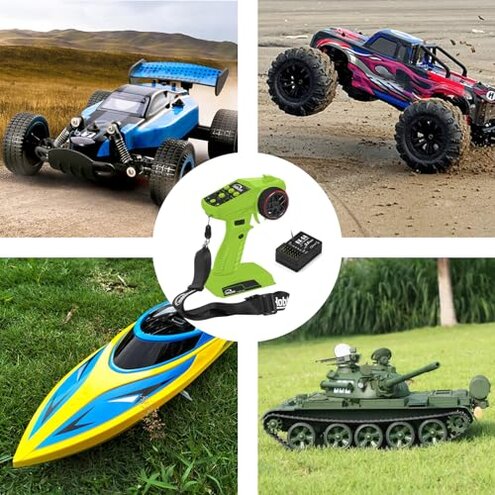
Why does the controller lose control while driving?
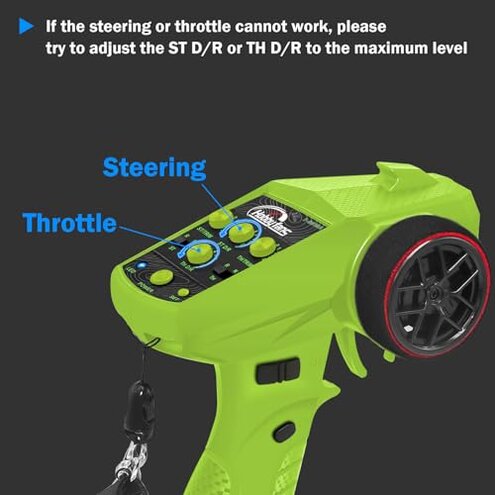
Signal drops: Intermittent loss of steering or throttle control is a common complaint and appears repeatedly in reports.
When it shows up: The issue typically appears during normal driving at modest distances and can occur with short maneuvers or turns.
Category contrast: This is worse than the mid-range baseline because stable connection is expected from 2.4G systems and drops are more disruptive than typical for the class.
Is the transmitter compatible with other receivers?
- Compatibility: The transmitter is limited to the receiver packaged with the set, which is repeatedly noted as a hidden requirement.
- Setup timing: Buyers discover this restriction at first setup, often after attempting to swap receivers.
- Practical impact: This increases replacement cost and repair friction compared with typical kits that allow receiver swapping.
- Fixability: The restriction is not easily fixed at home and usually requires buying the original receiver.
- Pattern rank: This counts as a primary issue because it permanently limits future upgrades.
Why are the controls confusing or imprecise?
- Control feel: Mixing modes and light controls add setup confusion for users who expect straightforward steering and throttle.
- Early signs: Users notice odd steering response during the first drive or after switching modes.
- Frequency tier: This is a secondary issue that appears commonly enough to affect overall usability.
- Cause: The mixing control requires a specific button sequence which adds extra steps compared to simpler transmitters.
- Impact: The learning curve increases crash risk for beginners during initial use.
- Attempted fixes: Reported remedies include repeating setup steps, recalibration, or returning the unit.
- Hidden requirement: Proper mixing needs a patient user familiar with non-intuitive button sequences.
Does the unit hold up after regular use?
- Durability reports: Some buyers report loose controls or degraded responsiveness after repeated handling.
- When it worsens: Problems tend to surface after frequent sessions rather than a single use.
- Severity: This is a secondary-to-edge-case failure but more disruptive than expected for mid-range kits.
- Early warning: Slight wobble in sticks or wheel rotation during the first weeks is a common sign.
- Impact on use: Drift or looseness increases trimming time and can cause unpredictable steering.
- Buyer fixes: Users report temporary fixes like tightening screws, but these are not permanent solutions.
- Replacement pain: Because of receiver compatibility limits, replacing the whole system is often the only full fix.
- Category contrast: Typical mid-range transmitters usually need less upkeep and allow partial part swaps.
Illustrative excerpts
Illustrative: "Lose steering mid-turn, car becomes uncontrollable instantly." — Primary pattern.
Illustrative: "Transmitter only worked with its receiver, wasted time swapping parts." — Primary pattern.
Illustrative: "Mixing modes are cryptic; had to watch videos to get lights right." — Secondary pattern.
Who should avoid this
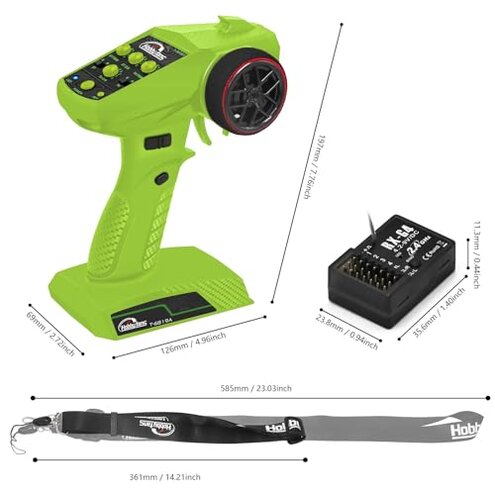
Beginners: New drivers who need reliable out-of-box stability should avoid this unit due to signal and control learning issues.
Hobbyists needing upgrades: Buyers who plan to swap receivers or upgrade are poorly served by the compatibility limitation.
High-intensity users: Frequent drivers who expect long-term toughness should avoid this unit because of reported durability decline.
Who this is actually good for
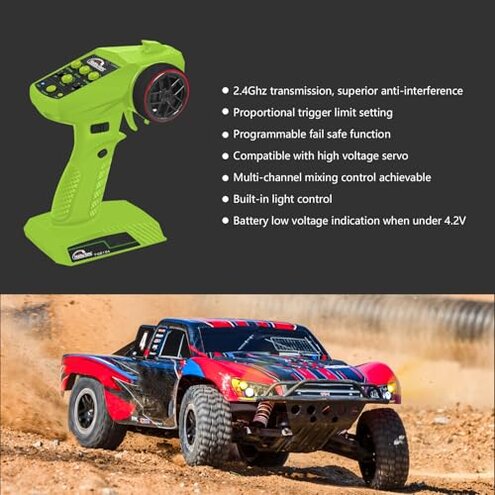
Budget casual users: Someone wanting a low-cost starter who accepts occasional reconnects can tolerate the signal risk for the price.
Non-upgraders: A buyer who keeps the set intact and never swaps receivers can tolerate the compatibility restriction.
Hobby tinkerers: Users comfortable repairing or tightening parts can live with the durability quirks and save money.
Expectation vs reality
Expectation: A 2.4G RC transmitter should provide stable control in normal driving conditions.
Reality: This product shows intermittent drops and control quirks more often than is reasonable for mid-range gear.
Expectation: Transmitters typically allow receiver swaps.
Reality: This unit is locked to its bundled receiver, making repairs and upgrades harder.
Safer alternatives
- Check compatibility: Pick transmitters that list interchangeable receivers to avoid hidden pairing limits.
- Prioritize stability: Look for user reports highlighting consistent connection in real-world use before buying.
- Prefer documented setup: Choose models with clear manuals or guided mixing to reduce setup friction.
- Inspect durability: Favor transmitters with reports of robust controls after months of use.
- Video check: Watch real-world operation clips to verify signal performance under driving conditions similar to yours.
The bottom line
Regret trigger: The main risk is signal instability during normal driving, which is among the most disruptive complaints for this category.
Severity: Combined with the receiver lock, these issues raise replacement and repair costs above typical mid-range expectations.
Verdict: Avoid this unit if you need reliable connectivity or upgrade paths; it only suits buyers willing to accept these trade-offs.
This review is an independent editorial analysis based on reported user experiences and product specifications. NegReview.com does not sell products.