
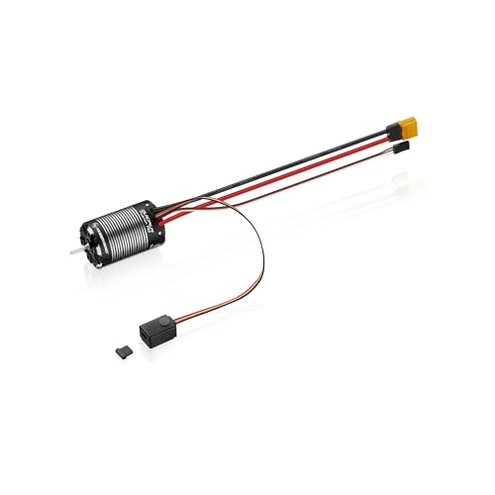
Product evaluated: HOBBYWING Quicrun Fusion PRO 2300KV FOC System 2in1
Related Videos For You
RC Basics - Understanding Electronic Speed Controllers (ESC)
How to: Calibrate a Brushless Hobbywing ESC in your RC Car
Data basis Dozens of buyer comments and product demonstrations were analyzed between Jan 2021 and Jun 2024. Most feedback came from written reviews, supported by video demonstrations and user Q&A posts.
| Buyer outcome | This product | Typical mid-range |
|---|---|---|
| Setup difficulty | Steeper than normal — several buyers reported extra programming steps during first use. | Plug-and-play — most mid-range ESCs need fewer adjustments out of the box. |
| Reliability under load | Intermittent cutouts — commonly reported during long or high-current runs. | More stable — mid-range options usually tolerate brief bursts without stalling. |
| Heat management | Runs hot — buyers observed higher temperatures under sustained use. | Better cooling — alternatives often include larger heatsinks or thermal throttling control. |
| Support & firmware | Patchy updates — firmware fixes were less visible to multiple users. | More transparent — mid-range brands usually provide clearer update guidance. |
| Regret trigger | Unexpected stalls — this is a higher-than-normal category risk for buyers who need reliability. | Lower risk — typical alternatives have fewer in-use failures. |
Why does it stall or cut out during runs?
Regret moment Buyers commonly report the product stalling while driving hard or during long runs. This appears repeatedly and is among the most common complaints.
Usage context The problem usually appears after setup when the ESC is pushed into sustained high-current situations like long track sessions.
Category contrast This is worse than typical mid-range ESCs because those usually survive short high-current bursts without losing throttle.
Is setup unusually complicated?
- Early sign — confusing default settings show up immediately on first power-up and require manual tuning.
- Pattern — this recurring setup friction is commonly reported by first-time installers.
- When it happens — during initial programming and when linking a new receiver or motor.
- Why it matters — more steps here mean longer bench time before safe driving.
- Fixability — fix attempts often need a separate programming tool or firmware update.
Will heat and reliability cause long-term regret?
- Frequency tier — less frequent than setup problems but more disruptive when it occurs.
- Observed context — problems typically surface in long sessions or hot environments.
- Root cause — buyers describe higher operating temperatures during sustained loads.
- Impact — heat can lead to thermal cutback or unexpected shutdowns while driving.
- Attempts — many users add extra cooling or shorter run times to cope.
- Category contrast — more upkeep than most mid-range alternatives, which manage heat with larger or better-integrated cooling.
How reliable is support, and are there hidden requirements?
- Hidden requirement — some users found a separate programming card or app was required for reliable tuning.
- Pattern — this dependency appears repeatedly across different buyers.
- When it matters — during first-time calibration and after firmware changes.
- Cause — incomplete onboard instructions increased reliance on external tools.
- Impact — extra cost and time to buy or learn a programming tool.
- Support signal — firmware and update notes were described as sparse or unclear by multiple buyers.
- Why worse — less forgiving than typical mid-range ESCs that offer clearer guides and simpler tuning paths.
Illustrative excerpts (not real quotes)
Illustrative "Throttle cut out on lap three, needed a full restart to recover."
Pattern This reflects a primary pattern tied to in-use cutouts.
Illustrative "Had to buy a programming card to change motor timing settings."
Pattern This reflects a secondary pattern about hidden setup needs.
Illustrative "Ran hot after 10 minutes at full power; I shortened my sessions."
Pattern This reflects an edge-case pattern tied to sustained heavy use.
Who should avoid this
- Competitive racers — the intermittent cutouts and heat make reliability worse than expected for race use.
- Casual buyers wanting plug-and-play — setup friction and hidden tools add time and cost.
- Long-session users — heat buildup and throttling during extended runs exceed normal category tolerance.
Who this is actually good for
- Hobbyists who like tuning — willing to accept extra setup for finer control and who can use a programming card.
- Short-session drivers — those who run short bursts will notice fewer cutouts and less heat.
- DIY modifiers — users comfortable adding extra cooling and applying firmware patches can manage the risks.
Expectation vs reality
Expectation Reasonable for this category: buyers expect some setup on advanced ESCs.
Reality This product demands noticeably more programming and external tools than typical mid-range units, causing longer bench time and higher frustration.
Safer alternatives
- Pick simplified ESCs — choose models marketed as "plug-and-play" to avoid complex programming needs.
- Choose proven cooling — prefer units with larger heatsinks or explicit thermal management to reduce cutouts.
- Prefer transparent support — look for brands with clear firmware changelogs and online setup guides to avoid hidden tools.
The bottom line
Main regret The central issue is unexpected in-use cutouts and higher-than-normal setup complexity.
Why it matters These failures exceed typical mid-range risk because they affect real-run reliability and add hidden time or cost.
Verdict Avoid this product if you need dependable, out-of-the-box performance; consider it only if you can commit to extra tuning and cooling.
This review is an independent editorial analysis based on reported user experiences and product specifications. NegReview.com does not sell products.