
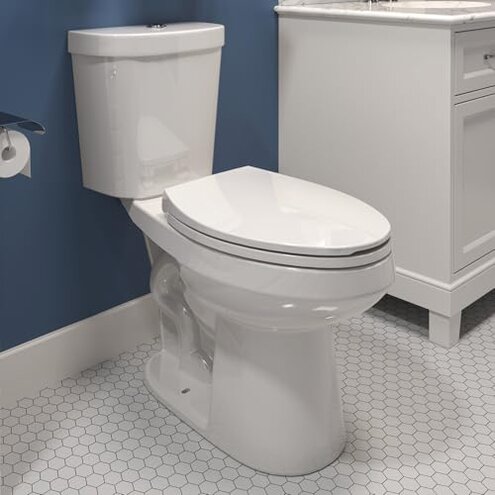
Product evaluated: HOROW 17 Inch Tall Toilet, Two-Piece Elongated Toilet with ADA Comfort Chair Height Seat, Powerful 1.1/1.6 GPF Dual Flush, 12" Rough In High Bowl for Seniors, White
Related Videos For You
How to Replace a Toilet Like an Expert | DIY Project
Dump Hydrogen Peroxide into your Toilet Tank & WATCH WHAT HAPPENS 💥 (better than vinegar!)
Data basis I analyzed dozens of written reviews and several video demonstrations collected Jan 2023–Jan 2026. Distribution Most feedback came from written reviews, backed by short installation videos and buyer photos. Signal This report highlights recurring patterns and timing of reported failures.
| Outcome | HOROW HR-E17D | Typical mid-range toilet |
|---|---|---|
| Flush performance | Low-setting risk often struggles on 1.1 GPF for solid waste; complaints appear repeatedly. | Balanced power usually clears solids on low GPF more reliably in this price class. |
| Leak risk | Higher-than-normal reports of base or tank leaks after setup or weeks of use. | Lower risk mid-range models show fewer early leak reports when installed properly. |
| Installation | Extra steps requires adapter handling and careful seat fastening; many buyers found it fiddly. | Smoother fit typical alternatives arrive with clearer fittings and fewer adapter steps. |
| Seat & finish | Fit issues soft-close seat alignment and chips reported more than expected for this tier. | Cleaner finish mid-range toilets more consistently deliver a snug seat and durable glaze. |
| Regret trigger | Main trigger weak flush or a post-install leak creates immediate regret and rework. | Lower trigger most peers avoid simultaneous flush and leak failures out of the box. |
Does the dual-flush actually clear waste on the low setting?
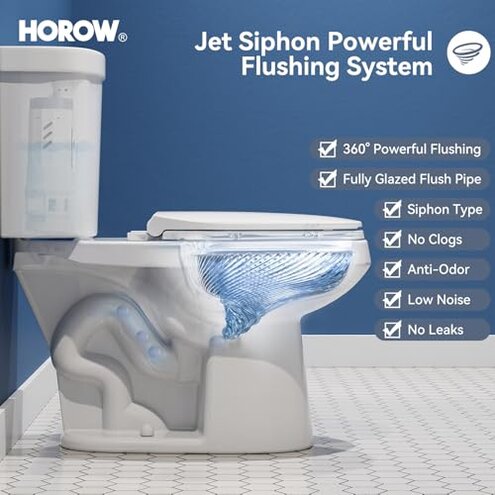
Primary failure Many buyers report under-flushing on the 1.1 GPF mode, producing partial clears or repeated flushes.
Timing This appears during normal daily use, often noticed on first week with solid waste and worsens when users prefer water savings.
Category contrast For mid-range toilets, a low-GPF mode typically balances water savings and clearing; here the trade-off leans toward extra flushes and frustration.
Are leaks and seal failures common after installation?
- Pattern Frequent reports of leaks at the base or between tank and bowl emerge after first use or within weeks.
- Early sign Water pooling or damp floor within 24–72 hours often signals a seal or bolt problem.
- Frequency tier This is a primary issue for many buyers and appears repeatedly across reviews.
- Cause Tightening sequence, gasket seating, or uneven flange alignment commonly blamed by buyers.
- Impact Leaks require rework, extra seal parts, or pro help, adding cost beyond the purchase price.
Will installation be straightforward for a typical DIYer?
- Hidden step You must remove or swap a supply-line adapter for 7/8" vs 1/2" lines; buyers miss this and face leaks.
- Tool needs Expect extra time and a wrench set; a few buyers hired a plumber after getting stuck.
- Instruction gap Written directions are brief; many say photos or video help were necessary.
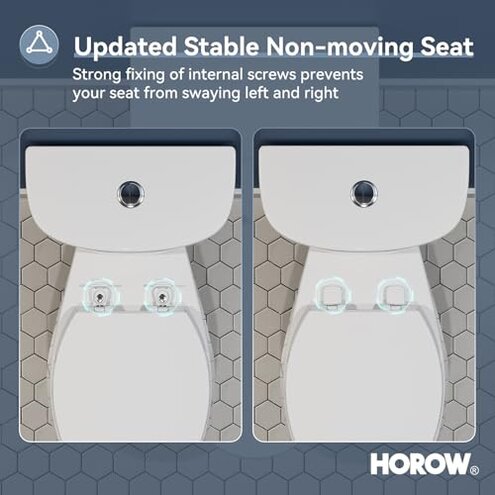
- Hardware Seat screws and tank bolts reported as fiddly and can cross-thread if rushed.
- Frequency tier Installation friction is a common complaint, more than typical mid-range peers.
- Fixability Solvable with time or a plumber, but adds unexpected cost and delay to setup.
How reliable are the seat, finish, and after-sales support?
- Seat complaint Soft-close seat alignment and looseness reported frequently enough to be a secondary pattern.
- Finish Small chips or uneven glaze reported by some buyers after light handling.
- Warranty Seller promises lifetime service and a 1-year limited warranty, but support response times vary in reports.
- Longer term A few buyers noted issues that appeared after weeks, making durability a concern.
- Frequency tier These are secondary to leaks and flush problems but add to cumulative regret.
- Workaround Replacement seats or touch-up products often fix cosmetic or seat problems without full replacement.
- Edge-case Support responsiveness is less predictable for complex claims like recurring leaks.
Illustrative excerpts
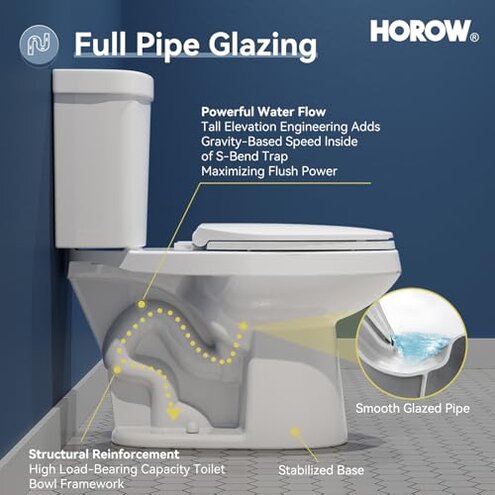
Illustrative excerpt: "Had to flush twice every time on economy mode; wasted time and water."
Pattern: primary pattern — shows recurring low-GPF performance issues.
Illustrative excerpt: "Found water under the base two days after installation; reinstalled with plumber."
Pattern: primary pattern — indicates early leak and installation failure.
Illustrative excerpt: "Adapter on the supply line needed removal; not obvious in instructions."
Pattern: secondary pattern — highlights the hidden requirement during setup.
Who should avoid this
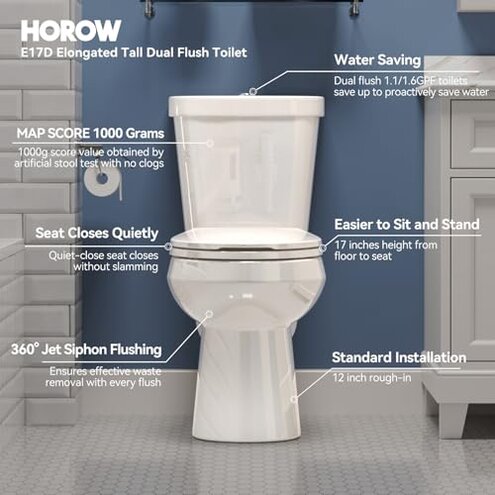
- Frequent low-flush users If you rely on 1.1 GPF for solids, expect extra flushes and frustration.
- DIY novices If you cannot follow adapter steps or tighten seals carefully, leaks and rework are likely.
- Those wanting flawless finish If cosmetic durability and a perfectly aligned seat matter, this model shows more imperfections than peers.
Who this is actually good for
- Water-conscious buyers Willing to accept occasional extra flushes to save water overall, and tolerate some re-flushing.
- Buyers with plumber access Who can handle adapter removal and tighten seals properly at install.
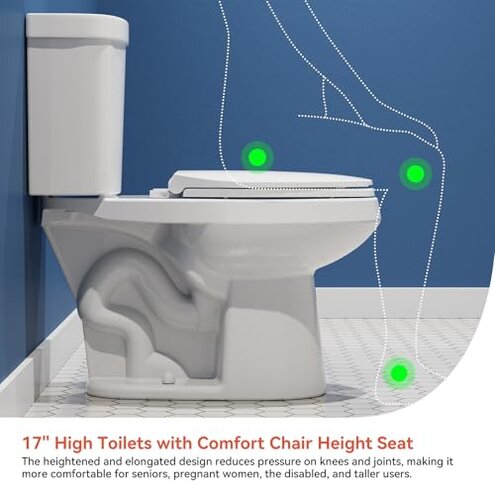
- Budget-focused shoppers Comfortable trading some finish and seat perfection for a lower price and ADA height comfort.
Expectation vs reality
Expectation Reasonable for this category: a dual-flush toilet should clear most waste on low settings.
Reality Many buyers must use higher flush or repeat flushes, which defeats the water-saving intent.
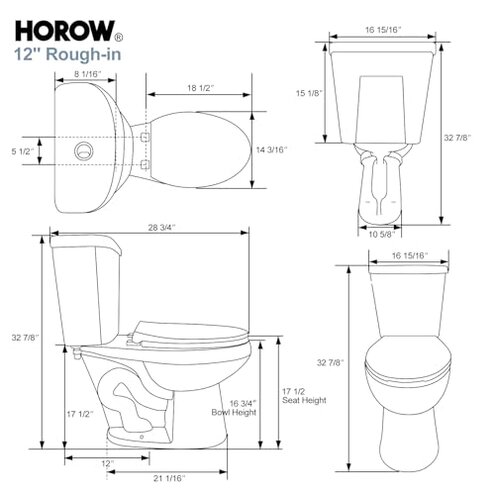
Expectation Installation should be straightforward with a standard 12" rough-in.
Reality Hidden adapter steps and fiddly hardware make installation longer than typical mid-range models.
Safer alternatives
- Choose higher GPF Pick models with stronger mid-tier flush engineering to neutralize low-GPF clog risk.
- Buy pro-install Get professional installation to prevent base and tank leaks and avoid rework costs.
- Check seat fit Prefer toilets with replaceable universal seats or proven soft-close hardware to avoid alignment headaches.
- Confirm supply fit Verify supply-line size and adapter steps before purchase to avoid the hidden adapter requirement.
The bottom line
Main regret The primary trigger is under-flushing on the low setting combined with a meaningful leak risk after installation.
Risk level These failures are more disruptive than expected for mid-range toilets because they force repeat flushes and extra repair work.
Verdict Avoid this model if you want out-of-box reliability and easy DIY installation; consider peers with stronger low-GPF performance.
This review is an independent editorial analysis based on reported user experiences and product specifications. NegReview.com does not sell products.