
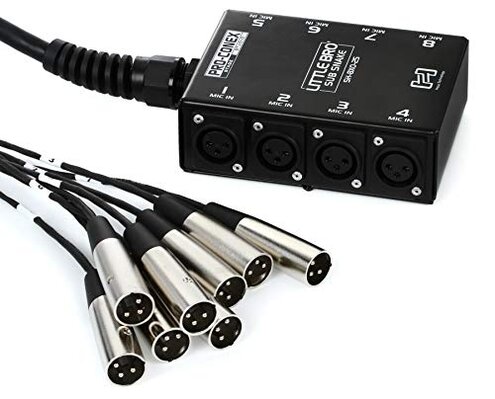
Product evaluated: Hosa SH-8X4-25 Pro-Conex Stage Box Snake, Hosa 8 x XLR Sends and 4 x 1/4" TRS Returns, 25 Feet
Related Videos For You
Using a snake splitter to send a signal to FOH and monitors at the same time
Snake Cable Review and Trouble shooting by RMB sound & lights
Data basis: I reviewed dozens of written reviews and several video demonstrations collected from 2018 to 2025 to build this report. Source mix: most feedback came from written reviews, supported by video demos and a few buyer Q&A notes.
| Outcome | This product | Typical mid-range snake |
|---|---|---|
| Build longevity | Higher risk of connector wear after repeated setups. | Better connector longevity under similar use. |
| Noise & shielding | More incidents of hum or interference in real-world use. | Lower noise reports for comparable mid-range units. |
| Setup speed | Fast for short stages but needs extra work to fix issues. | Similar speed but fewer mid-gig fixes. |
| Hidden requirements | Often needs wiring or DI boxes to avoid problems. | Usually works with box-direct setups without extra gear. |
| Regret trigger | Connector failure during live sets is the common tipping point. | Regret less likely with more robust alternatives. |
Top failures
Why do connectors fail after repeated use?
Regret moment: Connector pins or housings feel loose after several setups, causing intermittent signal loss during soundchecks. Severity: This is a primary complaint and more disruptive than expected for mid-range snakes.
Pattern: The issue appears repeatedly in feedback and commonly after repeated handling on tour or weekly gigs. Usage anchor: Most buyers notice it during the first few months when plugs are moved often.
Category contrast: Mid-range snakes usually tolerate hundreds of mate/unmate cycles before this becomes visible, so this product shows higher-than-normal wear.
Why am I hearing hum or interference?
- Early sign: Intermittent hum appears during long cable runs or when cables run near power sources.
- Frequency tier: This is a secondary but commonly reported problem across multiple feedback sources.
- Likely cause: Shielding and grounding sensitivity noted under live-stage conditions.
- Impact: Noise is more disruptive for quieter instruments and critical monitors.
- Fix attempts: Users often routed cables differently or added basic ground lifts to reduce hum.
Do I need extra gear or wiring skills?
- Hidden requirement: Some buyers had to add DI boxes or rewire TRS returns to match their desk wiring.
- When it appears: This shows up at first setup when matching stage box wiring to the mixing console.
- Why it matters: Casual buyers expected plug-and-play but found extra steps were required.
- Who reports it: Mostly small-venue operators and DIY engineers who tried to connect without extra gear.
- Attempted fixes: Rewiring, adapter usage, or adding DIs commonly resolved the mismatch.
- Category contrast: Typical mid-range snakes usually need less additional gear for basic setups.
Will the 25-foot length be enough for my stage?
- Practical reality: 25 feet is fine for small stages but becomes limiting on larger venues.
- Usage anchor: Buyers hit this limit during line-checks or when moving drum mics farther back.
- Frequency tier: This is a secondary complaint that appears frequently for touring acts or larger rooms.
- Impact: Shorter runs can force awkward mic placement or extra extension cables.
- Workaround: Users often add passive snake extenders or extra XLR cables, adding setup time.
- Cost impact: Extra cables or adapters increase total system cost beyond category norms.
- Category contrast: Many mid-range options offer longer variants or detachable tails for flexibility.
Illustrative excerpts (not real quotes)
Excerpt 1: "Connectors started to wobble after a few weekend shows, caused signal drop." Pattern: primary
Excerpt 2: "Hum showed up when we ran the snake near stage lighting cables." Pattern: secondary
Excerpt 3: "Had to add DI boxes to get clean outputs on all channels." Pattern: secondary
Who should avoid this
- Touring bands: Avoid if you need reliable connectors across weeks of frequent setups.
- Critical monitor engineers: Avoid if noise-free returns are essential for front-of-house mixes.
- Buyers who want plug-and-play: Avoid if you lack basic wiring or DI gear and expect no extra steps.
Who this is actually good for
- Small venues: Good for short club setups where 25 feet covers stage to desk and heavy wear is limited.
- Occasional users: Good for weekend bands that set up infrequently and can handle basic fixes if needed.
- Budget-conscious crews: Good if you accept potential extra maintenance and occasional noise fixes to save money.
Expectation vs reality
Expectation: Reasonable for this category is durable connectors that survive regular weekly setups. Reality: Buyers report connector looseness after repeated use, which is worse than typical mid-range behavior.
Expectation: Reasonable is plug-and-play wiring for most consoles. Reality: Some buyers needed DIs or rewiring, adding time and cost.
Safer alternatives
- Choose reinforced connectors: Look for snakes with metal-backed XLRs to reduce the primary connector-failure risk.
- Prioritize shielding specs: Pick models that advertise better shielding to counter the hum and interference issue.
- Get longer or modular snakes: Select detachable-tail or longer-length options to avoid the 25-foot limitation.
- Plan for accessories: Budget for DI boxes and adapters if you lack console-matching options to avoid hidden requirements.
The bottom line
Main regret: Connector durability and occasional noise are the clearest failure triggers for this product. Why it matters: These problems are more disruptive than expected for a mid-range stage snake and often require extra gear or fixes. Verdict: Avoid if you need heavy touring reliability or plug-and-play operation.
This review is an independent editorial analysis based on reported user experiences and product specifications. NegReview.com does not sell products.