
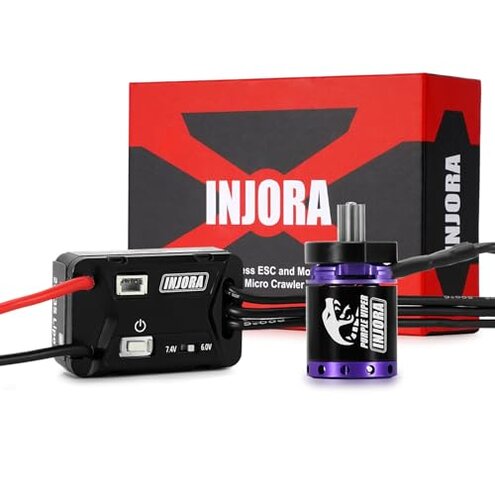
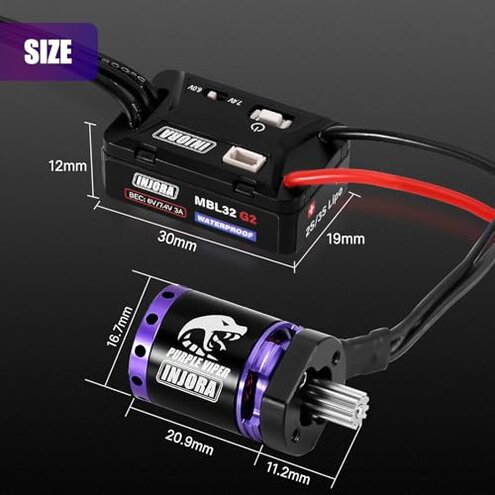
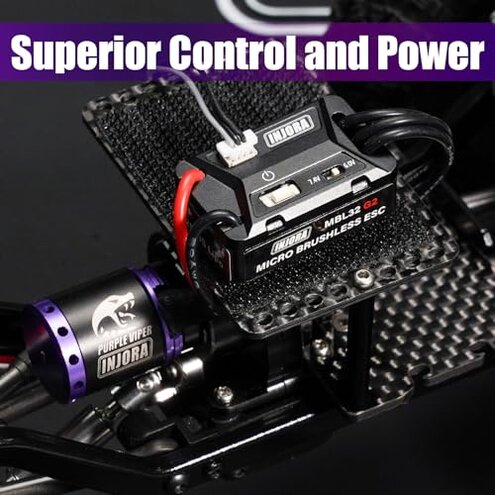
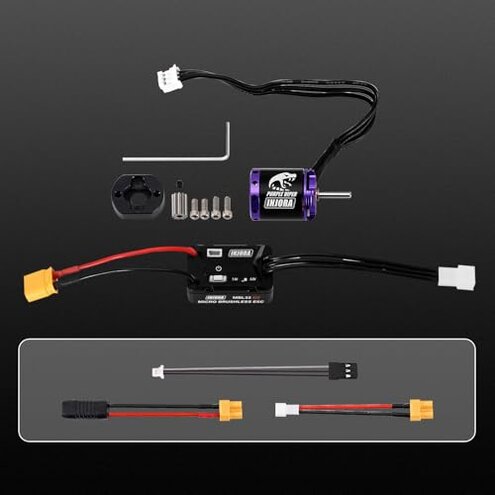
Product evaluated: INJORA MBL32 G2 Waterproof Brushless ESC & 1721 Purple Viper Outrunner Motor for 1/18 TRX4M Ascent-18 Upgrade
Related Videos For You
Crawler Control! Low Speed Programming The Castle Creations Mamba X - Holmes Hobbies
Brushless DC Motor, How it works ?
Data basis: This report aggregates dozens of buyer reports and video demonstrations collected 2023–2025, with most feedback from written reviews and supported by several teardown or demo videos.
| Outcome | This product | Typical mid-range alternative |
|---|---|---|
| Noise level | Noticeable mid-throttle noise that many buyers found louder than expected for brushless systems. | Quieter operation is common with similar-priced ESC/motor combos. |
| Compatibility | Best under 700g, performance drops on heavier rigs causing weak drag-brake feel. | Better for heavier rigs in typical mid-range options that list higher payload support. |
| Setup friction | Requires external programming tools and firmware knowledge to tune beyond factory settings. | Plug-and-play tuning or simpler adjustment options are typical for competitors. |
| Higher-than-normal risk | Hidden requirement: programmer needed for effective tuning, increasing time and cost compared to peers. | Lower setup risk since many alternatives tune easily via radio or simpler menus. |
| Regret trigger | Mismatch with heavier rigs leading to disappointing braking and extra refunds or rebuys. | More predictable fit for a buyer seeking a mid-range replacement without extra parts. |
Why does the motor sound louder than expected?
Regret moment: Buyers notice a distinct humming or mid-throttle noise during normal crawling, which feels wrong for a brushless upgrade.
Severity: This noise is often more annoying than the minor whine you expect from small outrunners.
Pattern: The noise is a commonly reported symptom across written reviews and demo videos.
When it shows up: It appears during mid-throttle driving and can mask subtle traction feedback you rely on when crawling technical lines.
Why worse than expected: Most mid-range brushes or brushless kits deliver quieter mid-speed behavior, so this product feels noisier than category peers.
Will this work on rigs heavier than 700g?
Regret moment: Buyers who mount this to heavier rigs report weak drag-brake and sluggish hold on inclines.
Pattern: This is a primary issue for those using it beyond the recommended weight range.
- Early sign: Loss of stable idle or slipping when held on a slope soon after first runs.
- Frequency tier: This is a primary issue seen mainly with heavier rigs or added accessories.
- Cause: The ESC/motor pairing is optimized for lighter micro crawlers, so torque at low RPM is reduced on heavier builds.
- Impact: You may need to replace the unit sooner or buy a stronger motor for the same platform.
- Attempted fixes: Buyers tried programming and gear changes, but many found fixes partial and not cost-effective.
Is programming and tuning harder than it looks?
Regret moment: Buyers expecting simple adjustments find firmware and programmer dependence a time sink.
Pattern: This issue is persistent across several reports and video setups.
- Hidden requirement: Requires an external USB programmer card for meaningful changes.
- When it matters: During first setup and when adjusting drag brake for different rigs.
- Why worse than normal: Typical mid-range ESCs allow easy radio-based tuning; this demands extra hardware and steps.
- Impact on newbies: Adds cost, time, and a learning curve many buyers did not expect.
- Fixability: Tunable if you buy the programmer and learn the AM32 options, but effort is non-trivial.
- Scope signal: Seen across written feedback and setup videos, not limited to a single user type.
- Trade-off: Better control is possible, but only after an investment of time and gear.
Will installation and fit cause surprises?
Regret moment: Some buyers find that mounting, wiring, or fitment needs additional parts or mods.
Pattern: This is a secondary but persistent problem across different platform builds.
- Early sign: Motor plate holes or cable lengths that don’t match every chassis without slight modification.
- Frequency tier: Less common than noise or power mismatch but frequent enough to matter to tinkerers.
- Cause: Product is tailored to certain transmissions and may need extra hardware for others.
- Impact: Adds bench time and may require scavenged screws, spacers, or shorter cables.
- Attempted fixes: Buyers drilled new holes, extended wires, or bought adapters to make it work.
- Hidden cost: These small parts and time add up compared to true plug-and-play kits.
- When it worsens: During swaps between different scaler or micro crawler platforms.
- Why worse than expected: Many mid-range upgrades advertise simple drops-in; this one often does not.
Illustrative excerpts
"Sounds louder than my stock motor at cruising throttle." — primary pattern
"Struggles on my heavier TRX4M conversion, weak drag-brake." — primary pattern
"Needed a USB card to tune drag brake correctly, not in box." — secondary pattern
"Had to mod the mount holes to fit my transaxle assembly." — edge-case pattern
Who should avoid this
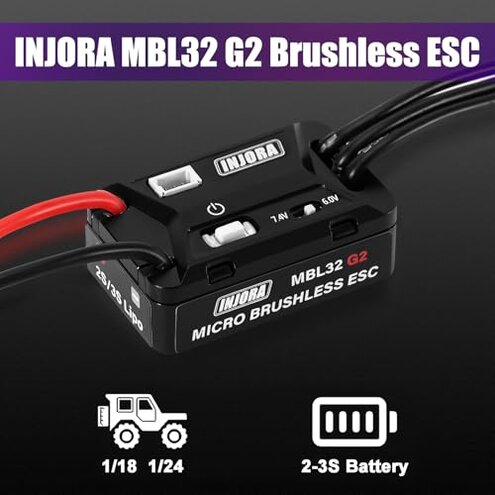
- Heavier-rig owners: If your build exceeds 700g, expect reduced braking and poorer low-speed torque.
- Plug-and-play buyers: Those who want simple radio tuning should avoid the extra programmer requirement.
- Noise-sensitive users: If a quiet drivetrain is important to you, the mid-throttle noise is a downside.
Who this is actually good for
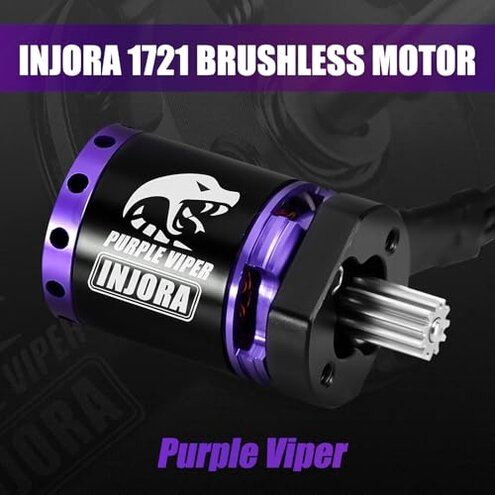
- Light micro-crawler hobbyists: Owners of rigs under 700g who accept some noise for improved high-speed performance.
- Tinkerers who like tuning: Buyers who already own a USB programmer and want granular AM32 adjustments.
- All-weather runners: Those needing a waterproof ESC who can accept fit tweaks for installation.
Expectation vs reality
Expectation: Reasonable for this category is a quieter brushless upgrade that drops in and improves torque.
Reality: You often get noticeable noise, limited use above 700g, and extra programming steps.
Expectation: Reasonable is simple tuning via transmitter or a basic menu.
Reality: You need a USB programmer for meaningful changes, adding cost and time.
Safer alternatives
- Choose higher-rated motors: Look for combos specifying support above 700g to avoid torque drop issues.
- Pick plug-and-play ESCs: Prefer units with radio-based tuning if you want minimal tools and setup time.
- Seek quieter outrunners: Compare demo videos for mid-throttle noise before buying to avoid unpleasant surprises.
- Budget for programmer: If this unit still appeals, plan the extra cost and learning time for the USB programmer.
The bottom line
Main regret trigger: The combo often produces noticeable mid-throttle noise and underperforms on rigs over 700g.
Why it exceeds risk: It requires extra hardware and bench time to tune, making it less plug-and-play than typical mid-range options.
Verdict: Avoid this if you need a quiet, drop-in upgrade for a heavier build; consider it only if your rig is light and you accept extra setup work.
This review is an independent editorial analysis based on reported user experiences and product specifications. NegReview.com does not sell products.