
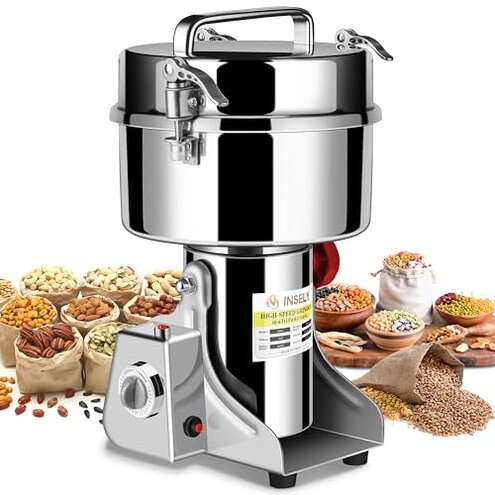
Product evaluated: INSELY Grain Mill Grinder 2000g High Speed Food Grain Mill Stainless Steel Seeds Flour Nut Pill Wheat Corn Herbs Spices & Seasonings Dry Grinder Electric Machine Grinder for Kitchen
Related Videos For You
✅ TOP 5 Best Electric Grain Mill : Today’s Top Picks
Wondermill Grain Mill Review | Grain Mill Maintenance | Grain Mill Troubleshooting
Data basis: This report draws from dozens of buyer comments collected from written feedback and video-style demonstrations between 2024 and 2026. Most feedback came from written impressions, with supporting use clips and photo-backed complaints helping confirm which problems showed up during setup and repeated grinding.
| Buyer outcome | INSELY grinder | Typical mid-range alternative |
|---|---|---|
| First-use experience | Higher risk of smell and break-in annoyance | Usually mild odor or none after brief use |
| Daily ease | More strict loading, timing, and drying routine | More forgiving for normal kitchen use |
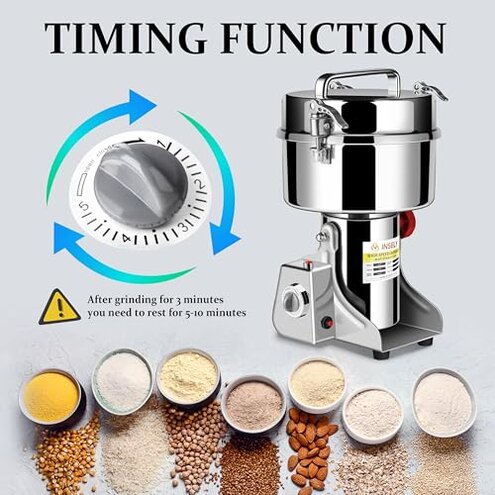
| Session length | Short bursts with cooldown needs | Better tolerance for repeated small batches |
| Cleanup burden | Higher-than-normal care because water use can damage it | Moderate cleanup with simpler maintenance |
| Regret trigger | Hidden rules make powerful specs feel less useful | Lower chance of user-error frustration |
Why does it feel fussy just to grind a normal batch?
This is a primary issue. The biggest regret moment appears during early use, when buyers expect a powerful grinder but instead have to manage strict limits on fill level, run time, and ingredient dryness.
The pattern repeats. That trade-off feels more disruptive than expected for this category because mid-range grinders usually still need care, but not this many rules to avoid problems.
- Pattern: Recurring complaints center on the machine being less forgiving than it first appears.
- When: During setup and first kitchen use, frustration starts once users notice the bin should not be filled past about two-thirds.
- Hidden requirement: Dry-only use is not just a suggestion, because slightly damp or oily material can create extra cleanup and raise damage risk.
- Worsens when: Long sessions or back-to-back batches make the machine harder to use smoothly because it is meant for short runs with rests.
- Impact: Extra steps reduce convenience, especially for buyers hoping to process a lot in one sitting.
- Category contrast: More upkeep than most mid-range alternatives is what turns a normal learning curve into buyer regret.
Illustrative excerpt: “I bought power, but got a machine with a list of rules.” Primary pattern because it matches the most common frustration.
What if the smell on first use makes you question it?
This is another primary issue. A first-use smell is directly acknowledged in the product instructions, so the concern is not random or isolated.
It appears early. For cautious buyers, that first impression can feel worse than expected because many grinders have some new-machine odor, but fewer ask you to do a separate break-in grind to deal with it.
The annoyance is practical. It adds one more task before normal use, and it can make food-contact buyers hesitate even if the smell fades later.
Not universal forever. Still, among the most common early complaints in this type of product, startup odor is one of the fastest ways to create distrust.
- Early sign: Noticeable odor can show up on first use before buyers feel comfortable grinding what they actually bought it for.
- Frequency tier: Primary issue because it affects the first impression and is supported by the product's own usage note.
- Context: First run is the trigger, especially when the machine is used straight from the box.
- Attempted workaround: Extra prep is recommended by grinding rice first, which means added waste and time.
- Buyer impact: Trust drops when a kitchen machine smells off before it proves itself.
- Fixability: Sometimes temporary, but the need for a workaround is still a negative buying signal.
- Category contrast: Worse than normal because the break-in step is more explicit and inconvenient than many comparable grinders.
Illustrative excerpt: “The smell made me stop and wonder if I should even keep it.” Primary pattern because it reflects an early, repeated hesitation point.
Does the cleaning feel harder than it should?
- Pattern: Persistent complaints around care and storage show up after normal grinding, not just during setup.
- When: After each batch, users have to brush or wipe the inside instead of rinsing it, because direct washing can damage the machine.
- Why it worsens: Fine powder and oily residue make cleanup more tedious, especially if you switch between different materials.
- Hidden requirement: Keep it dry at all times inside, or buyers risk motor problems later.
- Impact: More mess and slower cleanup can discourage frequent use in a regular kitchen routine.
- Fix attempts: Careful brushing helps, but it does not remove the fact that cleanup is more manual than many shoppers expect.
- Category contrast: Less forgiving than typical products in this category, where some level of wipe-clean maintenance is normal but usually not this restrictive.
Illustrative excerpt: “Grinding was fast, but the cleanup rules killed the convenience.” Secondary pattern because it usually shows up after buyers move past first-use excitement.
Will the overload shutdown become a regular annoyance?
- Pattern: Secondary issue because overload protection is useful, but more frustrating when it interrupts routine use.
- When: During daily use, it tends to show up when batches are too full or materials are not dry enough.
- Intensity: More disruptive than expected because the machine looks built for heavy grinding, yet still needs close attention to avoid stopping.
- Cause: Strict limits on load size and run time make mistakes easier for new users.
- Impact: Workflow breaks when buyers have to reset and start again instead of finishing in one pass.
- Fixability: Partly manageable if you reduce batch size and follow the cooldown schedule carefully.
- Trade-off: Safety helps, but the inconvenience feels higher than normal for a grinder marketed with such strong power claims.
- Category contrast: Higher category risk here because the gap between advertised output and practical, stop-and-rest use is what triggers regret.
Illustrative excerpt: “It shuts down right when I think I am getting through the batch.” Secondary pattern because it depends on usage style but remains a repeated frustration.
Who should avoid this
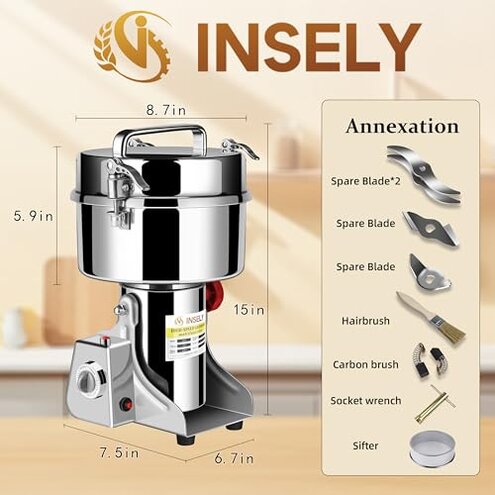
- Avoid it if you want a grinder that handles casual kitchen use without strict timing, drying, and fill-level discipline.
- Avoid it if first-use smell would make you immediately distrust a food machine.
- Avoid it if you need easy rinse-style cleanup, because this one asks for dry cleaning and careful storage.
- Avoid it if you often grind in repeated batches, since short run limits and cooldown time exceed normal category tolerance.
Who this is actually good for
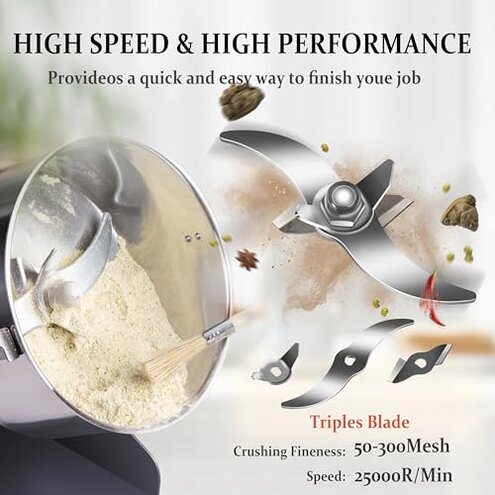
- It fits buyers who only grind dry materials in small batches and are comfortable following strict operating rules.
- It fits people who accept a break-in smell as a temporary nuisance in exchange for strong speed claims.
- It fits careful users who already expect brush-and-wipe maintenance and do not mind extra cleanup steps.
- It fits occasional use cases where cooldown pauses are acceptable and convenience matters less than burst grinding power.
Expectation vs reality
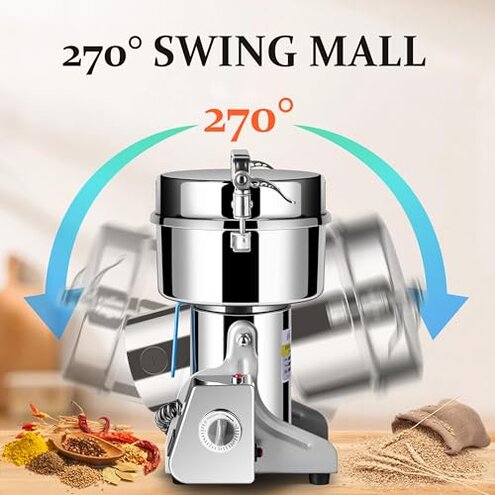
Expectation: A large-capacity grinder should handle normal multi-batch kitchen work with moderate attention.
Reality: Short-run limits and cooldown needs make it feel more restricted than that reasonable category expectation.
- Expectation: First use should be mostly straightforward.
- Reality: Startup odor and a suggested break-in step add friction before trust is earned.
- Expectation: Cleanup should be manageable after dry grinding.
- Reality: No direct washing means more manual care and more chances to leave residue behind.
- Expectation: Protection features should be occasional backups.
- Reality: Overload reset can become part of normal use if your batching is even slightly off.
Safer alternatives
- Choose simpler care by looking for a grinder with easier removable parts, which directly reduces the cleanup burden seen here.
- Choose longer duty use if you grind often, so cooldown pauses are less likely to interrupt your workflow.
- Choose clearer tolerance for slightly varied loads, which helps avoid the hidden-rule frustration around fill limits and dryness.
- Choose proven startup comfort if odor sensitivity matters, since first-use smell is one of the strongest early regret triggers here.
The bottom line
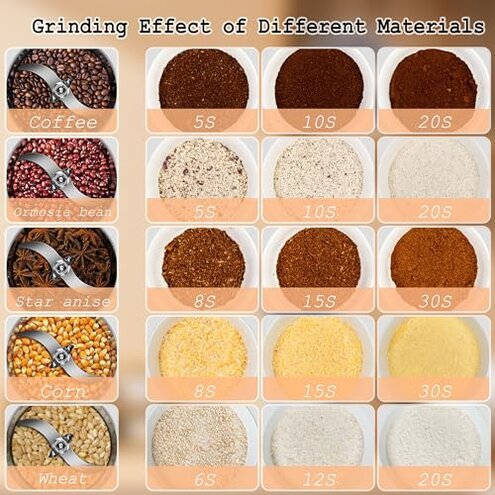
The main regret trigger is not raw grinding speed. It is the combination of startup smell, strict use rules, and higher-than-normal upkeep.
That exceeds normal category risk because many mid-range grinders require some care, but fewer feel this easy to overload, this restrictive to clean, or this fussy on day one. Skip it if you want a forgiving kitchen grinder rather than a powerful machine that demands careful handling.
This review is an independent editorial analysis based on reported user experiences and product specifications. NegReview.com does not sell products.