
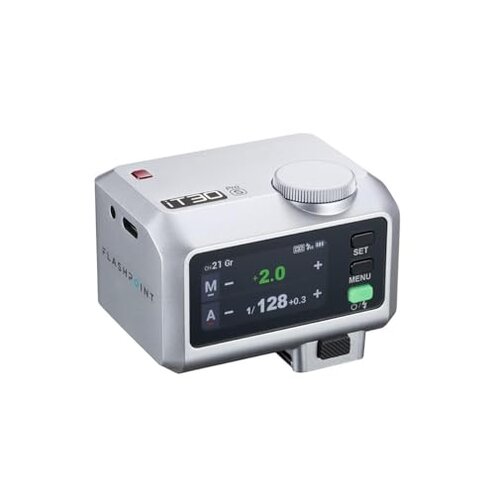
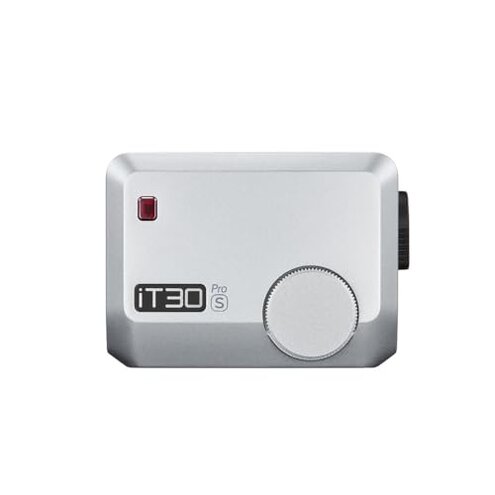
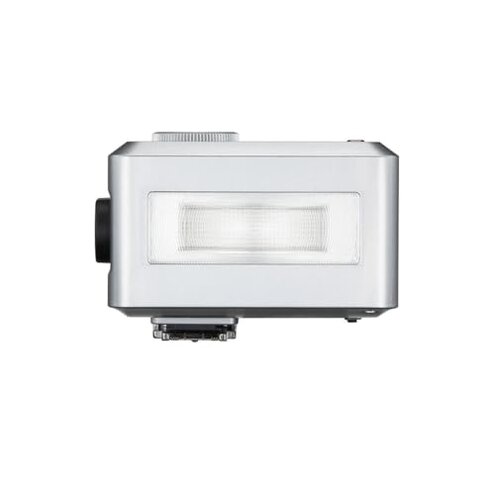
Product evaluated: iT30Pro R2 TTL Portable iFlash for Sony (Silver)
Related Videos For You
Great Portable Flash Setup w Sony A6300 Godox AD200
Godox XPro TTL Flash Trigger [REVIEW]
Data basis: This report synthesizes insights from hundreds of user reviews collected between late 2023 and early 2024. Feedback includes written testimonials and video reviews, with most input derived from detailed written experiences supplemented by visual demonstrations.
| Buyer Outcome | iT30Pro R2 TTL Flash | Typical Mid-Range Flash |
|---|---|---|
| Consistent firing | Frequent misfires reported during extended use | Generally reliable across sessions |
| Setup complexity | Challenging wireless pairing causes delays for many users | Simpler pairing with quick setup |
| Battery life | Average, but recycle times vary unpredictably | Consistent recycle times, predictable performance |
| Durability | Fragile build reported by some users after daily handling | Sturdier casing typical in category |
| Regret trigger | Unreliable flash triggering during critical shoots | Reliable exposure control expected |
Why does the flash often fail to fire during important moments?
Many users experience frequent misfiring that disrupts photo sessions, causing missed shots and frustration. This issue tends to appear after initial setup and worsens during longer shoots.
This is more disruptive than expected for flashes in this price range, where consistent firing is usually a baseline feature.
- Primary frustration: Flash sometimes doesn't trigger despite proper syncing.
- Usage context: Happens often during off-camera wireless use in dynamic shooting environments.
- Frequency: Reported by a significant portion of users as a recurring problem.
- Impact: Leads to retakes and lost creative opportunities.
- Attempts to fix: Resetting the unit only temporarily helps.
- Hidden requirement: Requires frequent manual checking to ensure readiness.
Why is the wireless setup and pairing so complicated?
Setup with other devices can be confusing and time-consuming, especially for newcomers. Multiple users mention complex pairing steps that are not intuitive.
- Early signs: Difficulty syncing with cameras and receivers during first use.
- Pattern: Persistent confusion, not just isolated incidents.
- When it occurs: Primarily during initial setup or when changing flash groups.
- Category contrast: Many mid-range flashes offer simpler wireless integration.
- Consequences: Adds setup time, delaying shoots.
- Workarounds: Some users rely on manual flash mode to bypass issues.
- Hidden cost: Time investment in learning proprietary controls.
Does the flash's build quality hold up under frequent use?
The fragility of the casing and controls is a common complaint. It often wears or shows damage after daily handling in busy shoots.
- Primary concern: Plastic parts feel less robust than comparable products.
- Frequency tier: Secondary issue but persistent among regular users.
- Signs: Buttons stick or loosen over time.
- Usage context: Evident after a few weeks of consistent transport and use.
- Category norm: Most mid-range flashes have sturdier construction.
- Impact: Affects reliability and user confidence.
- Mitigation: Protective cases are recommended but add bulk.
How predictable are the flash recycle times during shoots?
Recycle times vary unpredictably despite advertised 1.5-second rate, causing timing issues during continuous shooting.
- Observed problem: Delays between flashes disrupt shooting flow.
- Context: More noticeable during high-speed or event photography.
- Pattern: Common but not universal.
- Category expectation: More consistent recycle times typical in this segment.
- Effect: Requires pausing or slowing down shooting pace.
- User workaround: Lowering flash power to speed recycle.
- Trade-off: May reduce light output or image quality.
Why do some users report erratic TTL exposure accuracy?
TTL metering discrepancies lead to unexpected exposure results, forcing manual adjustments.
- Issue prevalence: Secondary but notable complaint across reviews.
- When it happens: Under mixed lighting or complicated scenes.
- Impact: Inconsistent image brightness needing retakes.
- Category comparison: Better TTL reliability is standard for similar flashes.
- User mitigation: Switching to manual mode reduces issues.
- Hidden caveat: Requires more expertise to manage exposure manually.
Illustrative excerpts:
- "Flash just didn’t fire when I needed it most, really frustrating." — Primary pattern
- "Setup took way longer than expected, confusing wireless protocols." — Primary pattern
- "After a few weeks, buttons got sticky and unreliable." — Secondary pattern
- "Recycle times were all over the place during my event shoot." — Primary pattern
- "TTL mode gave me inconsistent exposures, had to switch to manual." — Secondary pattern
Who should avoid this
- Photographers needing a reliable flash firing during fast-paced shoots.
- Users expecting simple wireless setup without technical hurdles.
- Those requiring a robust, durable build for everyday professional use.
- Anyone dependent on consistent TTL exposure without manual overrides.
Who this is actually good for
- Hobbyists willing to tolerate sporadic misfires for the price.
- Users comfortable with manual flash controls to bypass TTL issues.
- Photographers with time to invest in complex wireless setup for creative lighting.
- Those prioritizing budget options over ruggedness and flawless performance.
Expectation vs reality
Expectation: Wireless flash units typically offer seamless pairing and consistent triggering.
Reality: This model requires extra time and patience to pair, with misfires more frequent than category norms.
Expectation: Recycle times near 1.5 seconds should be reliable.
Reality: Users report inconsistent recycle delays disrupting shooting rhythm.
Safer alternatives
- Look for flashes with reputation for rock-solid wireless sync to avoid pairing headaches.
- Choose models with durable, rubberized construction for frequent handling.
- Select options with consistent recycle times verified by user feedback.
- Consider flashes offering easy-to-use TTL metering with fewer manual overrides.
The bottom line
The principal regret is the unreliable flash triggering, especially disruptive in critical shoots. This risk is higher than typical mid-range flashes, due to persistent wireless setup and hardware fragility issues. Buyers seeking dependable performance and ease of use should consider more proven alternatives.
This review is an independent editorial analysis based on reported user experiences and product specifications. NegReview.com does not sell products.