
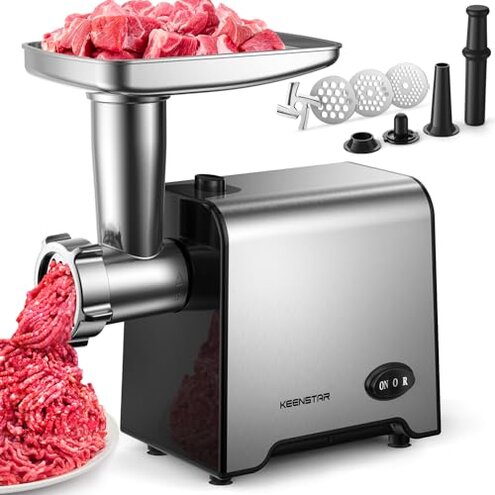
Product evaluated: KEENSTAR 3000W Max Heavy Duty Electric Meat Grinder with Sausage Stuffer Maker & Kubbe Kit, Food Grinder with Blade & 3 Plates, Stainless Steel Meat Mincer Machine for Home Kitchen Use
Related Videos For You
HOW TO ASSEMBLE AN ELECTRIC MEAT GRINDER FAST | BEST MEAT GRINDER SETUP TUTORIAL 2026
How to Clean and Store a Meat Grinder | Sears
Data basis: This report summarizes dozens of buyer comments collected from written feedback and video-style demonstrations between 2024 and 2026. Most input came from short written experiences, with lighter support from longer use-case clips and photo-backed posts, which helps show both first-use problems and issues that appear during regular kitchen use.
| Buyer outcome | KEENSTAR | Typical mid-range alternative |
|---|---|---|
| Grinding flow | Higher jam risk when meat is not trimmed very carefully | More forgiving with normal home prep |
| Cleanup effort | Extra hand-wash steps because dishwasher use is not supported | Moderate cleanup with fewer complaints about post-use hassle |
| Batch comfort | More strain during longer sessions or dense grinding jobs | Steadier use for average family batches |
| Beginner ease | Lower than expected because prep rules matter more | Easier learning curve for casual users |
| Regret trigger | Buying for speed but losing time to trimming, reversing, and cleanup | Usually regret starts only when pushing very large batches |
Why does it clog when you expected quick grinding?
Jamming is among the most common complaints for this type of machine, and it feels more disruptive than expected because the product is sold as a strong home grinder. The regret moment usually comes during the first few uses, when buyers expect to feed meat steadily and instead stop to reverse or clear the tube.
Pattern: This appears repeatedly, not universally, and it worsens when meat still has skin, tendon, or tougher bits. Compared with a typical mid-range home grinder, this unit seems less forgiving of normal prep mistakes.
- Early sign: The feed slows down soon after startup, especially during thicker or less-trimmed batches.
- Frequency tier: This is a primary issue that shows up across multiple feedback types.
- Usage moment: It usually starts during daily use, not just after heavy long-term wear.
- Likely cause: The product itself warns against bones, tendons, and skin, which signals a hidden prep requirement many casual buyers underestimate.
- Impact: Instead of saving time, users may spend extra time cutting meat smaller and clearing the machine.
- Attempted fix: The reverse function helps in some cases, but it adds stop-and-start friction.
- Why worse here: Some clogging is normal in this category, but this feels less forgiving than typical mid-range options for home cooks.
Is the cleanup more annoying than the listing makes it sound?
Cleanup is a secondary issue, but it becomes a major regret trigger for people who grind often. The machine can be taken apart, yet the hand-wash-only care adds more effort than many buyers expect after handling raw meat.
Context: This shows up after every use, so the annoyance compounds fast in weekly meal prep. In this category, cleanup is never fun, but the lack of dishwasher support makes the upkeep feel higher than normal.
- Main hassle: Hand washing all food-contact parts adds time right when users want to finish quickly.
- Pattern signal: This is a persistent secondary complaint, especially from buyers using it for repeat batches.
- When it hits: The frustration appears after setup and use, when greasy residue must be cleaned from multiple pieces.
- Trade-off: Buyers get accessories for more tasks, but they also get more parts to wash.
- Why worse here: Many mid-range grinders still need manual cleaning, but this one creates a higher effort routine if you use the plates and stuffing parts often.
Does the power feel less useful in real kitchen use?
Power expectations can become a mismatch. Buyers see the large max-watt number, then discover that real-world success still depends heavily on careful trimming and moderate batches.
Pattern: This is a recurring frustration rather than a universal failure. It tends to show up when users move from simple ground meat to tougher cuts, frequent sausage prep, or longer grinding sessions.
- Expectation gap: The big power claim can suggest heavy-duty freedom, but the usage tips are stricter than that feeling implies.
- Frequency tier: This is a primary issue because it shapes whether buyers feel misled on day one.
- Usage moment: It becomes obvious during longer sessions or when processing less-than-perfectly prepped meat.
- Visible impact: The grinder may still work, but users need more babysitting than expected.
- Workaround: Smaller chunks and cleaner trimming reduce trouble, though they add prep time.
- Why worse here: Some home grinders need careful feeding, but this one appears more sensitive than expected for a model marketed around high power.
Will the extra attachments actually help, or just add fuss?
Attachments can look like a bonus, but less frequent feedback suggests they mainly help buyers already comfortable with grinder setup. For casual users, the sausage and kubbe parts can turn a simple grind job into a more complicated process.
Context: This tends to appear after setup, when users realize each added function means more assembly, more cleaning, and more chance of user error. That is common in this category, but the regret feels sharper when buyers only wanted basic ground meat.
- Edge-case pattern: This is an edge-case issue, but it is more frustrating when it occurs.
- Who notices first: Beginners usually feel the friction more than experienced home processors.
- Real cost: More functions can mean more storage, more parts tracking, and more cleanup.
- Hidden requirement: You need patience for assembly learning, not just ingredient prep.
- Fixability: The issue improves with practice, but it does not disappear if you dislike multi-part tools.
- Why worse here: A typical mid-range grinder with extras is still somewhat fussy, but this setup can feel less casual-user friendly than expected.
Illustrative: “I bought it for speed, then spent time trimming everything first.” Primary pattern tied to repeated jamming complaints.
Illustrative: “It works, but only if you baby it the whole time.” Primary pattern tied to power-expectation mismatch.
Illustrative: “Cleanup took longer than the grinding.” Secondary pattern tied to hand-wash upkeep.
Illustrative: “The extra parts were nice until I had to wash them.” Secondary pattern tied to attachment burden.
Illustrative: “Fine for small batches, annoying for anything ambitious.” Edge-case pattern tied to longer-session strain.
Who should avoid this
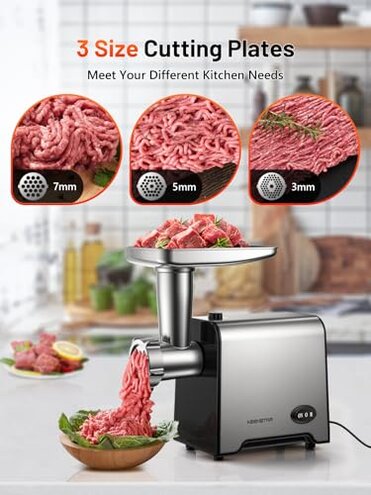
- Avoid it if you want a grinder that handles average supermarket trimming without much fuss, because clog sensitivity appears repeatedly.
- Avoid it if you meal prep often, since hand-wash cleanup and extra parts can create more upkeep than normal category tolerance.
- Avoid it if the high power wording makes you expect easy heavy-duty use, because real-world performance seems more prep-dependent than expected.
- Avoid it if you are brand new to meat grinding and want a forgiving first machine, because the hidden prep and assembly demands can feel steep.
Who this is actually good for
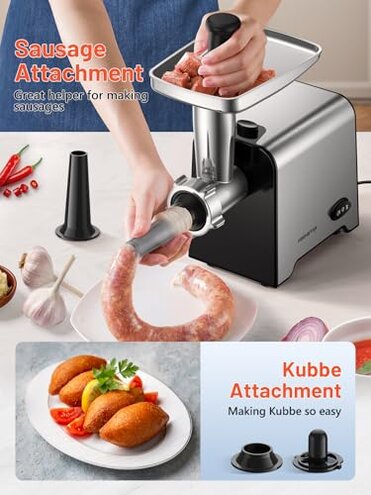
- Good fit for buyers processing small, carefully trimmed batches who accept the extra prep as the price of a lower upfront cost.
- Good fit for patient home cooks who do not mind hand washing and already expect grinder cleanup to be messy.
- Good fit for occasional users who mainly want simple ground meat and can ignore the extra attachments most of the time.
- Good fit for shoppers willing to follow stricter prep rules, because that reduces the main clogging problem.
Expectation vs reality
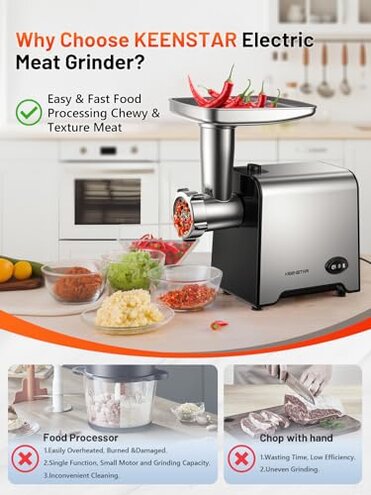
Expectation: A strong home grinder should process normal family batches with only basic trimming.
Reality: Careful prep matters more than expected, which can erase the time-saving benefit.
Expectation: Extra accessories should add flexibility.
Reality: Extra functions also add setup, washing, and storage effort.
Expectation: Hand cleaning is reasonable for this category.
Reality: Cleanup burden feels worse than expected when every session includes several small parts and raw-meat residue.
Safer alternatives

- Look for a grinder described as handling connective tissue better, which directly reduces the repeated jam risk.
- Choose a simpler model with fewer attachments if your real goal is plain ground meat, which cuts cleanup and setup friction.
- Prioritize designs known for easier post-use washing if you plan weekly batches, because that neutralizes the ongoing upkeep problem.
- Favor models praised as beginner-friendly, which helps avoid the hidden requirement of extra trimming and careful feeding.
The bottom line

Main regret starts when buyers expect fast, strong grinding and instead run into trimming rules, reversing, and cleanup work. That exceeds normal category risk because this machine appears less forgiving than a typical mid-range alternative during everyday home use. Verdict: skip it if you want convenience first; consider it only if you accept small batches, careful prep, and manual cleanup.
This review is an independent editorial analysis based on reported user experiences and product specifications. NegReview.com does not sell products.