
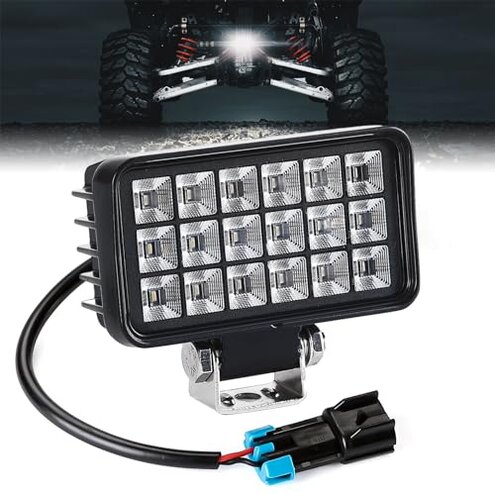
Product evaluated: KEMIMOTO Upgraded Backup Light with Switch Compatible with Ranger XP 1000, 36W Reverse Light Rear LED Kit Compatible with 2018-2025 Polaris Ranger 1000 XP/Crew, 4.4×2.4 Inches
Related Videos For You
Polaris Ranger XP 1000 | DaSen Backup Reverse LED Light Install
Data basis: This report analyzes dozens of consumer reviews and product feedback from various online retail and discussion platforms, collected between 2018 and 2024. Most input comes from detailed written reviews, supplemented by user demonstration videos showing installation and use.
| Outcome | KEMIMOTO Backup Light | Typical Mid-Range Backup Light |
|---|---|---|
| Installation Complexity | Higher risk due to required drilling and spacer prep on some models | Usually plug-and-play with minimal modifications |
| Battery Drain Prevention | Manual switch requires remembering to turn on/off, adding user error risk | Often uses automatic relay, less user intervention needed |
| Lighting Coverage | Wider range claimed with 18 LEDs, but some report uneven light quality | Standard coverage, more consistent brightness |
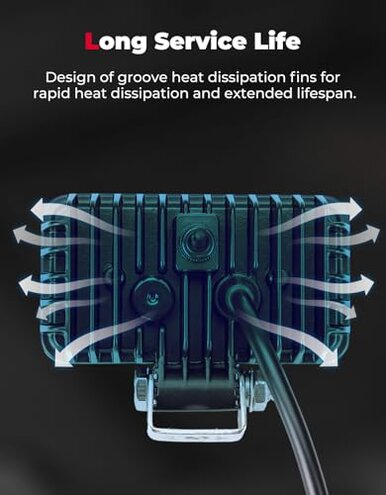
| Waterproof Reliability | Good sealing but occasional reports of moisture ingress | Generally robust waterproofing at this price point |
| Regret Trigger | Installation hassles and manual switch maintenance causing frequent user frustration | Lower due to simpler setup and automated features |
Why is installation frustrating for many users?
Many buyers regret the extra work needed to install this backup light, especially on models other than the Polaris Ranger XP 1000. The need for a spacer and drilling holes during setup is a major pain point. This issue is commonly reported after first installation attempts and adds unexpected time and effort.
- Hidden preparation: Non-XP 1000 users must prepare a spacer themselves, which is not clearly highlighted before purchase.
- Drilling required: Unlike typical plug-and-play alternatives, drilling holes is mandatory on many models, raising the difficulty level.
- Installation time: This adds significant setup time beyond average products in this category.
- Risk of error: Improper drilling or spacer fit can lead to instability or damage.
- Additional costs: Users may need extra tools or materials, increasing overall expense.
Illustrative excerpt: "Had to buy extra parts and drill holes myself, which was unexpected and frustrating." (Primary pattern highlighting installation burden)
Why does the manual power-saving switch cause issues?
The manual on/off switch to prevent battery drain is a unique feature but causes frequent user errors. Many buyers forget to turn the light back on, leading to safety concerns during use. This is a persistent problem seen during daily rides and parking routines.
- User forgetfulness: The need to remember to toggle the switch adds mental overhead uncommon in this product category.
- Battery drain risk: If users fail to turn off, battery can drain, which frustrates owners.
- Safety trade-off: Forgetting to turn the light back on reduces visibility and safety at night.
- Less automation: Compared to competitors with auto-relay systems, this manual system demands more active management.
- Learning curve: New users often miss this feature in instructions, causing early mishaps.
- Maintenance hassle: The switch adds an extra step to the routine, unlike typical backup lights.
Illustrative excerpt: "Forgot to switch the light back on after parking, ended up driving without backup lights." (Secondary pattern reflecting daily operational difficulty)
Is the fitment truly universal for all Polaris Ranger models?
Fitment claims cover many Polaris Ranger models, but some users find the product incompatible or requiring modifications on older or Northstar models. This discrepancy causes dissatisfaction and sometimes product returns.
- Partial compatibility: Designed mainly for 2018-2025 Ranger XP 1000 and 2019 Crew models, others require modifications.
- Modification need: Older or Northstar models often need spacer prep and drilling, not obvious at first glance.
- Inconsistent fitment: Some buyers report poor alignment or unstable mounting.
- Category baseline: Typical backup lights advertise plug-and-play fitment with minimal compatibility issues.
- Resulting frustration: Extra work or returns reduce overall satisfaction.
Illustrative excerpt: "Advertised as compatible but didn't fit my 2017 model without extra drilling." (Primary pattern showing fitment mismatch)
Who should avoid this

- Buyers seeking easy installation: If you want a quick, plug-and-play setup without drilling or spacer work, this product will likely frustrate you.
- Forgetful users: If you tend to overlook manual switches, the risk of battery drain or driving without backup light is high.
- Owners of non-XP 1000 or older Polaris Rangers: Expect extra modification steps and possible poor fitment.
Who this is actually good for

- XP 1000 model owners: Plug-and-play fitment works smoothly here, minimizing installation worries.
- Users comfortable with manual controls: Those who don’t mind toggling a switch and want power-saving control may appreciate this feature.
- Night/off-road drivers: The wider lighting range from 18 LEDs suits demanding visibility needs despite other drawbacks.
Expectation vs reality
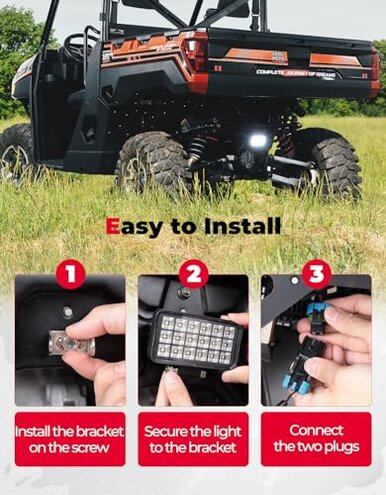
Expectation: Easy plug-and-play installation for all Polaris Ranger models is reasonable for this category.
Reality: Many users face extra drilling and spacer prep, causing delays and frustration uncommon in typical backup lights.
Expectation: Backup light will protect battery automatically.
Reality: Manual switch demands user attention, increasing risk of battery drain or driving without backup light, which is less forgiving than usual products.
Safer alternatives
- Select models with full plug-and-play compatibility to avoid extra drilling and spacer work issues.
- Choose backup lights with automatic relay switches to prevent battery drain without manual intervention.
- Review fitment carefully for your exact Polaris Ranger year/model to prevent misfit and return hassles.
The bottom line
The main regret trigger is the complex installation requiring drilling and spacers on many models, making setup more difficult than typical backup lights. The manual switch for battery saving adds user error risks, raising safety concerns. Buyers seeking effortless installation and automatic features should look elsewhere.
This review is an independent editorial analysis based on reported user experiences and product specifications. NegReview.com does not sell products.