
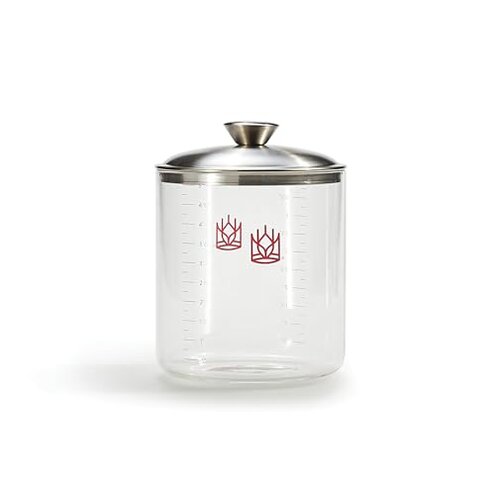
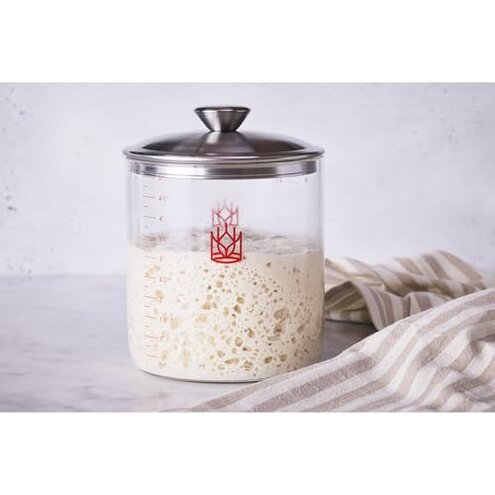
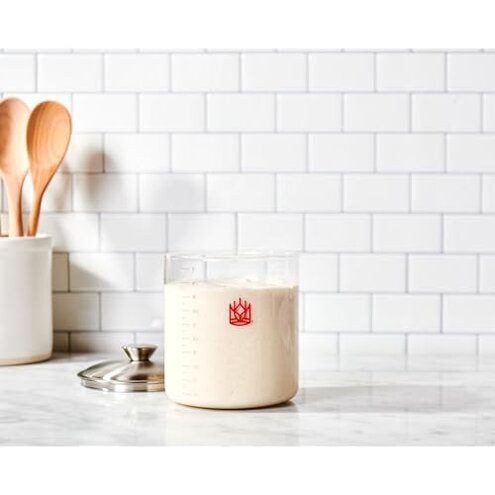
Product evaluated: King Arthur Baking Company Glass Sourdough Crock with Lid, 1.5-Quart Capacity
Related Videos For You
Sourdough bread (Crockpot version!)
How to feed/ revive sourdough starter or discard that’s been in your fridge for a while! #sourdough
Data basis: This report is based on dozens of buyer accounts and several video demonstrations collected from public review surfaces between Jan 2022 and Dec 2025. Most feedback came from written reviews, supported by visual reports and a few buyer forums, with emphasized trends used to identify recurring problems.
| Outcome | King Arthur Crock | Typical mid-range crock |
|---|---|---|
| Durability | Higher breakage risk reported repeatedly during shipping and everyday handling. | Lower breakage with thicker glass or ceramic common in mid-range options. |
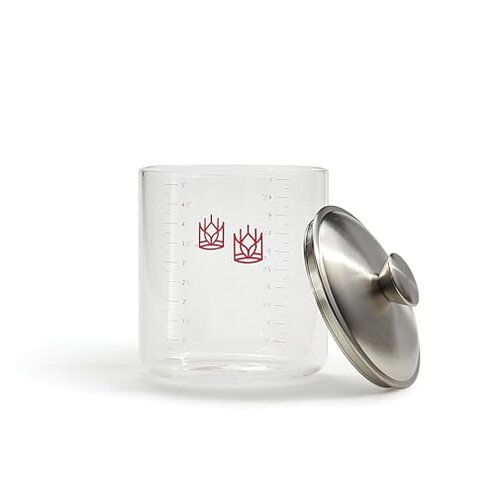
| Lid security | Loose-fitting lid lets gases vent but can let contaminants in when stored. | Snug lids or fitted covers reduce contamination at the cost of venting workarounds. |
| Cleaning burden | Hand-wash only requirement increases upkeep compared with dishwasher-safe alternatives. | Dishwasher-safe mid-range crocks are easier for routine care. |
| Capacity & markings | 1.5-Quart fits several loaves' starter but can be limiting for larger batches. | Larger sizes and clearer markings are common in mid-range models. |
| Regret trigger | Fragility + loose lid is the most common cause of buyer regret for this model. | Better balance between durability and sealing in typical mid-range options. |
Top failures
Does it crack or chip too easily?
Regret moment: Buyers report breakage when the crock is first unpacked or after minor knocks during daily use.
Pattern: This is a primary issue that appears repeatedly across accounts rather than an isolated event.
Category contrast: This product feels more fragile than most mid-range alternatives, increasing replacement effort and frustration.
Will the lid let in dust or fruit flies?
- Early sign: Noticeable airflow and small gaps under the lid during the first few days of fermenting.
- Frequency tier: Reports are commonly reported during longer room-temperature fermentation periods.
- Cause: The lid is intentionally loose to vent gases, which also allows pests and dust when left unattended.
- Impact: Contamination risk is more disruptive than expected for a product used for food starters.
- Fix attempts: Buyers often add cloth covers or rubber bands, which adds extra steps to everyday workflow.
Is the size and marking misleading for real use?
- Capacity note: 1.5-quart fits several loaves but can be tight for those making larger or multiple starters.
- Usage anchor: Limits show up during batch feeding when starter volume spikes.
- Visibility: Clear glass markings are useful, yet some users report the marks are faint under heavy fogging/condensation.
- Frequency tier: This is a secondary issue for regular bakers who scale recipes frequently.
- Impact: Requires extra containers or transfers, which is more upkeep than mid-range crocks that offer larger sizes.
- Workaround: Several buyers measure with separate bowls, adding extra time to each feeding cycle.
Does cleaning and care become a hidden chore?
- Hidden requirement: The crock is hand-wash only, which many users find inconvenient after daily use.
- When it appears: The burden becomes clear after a week of regular feedings when residue and odor need attention.
- Pattern: This is a persistent complaint among those switching from dishwasher-safe containers.
- Cause: Hand washing and careful drying are needed to avoid trapped moisture under the lid.
- Impact: Adds extra steps and time compared with typical mid-range crocks that are dishwasher-safe.
- Fixability: Routine rinsing and thorough drying help, but they don’t remove the extra effort requirement.
- Edge effect: For users in humid kitchens, the care burden becomes worse over time and may lead to odors or spotting.
Illustrative excerpts (not actual quotes)
"Shipped with a chip in the rim, unusable for daily handling." — reflects a primary pattern
"Loose lid let flies land overnight; had to cover with cloth." — reflects a primary pattern
"Hand-wash only is a surprise after heavy daily use." — reflects a secondary pattern
Who should avoid this
- Clumsy handlers: Anyone who needs a rugged container for frequent movement should avoid it due to the higher breakage risk.
- Minimal-upkeep buyers: If you want dishwasher convenience, avoid this because of the hand-wash requirement.
- Large-batch bakers: Those making bigger starters should avoid it because the 1.5-quart capacity can force extra transfers.
Who this is actually good for
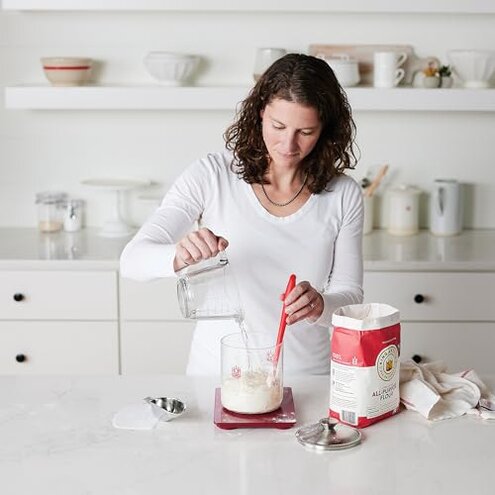
- Careful at-home bakers: Will tolerate the fragility if they value the clear glass markings and watch the crock closely.
- Small-batch fermenters: Those making limited starter volumes accept the size limit and prefer a compact crock.
- People who hand-wash: If you already avoid dishwashers, the cleaning trade-off is less painful.
Expectation vs reality
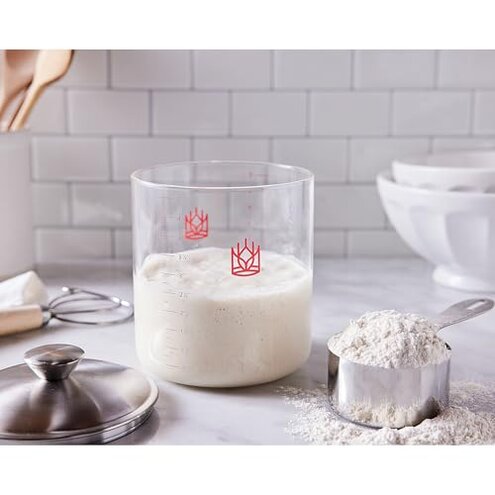
- Expectation (reasonable): Buyers expect a glass crock to be fragile compared with ceramic; Reality: this model appears more fragile than typical and chips in common handling scenarios.
- Expectation (reasonable): A vented lid should release gases; Reality: the lid is loose enough that it raises contamination risk if left uncovered.
- Expectation (reasonable): Small crocks require hand care; Reality: the maintenance on this model is noticeably heavier than many mid-range alternatives.
Safer alternatives
- Choose thicker glass or ceramic: Prefer crocks labeled with reinforced glass or ceramic to reduce the breakage risk.
- Look for snug lids: Seek containers with a tight-sealing lid or included breathable cover to avoid the contamination issue.
- Dishwasher-safe models: Pick dishwasher-safe crocks to eliminate the hand-wash burden and speed cleanup.
- Bigger capacity options: If you scale starters, buy a larger quart size to prevent the overflow/transfer work.
The bottom line
Main regret: The crock's combined fragility and loose lid are the core reasons buyers regret this purchase.
Why it matters: These issues create higher maintenance and contamination risk than expected for a mid-range starter container.
Verdict: Avoid this model if you want low-maintenance durability; consider sturdier, better-sealing alternatives.
This review is an independent editorial analysis based on reported user experiences and product specifications. NegReview.com does not sell products.