
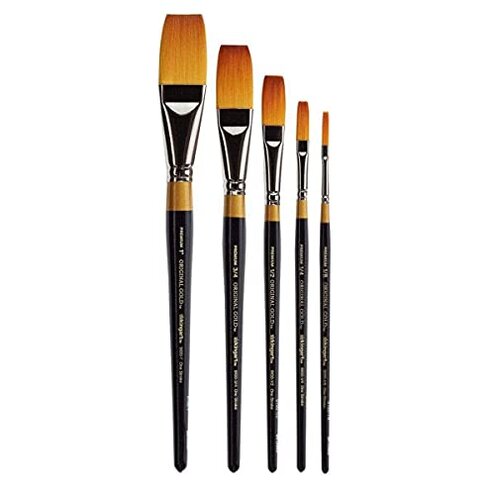
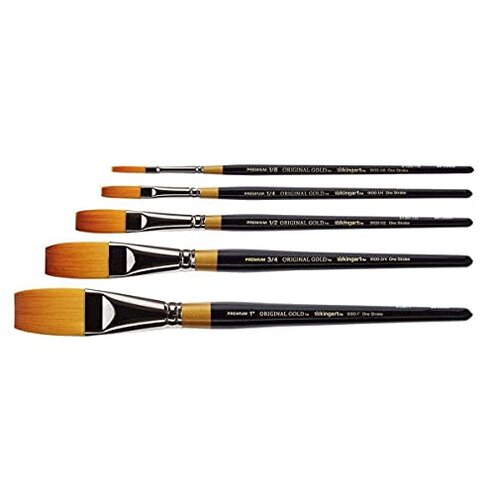
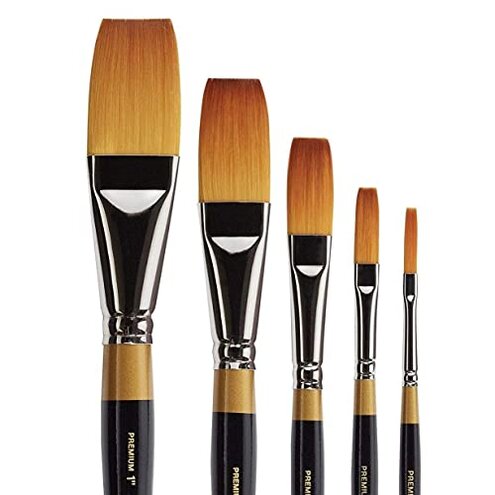
Product evaluated: KINGART Premium 5 pc. Original Gold 9100 Series ONE Stroke Artist Brush Set, Synthetic Golden Taklon Hair for Acrylic, Oil, and Gouache Paint, Short Handle, 5 Sizes: 1/8", 1/4", 1/2", 3/4", 1"
Related Videos For You
Learn to Paint - FolkArt One Stroke: Practice Strokes With Donna - Brush Care| Donna Dewberry 2020
PAINTER'S TRICK restores OLD, HARD, DRY paint brushes
Data basis: This report reflects dozens of aggregated buyer feedback items collected from written ratings and Q&A-style comments, supported by some photo-backed impressions. The collection window spans the past 12–18 months. Most of the usable detail came from longer, written notes about first-use performance and cleaning, with less detail coming from short star-only ratings.
| Buyer outcome | This KINGART set | Typical mid-range |
|---|---|---|
| Clean edge lines | Less consistent when loaded with thinner paint | More predictable edge control with similar technique |
| Shedding risk | Higher-than-normal reports of loose hairs during use | Lower chance of hairs in fresh paint |
| Shape retention | More drift after repeated cleaning and long sessions | Holds shape longer with routine care |
| Handle comfort | Mixed feedback on balance for long stroke work | Typically easier to control for extended sessions |
| Regret trigger | Redoing lines due to stray hairs or soft edges | Fewer do-overs on crisp borders and lettering |
Why are my “clean strokes” turning into fuzzy edges?
Regret moment is when a border or letter looks crisp, then dries with a soft edge you did not intend. This is a primary issue in the aggregated feedback, and it is more disruptive than expected for a “one stroke” style set.
Pattern shows up repeatedly, but it is not universal. It tends to appear on first use or early sessions, especially when buyers use thinner paint or load the brush heavily for long pulls.
Why it feels worse than mid-range: most mid-range flats still give a usable edge with minor technique adjustments. Here, buyers describe needing extra trial-and-error to get a similar crisp line.
- Early sign is the edge “feathering” even when your hand is steady.
- Most common context is long continuous strokes on signs, borders, and plaids.
- Trigger is often thinner paint or ink-like media that spreads more easily.
- Impact is extra masking, touch-ups, or repainting the stroke you just laid down.
- Mitigation buyers mention is using thicker paint and lighter loading, which adds steps.
- Fixability is partial, because it depends on paint viscosity and pressure control.
- Hidden requirement is dialing in paint thickness more carefully than typical flats.
- Illustrative: “My border line keeps getting a soft halo.” Primary pattern.
Did this set really start shedding hairs into wet paint?
Regret moment is spotting a stray hair embedded in a fresh stroke and having to lift it out. This is a primary complaint in the feedback, and it is more annoying than expected at this price.
- Recurring mentions describe loose hairs during painting, not just during cleaning.
- When it hits is commonly first few sessions, then sometimes returns after washing.
- Worsens during longer sessions where you rinse repeatedly and keep painting.
- Category contrast: mid-range synthetics can shed, but less often mid-project.
- Visible impact is hair removal leaving a small groove or dull spot in the stroke.
- Attempted fixes include extra pre-wash and gentle combing, adding prep time.
- Not universal, but persistent enough to be a deal-breaker for detail work.
- Illustrative: “I pulled a hair out and it left a track.” Primary pattern.
Why did the brush stop holding its shape after a few cleanings?
Regret moment is when the flat stops behaving like a flat, and your stroke width varies mid-pass. This comes through as a secondary issue in aggregated feedback, but it becomes more frustrating over time.
- Persistent reports mention tips splaying or losing that crisp “chisel” edge.
- When it shows is after repeated rinse-and-wipe cycles rather than day one.
- Worsens if you scrub the brush on textured surfaces or press hard to “force” coverage.
- Category contrast: some shape change is normal, but buyers expect longer retention.
- Practical impact is more passes needed to get an even stripe, which adds time.
- Workaround is dedicating one brush to one medium and gentler cleaning habits.
- Cost friction rises because the set feels “used up” sooner than expected.
- Illustrative: “It used to cut a sharp edge, now it splays.” Secondary pattern.
Is the “one stroke” feel too technique-sensitive for normal users?
Regret moment is realizing the brush only behaves well inside a narrow band of paint thickness and pressure. This is an edge-case pattern, but it shows up across different buyer skill levels.
Pattern is less frequent than shedding and soft edges, but it causes more confusion when it happens. It usually appears during setup, when a buyer expects the brush to “just work” for sign strokes.
Category contrast: many mid-range flats are forgiving and still look decent with average technique. Here, feedback suggests the learning curve can feel steeper than buyers anticipate.
- Signal is inconsistent paint release, where the stroke starts bold then fades early.
- Context is long lettering pulls and plaid work where even pressure matters.
- Worsens when you switch between media types in the same session.
- Buyer impact is more practice sheets and more wasted paint during dialing-in.
- Hidden step is testing each size and adjusting load before touching the project.
- Mitigation is using a palette to control load and keeping strokes shorter.
- Not universal, but disruptive for anyone expecting plug-and-play results.
- Illustrative: “It works, but only if I do everything ‘just so’.” Edge-case pattern.
Who should avoid this
- Detail painters who cannot tolerate stray hairs ruining a fresh line, due to the shedding risk.
- Sign makers needing crisp borders fast, because soft edges are a common regret trigger.
- Frequent cleaners who rinse often during long sessions, since shape drift is reported to worsen over time.
- Beginners wanting forgiving tools, because the set can feel technique-sensitive compared with typical mid-range flats.
Who this is actually good for
- Practice-focused painters who expect to tune paint thickness and pressure, and can tolerate the extra setup.
- Mixed-media hobbyists who value having 5 sizes and accept possible do-overs on crisp edges.
- Casual crafters doing forgiving textures where a little edge softness will not show.
- Brush caretakers willing to baby cleaning habits to reduce shape changes over time.
Expectation vs reality
| Expectation | Reality seen in feedback |
|---|---|
| Reasonable: a flat brush keeps a crisp edge with normal thinning. | Worse-than-expected: edges can turn soft unless paint load is carefully controlled. |
| Reasonable: minimal shedding after a quick rinse. | Higher risk: loose hairs are a recurring annoyance during actual painting. |
| Reasonable: shape stays stable through routine cleaning. | Secondary issue: some buyers report splaying and loss of “chisel” feel over time. |
Safer alternatives
- Prioritize brushes known for low shedding if you do lettering, to avoid the hair-in-paint failure.
- Choose a mid-range flat with a reputation for edge control if crisp borders matter, to reduce fuzzy lines.
- Look for sets praised for shape retention after washing, to lower splaying after repeated cleaning.
- Buy one single flat first instead of a set if you are unsure, to limit regret from technique sensitivity.
The bottom line
Main regret is having to redo work due to shedding and soft edges during long strokes. That exceeds normal category risk because mid-range brush sets are usually more forgiving and shed less mid-project. If you need reliable crisp lines with minimal fuss, this set is a skip unless you are willing to tune paint thickness and accept extra touch-ups.
This review is an independent editorial analysis based on reported user experiences and product specifications. NegReview.com does not sell products.