
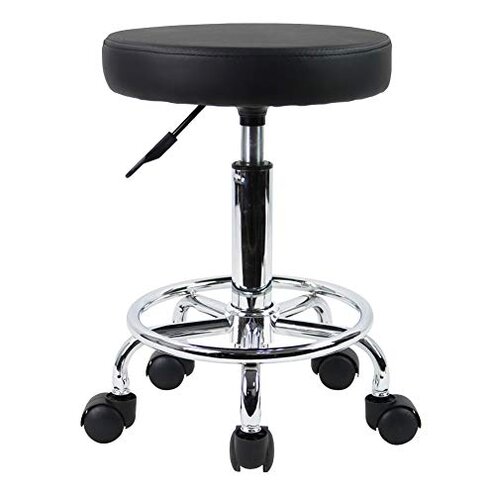
Product evaluated: KKTONER PU Leather Round Rolling Stool with Foot Rest Swivel Height Adjustment Spa Drafting Salon Tattoo Work Office Massage Stools Task Chair Small (Black)
Related Videos For You
How to assemble/build a rolling stool
Salon Chair Repair - The Salon Chair Guys - Hydraulic Salon Chair Repair Hydraulic Seal Replacement
Reviewed sources: this report used dozens of written buyer reviews and multiple video demonstrations collected through Jan 2026, with most feedback coming from written reviews supported by video clips.
| Outcome | KKTONER Stool | Typical Mid‑Range Stool |
|---|---|---|
| Stability | Wobble reported — more frequent wobble and tilt during use than expected. | Steadier — most mid-range stools feel stable for long sessions. |
| Height mechanism | Gas‑lift problems — occasional sinking or failure after weeks of use. | Reliable — typical alternatives keep height under regular daily use. |
| Cushion durability | Peeling/flattening — visible wear appears sooner than normal. | Higher durability — mid-range options usually last longer under similar use. |
| Regret trigger | Early failure — problems often start within the first weeks of use. | Later issues — regrets usually appear after months of heavy use. |
Why does the stool feel unstable during normal use?
Regret moment: wobble or sideways tilt often appears when you sit down or twist on the seat.
Severity: this is a primary complaint and commonly reported across feedback, making everyday tasks like tattooing or salon work frustrating.
Category contrast: more disruptive than expected because most mid‑range rolling stools remain stable for similar weights and motion.
Is the seat cushion going to peel or flatten quickly?
- Early signs — surface cracking or gloss loss shows up within weeks for many buyers.
- Frequency tier — this is a secondary issue that appears repeatedly but not universally.
- Likely cause — thin cover and light padding are commonly blamed in user feedback.
- Impact — cosmetic wear reduces comfort and gives a cheap look faster than peers.
- Fixability — cushion replacement or reupholstery adds time and cost compared to typical mid‑range stools.
Will the height adjuster fail or sink after regular use?
- Pattern — gas‑lift sinking is a primary pattern and appears repeatedly after weeks to months of use.
- When it happens — often shows up after daily handling or frequent height changes.
- Cause — reports point to weaker internal lift compared with sturdier models.
- Impact — sinking interrupts tasks and can be unsafe during active work.
- Attempts — some buyers temporarily re‑inflate or replace the lift, adding extra cost.
- Category contrast — this is worse than average because many mid‑range stools keep consistent height under similar use.
Does this stool need hidden maintenance or frequent tightening?
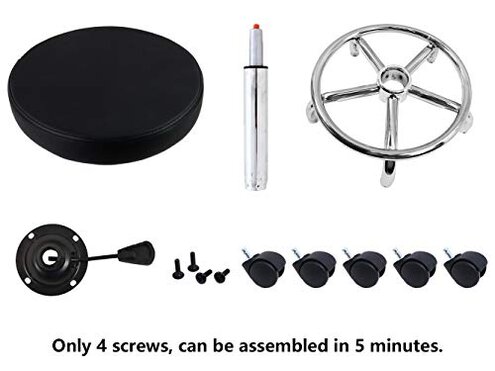
- Hidden requirement — periodic bolt tightening is commonly reported after first assembly.
- Early signs — creak or increased wobble appears within the first days of use for several buyers.
- Frequency tier — a secondary but persistent issue that requires regular checks.
- Cause — factory torque and loose fasteners are commonly blamed in feedback.
- Impact — adds maintenance time and can erode confidence in safety.
- Fixability — simple hand tools usually solve it, but this is more upkeep than most competitors require.
- Category contrast — less forgiving than typical mid‑range stools which rarely need frequent retightening.
Illustrative excerpts (not real quotes)
- "Seat started wobbling within two weeks of daily use." — reflects a primary pattern.
- "Cover peeled at the seam after a month." — reflects a secondary pattern.
- "Height slowly sank during a long shift." — reflects a primary pattern.
- "Had to tighten bolts weekly to stop creaking." — reflects a secondary pattern.
Who should avoid this
- Heavy or active users — avoid if you need a stool for hours per day because stability and lift issues are more disruptive than expected.
- Professional salon or studio — avoid if you need consistent height and appearance under frequent daily use.
- Low‑maintenance buyers — avoid if you don’t want periodic tightening or early cosmetic wear.
Who this is actually good for
- Light occasional users — okay if you use the stool sporadically and can tolerate early cosmetic wear.
- Budget short‑term needs — fits short projects where price matters more than longevity.
- DIY upcasters — suitable if you plan to reupholster or upgrade the gas lift quickly.
Expectation vs reality
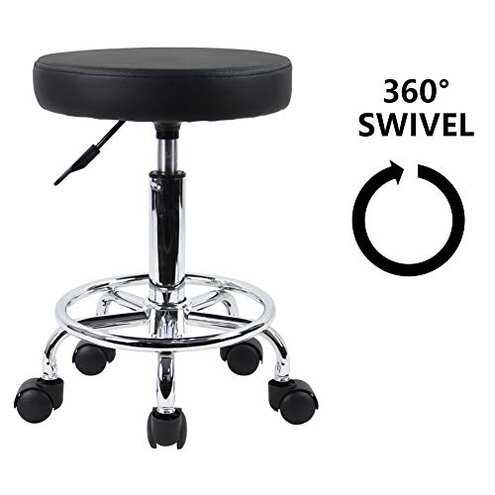
Expectation: reasonable for this category to be a comfortable compact stool that lasts months under light daily use.
Reality: many buyers saw wobble, peeling, or sinking within weeks, which is worse than the category baseline and leads to regret.
Safer alternatives
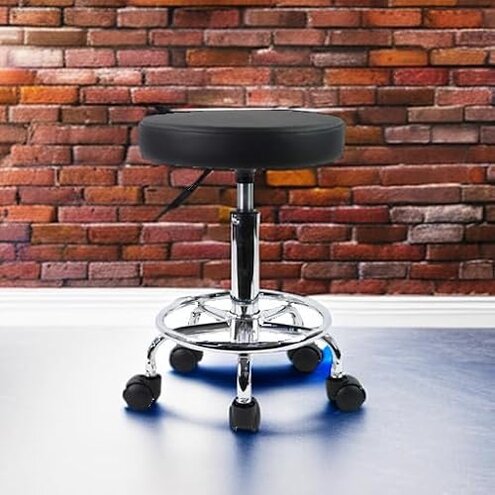
- Choose reinforced base — look for stools that advertise a metal or wider base to reduce wobble.
- Select tested gas lifts — prefer models that highlight a heavier‑duty lift or extended warranty to avoid sinking.
- Prefer thicker upholstery — pick seats with higher‑durability covers or replaceable cushions to limit peeling regrets.
- Check serviceability — buy from sellers that offer spare parts or clear maintenance guidance to reduce hidden upkeep.
The bottom line
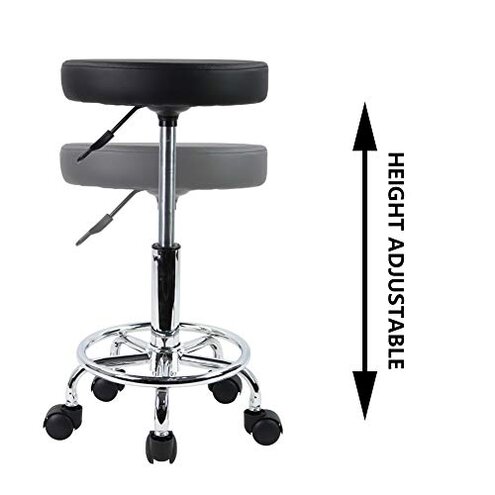
Main regret: early wobble and gas‑lift problems drive most return reasons and daily frustration.
Why worse: these failures appear sooner and more often than typical mid‑range rolling stools, adding maintenance and replacement costs.
Verdict: avoid this stool if you need lasting stability and low upkeep; consider sturdier mid‑range alternatives instead.
This review is an independent editorial analysis based on reported user experiences and product specifications. NegReview.com does not sell products.