
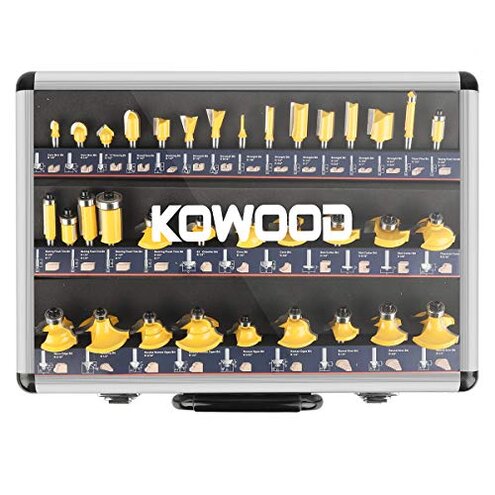
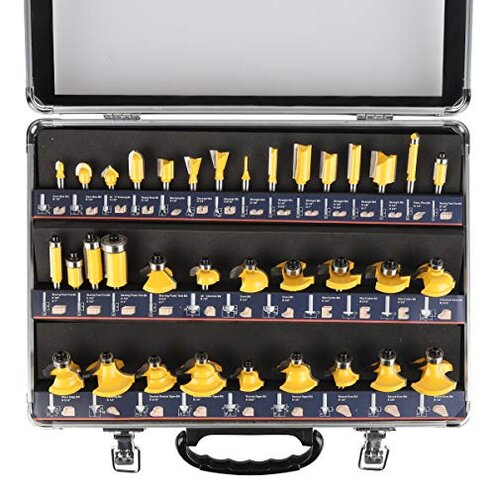
Product evaluated: KOWOOD Router Bits Sets of 35B Pieces 1/4 Shank Router Bit Set T Shape Wood Milling Cutter
Related Videos For You
99% of Beginners Don't Know the Basics of Router Bits
Data basis I analyzed dozens of written reviews and several demonstration videos collected between Jan 2020 and Dec 2025. Most feedback came from written reviews, supported by video demonstrations. Patterns reported here reflect a mix of recent buyers and long-term use notes.
| Outcome | This set | Typical mid-range |
|---|---|---|
| Cut quality | Variable — sharp at first but commonly reported to dull quickly under normal hardwood use. | Consistent — mid-range bits keep edge longer across several uses. |
| Durability | Lower — buyers report faster wear and more replacements than expected. | Higher — typical sets tolerate repeated use before resharpening. |
| Fit & balance | Inconsistent — some 1/4" shanks show wobble or vibration in routers. | Tighter — mid-range collets and bits usually run truer with less vibration. |
| Kit accuracy | Mixed — sizing and labeling errors appear repeatedly in buyer reports. | Reliable — mid-range kits tend to match sizes and include clear labeling. |
| Regret trigger | Replacement cost — frequent repurchases and added tools make total cost rise fast. | Lower ongoing cost — fewer replacements, less extra equipment needed. |
Top failures
Dulling: Why do these bits lose sharpness so quickly?
Regret moment You notice rough edges and burning after a few passes on hardwood.
Severity This is a primary issue and commonly reported across buyers who used the bits on dense wood.
Usage The problem appears within the first few uses and worsens under long sessions or cutting hardwoods.
Category contrast More upkeep than most mid-range alternatives because users must resharpen or replace much sooner.
Fit issues: Do the bits wobble or vibrate in the router?
- Early sign — wobble felt immediately when starting the router.
- Frequency — this is a secondary but common complaint across different buyers.
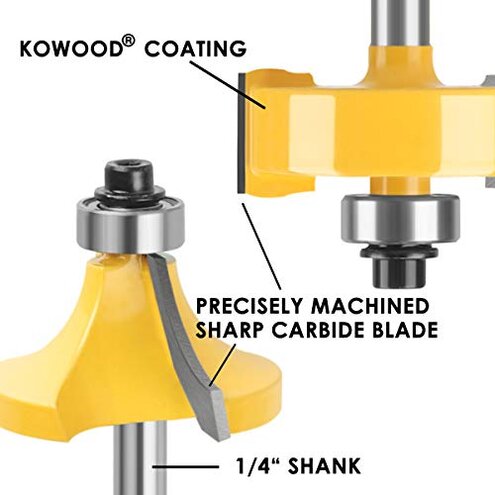
- Cause — inconsistent 1/4" shank tolerances that don't seat perfectly in collets.
- Impact — vibration causes chatter marks and uneven cuts during routing.
- Fixability — often requires buying a better collet or shank adapter to reduce wobble.
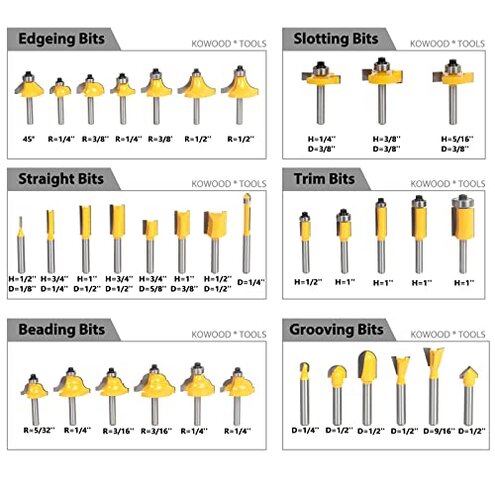
Kit accuracy: Are the sizes and labels reliable?
- Primary sign — cutters labeled inconsistently compared to measurements buyers checked.
- Scope — appears repeatedly across written reviews and some demonstrations.
- When — noticed during initial setup when sorting bits into a project-specific tray.
- Hidden requirement — expect to verify sizes with calipers before precision work.
- Impact — extra setup time and reordering of specific bit sizes.
- Severity — less frequent than dulling but more disruptive for precision tasks.
- Attempts — buyers report marking or re-labeling bits to avoid future confusion.
Packaging & support: Is the case and warranty reliable?
- Early sign — aluminum case arrives dented or with poor internal organization.
- Frequency — a secondary issue but recurrent across several buyers.
- Service — some buyers report delayed responses when parts arrived damaged.
- Impact — damaged packaging increases initial inspection time and risk of missing parts.
- Workaround — many buyers recommend photographing defects immediately for faster claims.
- Cost — combined with rapid wear, replacement costs can exceed a mid-range set.
- Fixability — manufacturers may replace items, but the process adds extra handling time.
Illustrative excerpts
"Illustrative" "Cut looked fine first pass, dull and burned on second pass." — primary
"Illustrative" "Bit felt wobbly despite tightening the collet." — secondary
"Illustrative" "Sizes didn't match my measurements, had to sort them all." — primary
"Illustrative" "Case was dented and one slot was missing foam." — edge-case
Who should avoid this
- Hardwood users — if you rout hardwood often, the rapid dulling exceeds normal tolerances.
- Precision shops — inconsistent sizing and wobble make tight-tolerance work risky.
- Busy pros — extra replacements, sharpening, and collet changes add downtime and cost.
Who this is actually good for
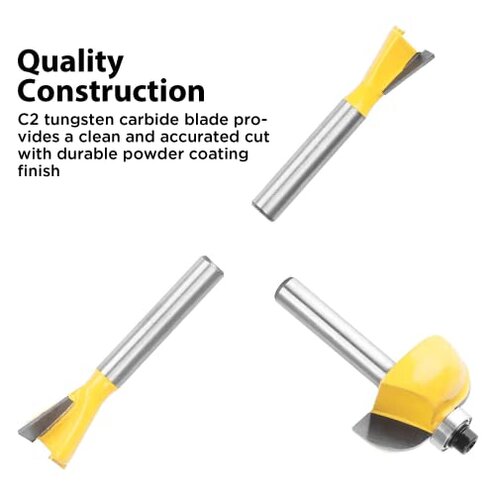
- Hobbyists on softwoods — if you cut softwoods occasionally, you may accept faster wear for the low upfront price.
- Beginners on a budget — if you need many bit shapes to learn profiles, this set provides variety despite quality trade-offs.
- One-off projects — if you need bits for a few short runs, the kit can be serviceable before wear shows.
Expectation vs reality
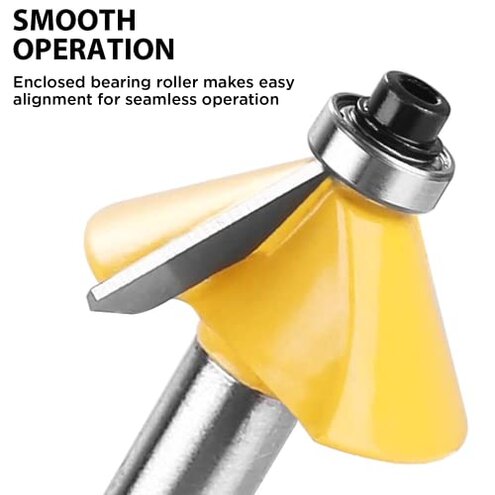
- Expectation — reasonable for this category: a 35-piece set should give usable variety and moderate durability.
- Reality — this set shows worse durability and fit than typical mid-range kits, requiring extra tools and purchases.
- Expectation — labeled sizes match hands-on measurements.
- Reality — labeling and sizing errors force verification and relabeling before precision work.
Safer alternatives
- Buy fewer high-quality bits — choose mid-range bits with verified tolerances to neutralize fit and vibration problems.
- Check runout before use — measure bit runout and replace or dress bits that wobble to avoid chatter.
- Plan for sharpening — purchase a resharpening service or jig to counter rapid dulling.
- Verify sizes — use calipers to confirm labeling when doing precision joinery or profiles.
- Inspect packaging — photograph incoming kits and test a few bits right away to catch shipping damage early.
The bottom line
Main trigger The biggest regret is rapid dulling combined with fit inconsistency, which increases long-term cost and downtime.
Why worse These failures are more disruptive than typical budget sets because they demand extra tools and frequent replacement.
Verdict Avoid this set if you need durable, balanced bits for repeated or precision work.
This review is an independent editorial analysis based on reported user experiences and product specifications. NegReview.com does not sell products.