
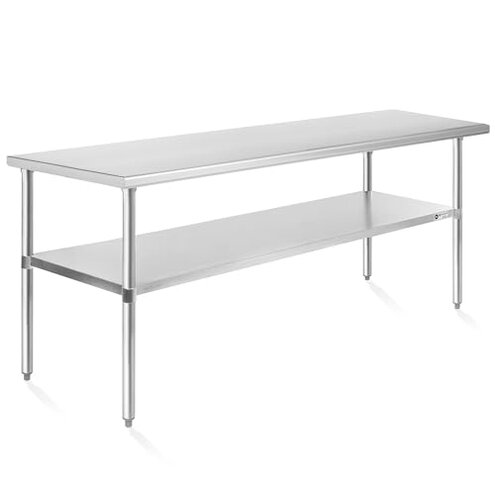
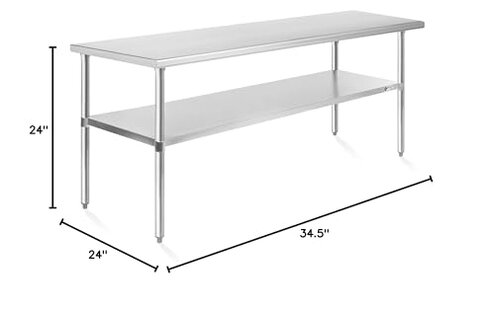
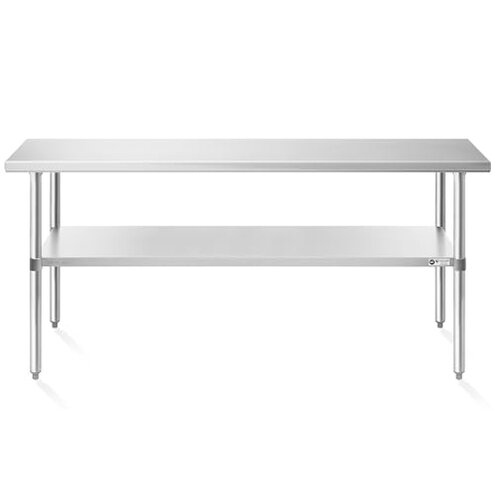
Product evaluated: KUTLER Stainless Steel Table 24 x 72 Inches, NSF Heavy Duty Commercial Kitchen Prep and Work Table with Undershelf for Restaurant, Hotel, Home
Related Videos For You
How to Install Casters on a Stainless Steel Work Table
Condenser Cleaning - Undercounter, Worktop & Prep table refrigeration
Data basis: This report used dozens of user accounts and visual checks gathered from written reviews and video demonstrations collected between Jan 2023 and Jan 2026. Most feedback came from written reviews, supported by video demonstrations, giving a mix of quick impressions and hands-on setup clips.
| Comparison | KUTLER 24x72 | Typical Mid-range Table |
|---|---|---|
| Stability | Higher wobble reported after setup and under heavy prep loads. | More stable under similar loads in most mid-range options. |
| Finish & edges | Finish issues and sharp edges appear in several instances. | Smoother edges and cleaner welds are common for the category baseline. |
| Assembly | Time-consuming setup and occasional missing hardware delays. | Quicker fit assembly with clearer instructions typical in category peers. |
| Undershelf durability | Prone to bend or surface issues under repeated heavy storage. | Stronger under-shelves that resist sagging are more common. |
| Regret trigger | Higher-than-normal risk of buyer disappointment due to wobble and finish defects. | Lower regret when buyers select mid-range models with steadier assembly. |
Does the table wobble or feel unstable?
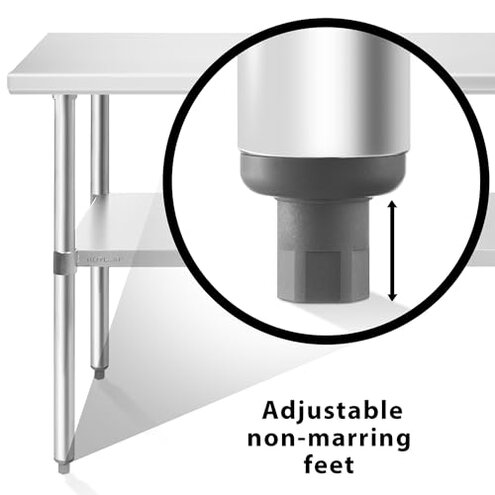
Regret moment: Buyers notice wobble during first use while chopping or rolling dough.
Pattern: This is a commonly reported issue, seen repeatedly across written feedback and setup videos.
Usage anchor: Wobble appears after setup and worsens when the table carries heavy pots or frequent back-and-forth prep.
Category contrast: More disruptive than expected because most mid-range prep tables are stable out of the box, while this one often needs extra shimming or re-tightening.
Are sharp edges and poor finish a problem?
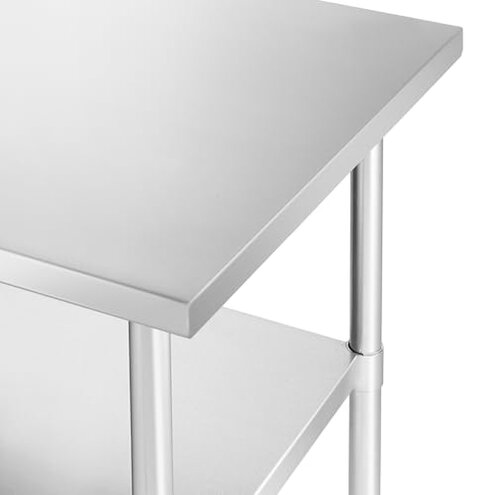
- Early sign: Rough or unfinished edge felt during first unpacking and inspection.
- Frequency tier: This is a secondary but persistent pattern reported by multiple buyers.
- Cause: Finish flaws commonly appear at welds and cut edges after shipping and handling.
- Impact: Sharp edges create a safety concern for quick commercial use.
- Fixability: Simple filing or edge trimming helps, but it adds extra time and tools.
Will assembly and missing hardware slow you down?
- Early sign: Assembly takes longer than the product listing suggests for first-time users.
- Frequency tier: This is a primary complaint among new buyers setting up alone.
- When it shows: Problems surface during initial setup, especially in single-person installs.
- Worsens when: Heavy parts and misaligned bolt holes require extra force and a second person.
- Attempts: Buyers commonly report needing additional tools and hardware not included.
- Hidden requirement: The table often requires two people or heavy-duty tools for proper alignment.
- Category contrast: This is more effort than most mid-range tables that snap or bolt together more easily.
Does the undershelf corrode or bend under load?
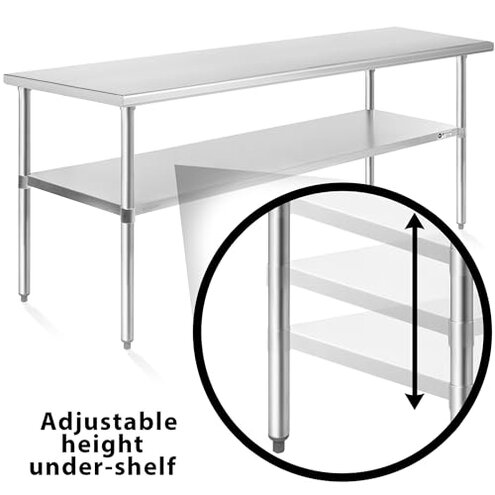
- Early sign: Visible bending or finish wear appears after weeks of heavy storage.
- Frequency tier: This is a secondary but notable pattern in longer-term use reports.
- Usage anchor: Problems occur after repeated use and when heavier ingredient bins are stored below.
- Cause: The undershelf may be less reinforced than the top, leading to sagging under constant heavy loads.
- Impact: Sagging reduces usable storage and forces buyers to relocate heavy items.
- Attempts: Buyers add extra supports or move loads to floor-level to compensate.
- Fixability: Reinforcement is possible but requires extra parts or retrofit brackets.
- Category contrast: This is less durable compared with many peers designed for heavy storage use.
Illustrative excerpts
Excerpt: "Table wobbled when I chopped vigorously, needed shims immediately."
Pattern: Primary pattern reflecting the stability issue during first use.
Excerpt: "Edges were rough out of the box, I filed them down myself."
Pattern: Secondary pattern tied to finish and safety concerns.
Excerpt: "Missing a bolt and instructions were vague, took two people to fit."
Pattern: Primary pattern showing the hidden assembly requirements.
Who should avoid this
- Single-person buyers: If you set up alone, the assembly demands and hidden tools make this a poor choice.
- High-volume kitchens: If you need worry-free stability, the wobble risk is more disruptive than acceptable.
- Safety-conscious users: If sharp edges are intolerable, the finish issues create extra labor and risk.
Who this is actually good for
- Handy buyers: If you can file edges, shim legs, and have tools, you can tolerate the finish and assembly fixes.
- Budget-minded users: If cost matters more than out-of-box perfection, you may accept the trade-offs.
- Low-load users: If you store light items only, the undershelf sag is less of an issue.
Expectation vs reality
Expectation: Reasonable for this category is a sturdy table that needs minimal adjustment.
Reality: The KUTLER table often needs shimming, extra hardware, or finish work before regular use.
- Expectation: Typical mid-range tables arrive with usable edges and clear instructions.
- Reality: Here, edge finishing and missing fasteners increase setup time and effort.
Safer alternatives
- Look for reinforced legs: Choose models explicitly marketed with stabilized leg systems to avoid wobble.
- Check finished welds: Prioritize tables with clear pictures of finished edges and customer images showing smooth seams.
- Confirm included hardware: Buy from sellers that list every bolt and tool included to prevent missing parts delays.
- Choose reinforced shelves: If you use the undershelf heavily, prefer tables with stated weight-rated undershelves.
- Prefer local pickup: When possible, inspect in person or choose local pickup to confirm finish and stability.
The bottom line
Main regret: The prime regret trigger is the wobble and finish combination noticed at first use.
Why it matters: These issues exceed normal category risk because they add setup time, safety fixes, and potential reinforcement costs.
Verdict: Avoid this table unless you accept hands-on fixes or need a lower-cost option and have tools or help for setup.
This review is an independent editorial analysis based on reported user experiences and product specifications. NegReview.com does not sell products.