
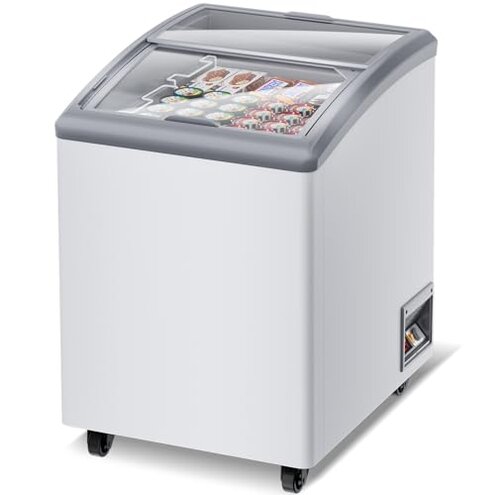
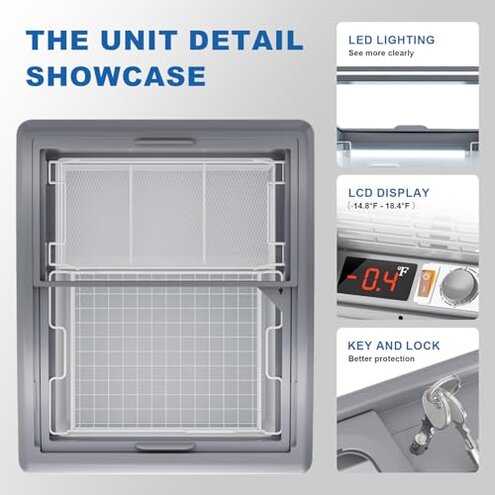
Product evaluated: 5.5 Cu.Ft Ice Cream Freezer Commercial 23 Inch Display Case Chest Freezers Restaurant Gelato Dipping Cabinet with 2 Large Displayed Baskets
Related Videos For You
Ice Cream Maker
5 Essential Chest Freezer Maintenance Tips
Data basis: This report draws on dozens of written buyer reviews and several video demonstrations collected from public product feedback between 2023–2025. Most feedback came from written reviews, supported by troubleshooting clips and seller Q&A. The distribution is primarily customer text comments, with some short video uploads.
| Outcome | 5.5 cu.ft unit | Typical mid-range chest freezer |
|---|---|---|
| Temperature stability | Unstable—reports of warm spots and cycling during daily use. | Stable—mid-range units usually hold set temperature with minor drift. |
| Noise & vibration | High—several buyers noted louder-than-expected compressor noise. | Moderate—similar units generally quieter for customer areas. |
| Mobility & setup | Tricky—casters reported stiff or misaligned after shipping. | Smoother—mid-range displays usually arrive with usable casters. |
| Service & fixability | Limited—warranty exists but some buyers reported slow part resolution. | More support—established brands often provide faster parts access. |
| Regret trigger | Frequent cold loss—risk of product spoilage during daily service. | Lower risk—typical alternatives have fewer temperature complaints. |
Is the freezer keeping my ice cream actually cold?
Temperature inconsistency is the primary issue reported and triggers the most customer regret.
Pattern: this is a primary issue seen repeatedly across reviews.
Usage anchor: problems appear during daily service and sometimes within the first week after setup.
Category contrast: this feels worse than expected because most mid-range freezers keep steady temperatures during heavy use.
Why is it so noisy and does that matter?
- Early signs: louder compressor and fan noise noticed right after unboxing.
- Frequency tier: a secondary issue—commonly reported but not universal.
- When it worsens: noise increases under long service cycles or continuous on-time.
- Cause hint: vibration likely from shipping misalignment or weak mounts.
- Impact: disruptive in cafés or small shops where noise matters for customers.
Are there gaps, leaks, or condensation problems?
- Seal issues: some buyers saw fogging or condensation near the glass after setup.
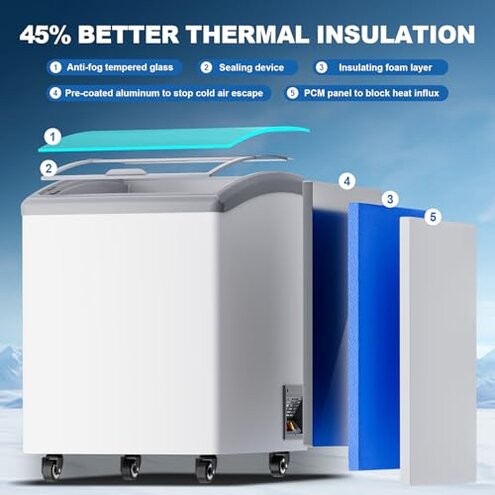
- Insulation trade—despite claimed layers, performance varies in warm rooms.
- Frequency: a secondary issue seen across multiple review types.
- Worse-than-normal: mid-range cabinets usually manage condensation better under similar room temperatures.
- Hidden need: may require more frequent manual defrosting or attention to door seals.
- Attempts to fix: buyers reported tightening seals or contacting support with mixed results.
- Impact on business: condensation can lead to visible ice melt and product sogginess during busy shifts.
Does moving and maintaining this cabinet require extra work?
- Mobility problems: casters were reported as stiff or misaligned on arrival.
- Assembly time: some buyers needed extra time to align the lid and seals after delivery.
- Maintenance: a hidden requirement for frequent checks and occasional parts replacement.
- Service access: warranty exists but buyers described slow part support for compressor or controls.
- Frequency tier: this is a tertiary but persistent issue that appears during the first months of use.
- Cost impact: extra maintenance time adds ongoing operating cost for small businesses.
- Fixability: some issues can be corrected with basic tools, but others need service visits.
- Customer trade-off: mobility claims are attractive, but actual use may require two people to reposition.
Illustrative excerpts
Illustrative: “Freezer drifted warm overnight and ruined tubs during opening week.” — primary pattern.
Illustrative: “Compressor louder than expected for a display unit in my cafe.” — secondary pattern.
Illustrative: “Caster wheel bent after first move, had to reassemble.” — edge-case pattern.
Who should avoid this
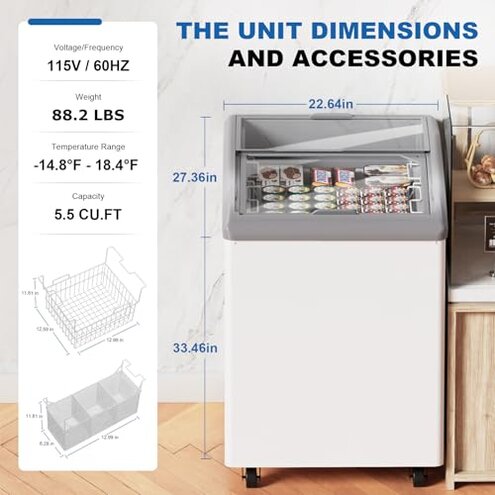
- High-volume shops: avoid if you need consistent cold during constant customer turnover; temperature lapses risk product loss.
- Quiet cafés: avoid if ambient noise matters; loud compressor complaints exceed typical tolerance.
- No-tech operators: avoid if you cannot accept extra maintenance or service calls due to hidden upkeep.
Who this is actually good for
- Low-traffic vendors: suitable if you run a small stall where occasional temperature checks are acceptable and loss risk is small.
- Budget-focused buyers: okay for those who prioritize price over flawless stability and can handle repairs.
- Workshop users: fine for storage of non-food frozen goods where temperature perfectness is less critical.
Expectation vs reality
Expectation (reasonable for this category): buyers expect a display freezer to hold set temperature during day-long service.
Reality: this unit shows temperature drift and requires monitoring more than typical mid-range options.
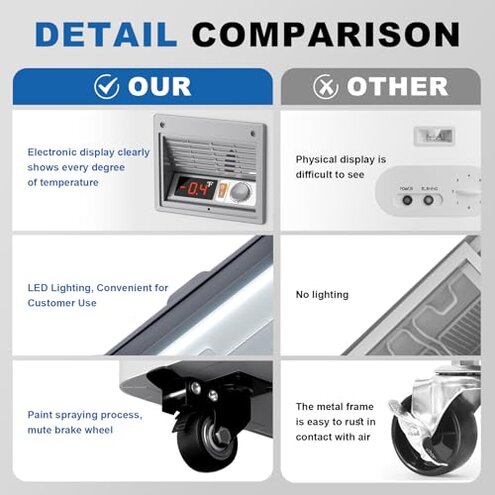
Expectation: casters and lights should work out of the box.
Reality: some users needed to adjust casters and tighten fittings after delivery to reduce noise and wobble.
Safer alternatives
- Choose proven brands: pick vendors with documented faster parts support to reduce repair downtime.
- Prioritize stability: look for freezers with explicit temperature-hold tests in specs or reviews.
- Inspect on arrival: plan to check casters, seals, and compressor noise immediately to claim damages early.
- Consider service plans: opt for extended support if your business cannot tolerate unexpected repairs.
The bottom line

Main regret: frequent temperature instability is the dominant issue and the primary reason buyers report spoilage risk.
Why worse: compared with typical mid-range displays this unit shows more noise and needs extra maintenance.
Verdict: avoid this model if you need reliable, low-maintenance cooling for daily commercial service.
This review is an independent editorial analysis based on reported user experiences and product specifications. NegReview.com does not sell products.