
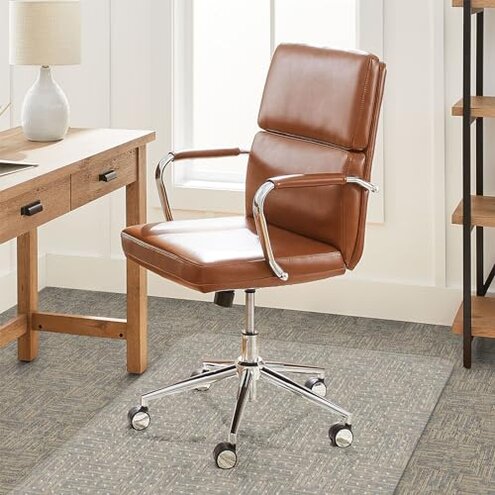
Product evaluated: Office Chair Mat for Carpet: 36" x 48" Plastic Heavy Duty Computer Desk Mats with Lip for Low Flat and No Pile Carpeted Floor - Clear Rug Pad for Rolling Chairs Office Work Home Gaming Rectangle
Related Videos For You
Stop DESTROYING Your Home Office Carpet! Build a Chair Mat For CHEAP!
Data basis: This report summarizes dozens of buyer comments collected from written feedback and video-style demonstrations between late 2023 and early 2026. Most signals came from written experiences, with supporting visual feedback helping confirm what happens after setup and during daily rolling use.
| Buyer outcome | Labeta mat | Typical mid-range mat |
| First-day setup | Easier if it arrives flat enough to use right away | Usually slower because flattening is often needed |
| Carpet compatibility | Narrower tolerance because low-pile carpet fit matters more than usual | More forgiving across common office carpet variations |
| Daily rolling feel | Mixed when chair weight and carpet texture are not ideal | More predictable for routine desk use |
| Higher-normal risk | More setup-sensitive than this category should be | Lower risk if basic carpet specs are close |
| Regret trigger | Buying for the wrong carpet and noticing drag or movement after a work session | Mainly size mistakes, not basic function failure |
Why does it feel wrong on carpet that seems close enough?
This is the primary issue. The biggest regret moment happens after setup, when the mat looks usable but rolling still feels resistant or unstable. That trade-off is more disruptive than expected because chair mats are supposed to reduce friction, not add guesswork.
The pattern appears repeatedly. It is not universal, but it shows up often enough when carpet is even slightly outside the intended low-pile range. Compared with a typical mid-range option, this one seems less forgiving about carpet texture and thickness.
- Early sign: After the first few chair pushes, movement can feel more draggy than buyers expected.
- When it shows: The issue tends to appear during the first work session, not weeks later.
- Hidden requirement: Carpet needs to be very close to the stated low and flat profile, which is a narrower match than many shoppers assume.
- Impact: Long desk sessions feel more annoying because small repositioning takes more effort.
- Why worse: That is a higher-than-normal category risk, since mid-range chair mats usually tolerate small carpet differences better.
Illustrative excerpt: “It fits my office, but my chair still fights me.” Primary pattern tied to carpet-match problems during normal use.
Why does the mat shift or not grip the way buyers expect?
- Pattern tier: This is a secondary issue, less frequent than rolling resistance but more frustrating when it happens.
- Usage moment: It tends to show up after setup once the chair starts moving in and out repeatedly.
- Reported behavior: Some feedback describes the mat acting less secure than expected on certain low carpets.
- What worsens it: Frequent push-offs, rolling backward, and longer work sessions can make movement more noticeable.
- Buyer cost: You may spend extra time repositioning the mat instead of forgetting it is there.
- Category contrast: Some movement can happen with carpet mats, but this seems more setup-sensitive than many mid-range alternatives.
Illustrative excerpt: “I wanted protection, not another thing to keep straight.” Secondary pattern reflecting setup drift during daily use.
Why does the size and lip create annoyance in real desks?
This is a persistent secondary complaint. The 36" x 48" format with lip works on paper, but some buyers find the coverage or desk fit less helpful in practice. The frustration shows up after the mat is placed and the chair starts moving beyond the protected area.
It becomes clearer over time. If your chair rolls wide, or your desk layout is not centered, the usable zone can feel smaller than expected. That feels worse than normal because buyers often expect a chair mat in this price range to be more forgiving of real room layouts.
- Early clue: Corners or edge coverage can look tighter once the chair is fully under the desk.
- When worse: The problem grows during workdays with lots of side-to-side rolling.
- Practical impact: Wheels may leave the mat more often than buyers planned.
- Trade-off: A compact footprint is easier to place, but it can protect less area in active setups.
Illustrative excerpt: “It covers the center, but not how I actually move.” Secondary pattern linked to everyday desk motion.
Why can a mat advertised for instant use still disappoint after unboxing?
- Issue tier: This is an edge-case issue, but it matters because the flat-out-of-box promise raises expectations.
- When noticed: Buyers notice it immediately during unboxing and floor placement.
- Pattern: Feedback suggests setup is often easier than rolled mats, but not always perfectly trouble-free.
- Why frustrating: Even minor settling or positioning effort feels bigger when the main selling point is instant convenience.
- Fixability: Small setup annoyances may be manageable, but they still add steps buyers thought they were avoiding.
- Category contrast: Most mid-range mats need some flattening, so this product is better here when it works, but more disappointing when it does not.
- Regret angle: The problem is not severity alone; it is expectation mismatch.
Illustrative excerpt: “Better than rolled mats, but not as effortless as promised.” Edge-case pattern tied to unboxing expectations.
Who should avoid this
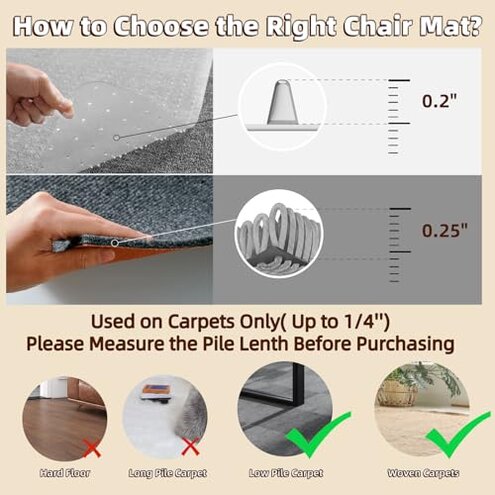
- Avoid it if your carpet is anything other than clearly low and flat, because compatibility looks narrower than normal for this category.
- Skip it if you hate trial-and-error setup, since basic function depends heavily on carpet match and desk layout.
- Pass if you move your chair a lot side to side, because the coverage can feel limiting in active work setups.
- Look elsewhere if mat movement would drive you crazy, since repeated repositioning appears in recurring complaints.
Who this is actually good for
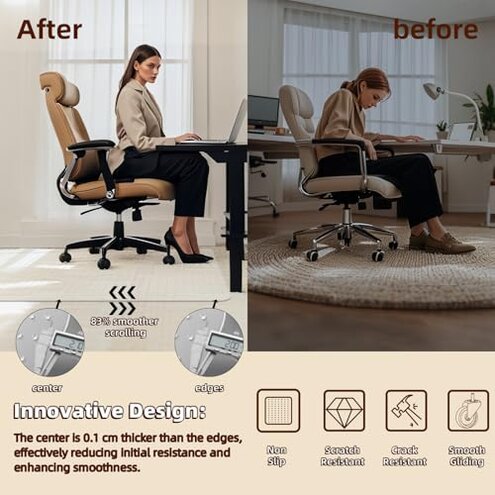
- Good fit for buyers with clearly low-pile carpet who mainly roll forward and back under a centered desk.
- Works better for people willing to measure their carpet and accept that compatibility matters more than usual.
- Reasonable choice if your main pain is curled rolled mats, and you can tolerate some placement sensitivity.
- Better match for lighter daily office use where the chair stays mostly in one area.
Expectation vs reality
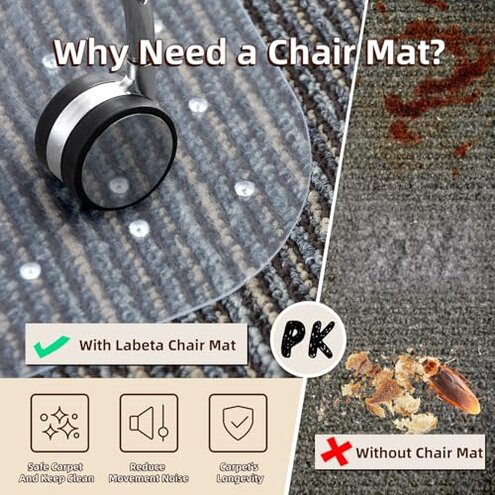
Expectation: A chair mat for carpet should work on most common office carpets without much thought.
Reality: This one seems less forgiving than a reasonable-for-this-category mid-range baseline, so “close enough” carpet may still feel wrong.
Expectation: The lip and rectangle should cover normal desk movement.
Reality: Real movement can exceed the protected area faster than some buyers expect.
Expectation: Instant-use design means zero setup friction.
Reality: Unboxing ease is often better than rolled mats, but not always fully effortless.
Safer alternatives
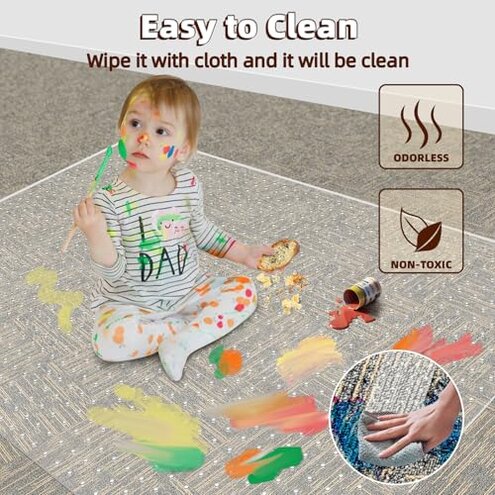
- Choose by carpet first, not by price, and look for mats described as more forgiving across low-pile variations.
- Size up if you roll side to side often, because extra coverage directly reduces the edge problem.
- Prioritize grip tolerance if mat shifting bothers you, since that failure is more disruptive than minor cosmetic issues.
- Treat “instant use” carefully and focus more on real-use compatibility than packaging convenience.
The bottom line
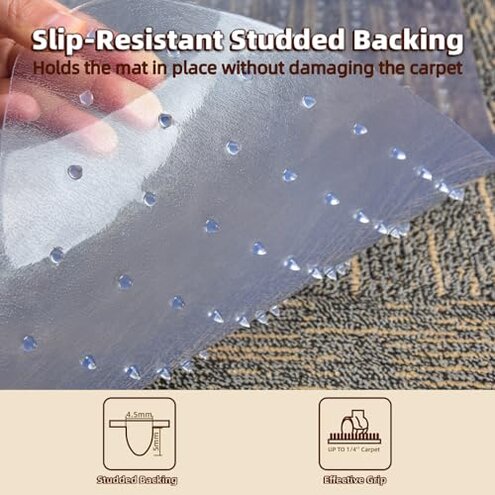
Main regret comes from buying this mat for carpet that seems suitable, then noticing drag, shifting, or limited coverage during real work. That exceeds normal category risk because the product appears more sensitive to carpet type and setup details than many mid-range alternatives. Verdict: avoid it unless your carpet is clearly low-pile, your desk movement is simple, and you value flat-pack convenience more than broad compatibility.
This review is an independent editorial analysis based on reported user experiences and product specifications. NegReview.com does not sell products.