
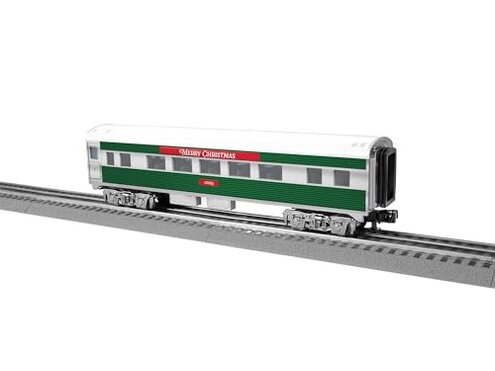
Product evaluated: Lionel Christmas 12023 Passenger O Gauge Model Train Coach Car
Related Videos For You
A Full Tour of My Amazing O Gauge Model Train Layout!
TOP 3 O-Gauge Freight & Passenger Cars : My Picks for what to Pull behind your Train!
Data basis: this report used dozens of buyer comments and a selection of video demonstrations collected between Aug 2024 and Jan 2026.
Source signal: most feedback came from written reviews, supported by video demonstrations and a few user Q&A posts.
| Outcome | Lionel 12023 | Typical mid-range O‑gauge |
|---|---|---|
| Track compatibility | Higher risk on tight curves and mixed O/O27 layouts; buyers report clearance problems. | Lower risk — most mid-range cars tolerate O27 tighter without frequent tweaks. |
| Reliability in use | Spotty traction and occasional derailments after setup, especially on older track. | More stable day‑to‑day operation is common for mid-range alternatives. |
| Electrical pickup | Inconsistent illumination reported during longer runs and on dirty rails. | More consistent pickup from comparable mid-range cars with similar lighting. |
| Finish & QC | Cosmetic issues and loose parts appear repeatedly in buyer notes. | Cleaner finish and fewer loose parts in many mid-range options. |
| Regret trigger | Derailment on curves — more disruptive than expected for casual hobbyists. | Minor tweaks are usually only occasional for typical mid-range cars. |
Top failures
Derailment: Why does the car leave the rails on turns?
Regret moment: car derails during the first run on layouts with tight O27 curves, which interrupts play and needs hands-on fixes.
Pattern: this is among the most common complaints and appears repeatedly across written reports and videos.
Context anchor: happens at first use or after swapping from a shorter car, and worsens on older or uneven track surfaces.
Category contrast: more disruptive than typical O‑gauge cars because the 13" length and chassis need larger curves to stay stable.
Coupler: Are the couplers causing uncoupling or misalignment?
- Early signs — couplers hang or bind during the first couple of hookups on mixed train sets.
- Frequency tier — a primary issue for many buyers rather than an isolated defect.
- Cause — tight clearances and tall coupler pockets worsen problems on curved track.
- Impact — causes unplanned uncoupling and poor train handling during slow or reverse moves.
- Fixability — often mitigated by swapping couplers or bending linkages, but that adds time and parts.
Lighting: Why does interior illumination cut out or flicker?
- Pattern — a common secondary complaint reported across reviews and short videos.
- Usage anchor — shows up during longer runs and on sections with less-clean rails.
- Cause — inconsistent electrical pickup from wheelsets and pickup contacts.
- Impact — erratic lighting that defeats the holiday display effect buyers expect.
- Attempted fixes — cleaning rails, adding pickups, or tightening wheel axles are often required.
- Hidden requirement — the product notes say to lubricate wheels, which many buyers missed before first use.
Finish: Are cosmetics and small parts reliable out of the box?
- Pattern — cosmetic chips and small loose parts are a persistent, though less frequent, pattern.
- Scope — seen across multiple written reviews and supported by video close‑ups.
- Impact — reduces collector value and requires touch‑ups or replacements for display use.
- Hidden cost — buyers often need extra time and paint to fix small blemishes.
- Repair attempts — glue, paint, or part swaps work, but are more effort than similar mid-range cars.
- When it appears — typically noticed immediately during unboxing and first assembly.
- Category contrast — more QC variance than expected in this price tier.
Illustrative excerpts (not real quotes)
Example: "Coupler popped free on the first reverse curve, stopped the whole train." — primary pattern
Example: "Lights flicker on long runs unless I clean the track every time." — secondary pattern
Example: "Paint nicked where the package rubbed; needed touch‑up." — edge-case pattern
Who should avoid this
- Tight-curve layout owners who run O27 or compact loops without larger radii.
- Casual users who want reliable plug‑and‑play display cars with minimal maintenance.
- Collectors who expect pristine finish out of the box and low QC variance.
Who this is actually good for
- Tinkerers who enjoy swapping couplers and adjusting wheelsets and don’t mind extra setup time.
- Large-layout owners with generous curve radii who can avoid the derailment trigger.
- Holiday buyers who want the look and are prepared to do cleaning and minor fixes for display runs.
Expectation vs reality
- Expectation: reasonable for this category to run on O27; Reality: actual operation often needs larger curves or adjustments, making it less forgiving.
- Expectation: lights should work out of the box; Reality: pickup issues mean cleaning or tweaks are commonly required.
- Expectation: mid-range finish quality; Reality: more blemishes and loose parts than typical at this price.
Safer alternatives
- Choose cars explicitly advertised for tight‑curve O27 use to avoid the primary derailment risk.
- Prefer models with metal pickup shoes or multiple pickups to reduce lighting flicker.
- Inspect finish photos closely and favor sellers offering verified close‑ups for collector peace of mind.
- Budget for minor parts and coupler swaps if you want to mix with older rolling stock.
The bottom line
Main regret trigger: derailment and fit issues on tight curves are the clearest buyer pain point.
Severity exceeds normal category risk because the 13" length and pickup behavior need larger radii and extra maintenance.
Verdict: avoid this coach if you run tight O27 loops, want low‑maintenance operation, or expect pristine finish.
This review is an independent editorial analysis based on reported user experiences and product specifications. NegReview.com does not sell products.