
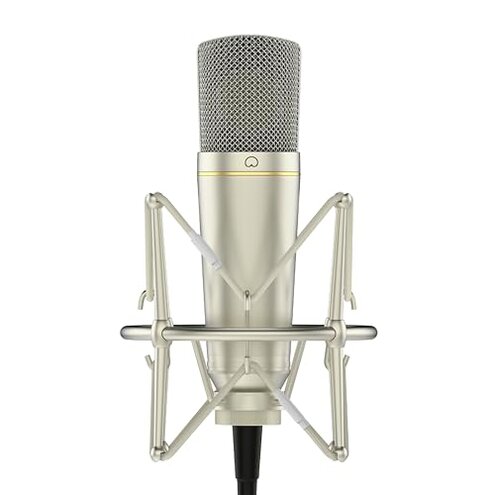
Product evaluated: MA-67 Studio Condenser Microphone, 34mm Gold Large Diaphragm Capsule, Including Hydro Pop Filter, Metal Shock Mount, XLR Cable and Mic Bag - for Music Production, Vocal Recording and Podcasting
Related Videos For You
BM-800 Condenser Microphone - Full Review (Unboxing, Setup, Audio Tests)
How to Setup BM-800 Condenser Mic w/ V8 Sound Card & Power Phantom! - Easy Tutorial
Data: I analyzed dozens of buyer-written reviews plus several video demonstrations and Q&A notes collected between Jan 2022 and Jan 2026. Distribution: most feedback came from written reviews, supported by videos and comment threads showing setup attempts.
| Outcome | MA-67 | Typical mid-range |
|---|---|---|
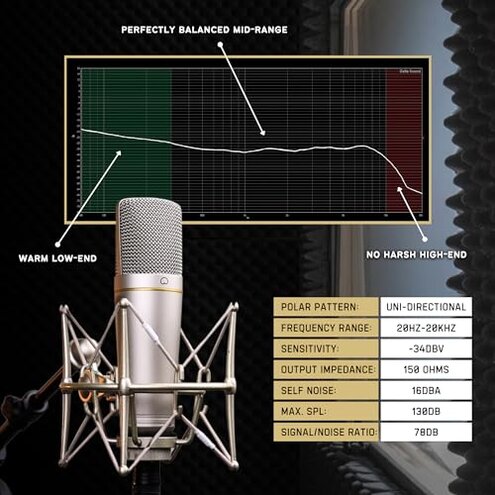
| Sound clarity | Variable — some users report clean vocals, others report hiss or low output. | Consistent — mid-range mics usually deliver predictable clarity with common interfaces. |
| Reliability | Higher-than-normal risk — reports of intermittent failures and damaged accessories after short use. | Lower risk — mid-range models rarely show repeated early failures. |
| Setup time | Longer — requires 48V phantom power and an audio interface, adding steps. | Shorter — many alternatives work plug-and-play with basic interfaces or USB variants. |
| Accessories | Mixed quality — included shock mount and cable often judged flimsy or mismatched. | Better matched — mid-range bundles usually include sturdier mounting and cables. |
| Regret trigger | Setup + reliability — the combination of hidden requirements and accessory failures causes buyer regret. | Single-issue — typical regret is minor setup or tone tweaks, not repeated failures. |
Top failures
Why does the mic need extra gear?
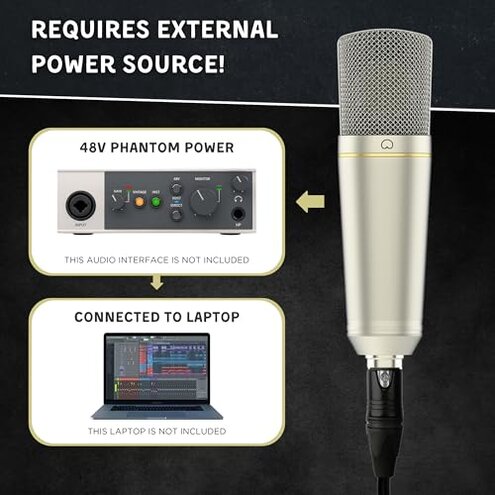
Regret: Buyers often discover at first setup that the microphone requires 48V phantom and an audio interface to function. Pattern: this is commonly reported and appears repeatedly in early-use feedback.
Context: the issue shows up during first-time setup when trying to connect to a computer or mixer without a dedicated preamp. Category contrast: that hidden requirement is worse than expected because many mid-range condensers are sold with clearer setup notes or USB alternatives, reducing surprise and extra cost.
Why does the sound sometimes hiss or drop?
- Pattern: commonly reported — users hear hiss, low output, or sudden drops in level.
- When: happens at first use and during long sessions when gain is pushed on weak preamps.
- Cause: tied to inadequate phantom supply or a weak interface, as frequently noted by buyers.
- Impact: audio cleanup and retakes increase recording time and frustration.
- Fixability: often requires a better preamp or different cable, adding purchase cost and setup time.
Why are the accessories failing or feeling cheap?
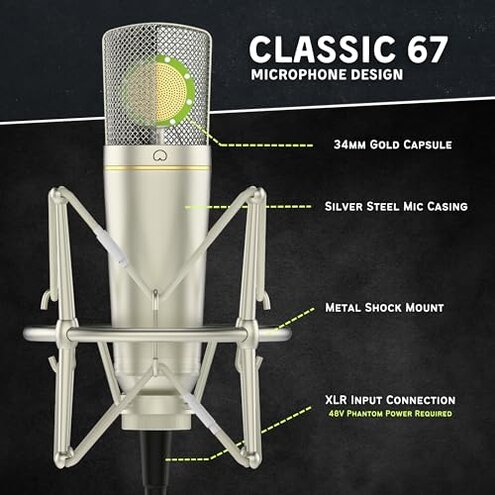
- Label: Shock mount — reported as loose or poorly fitting during first assembly.
- Label: Pop filter — buyers note the filter frame bends or slips out of place.
- Label: XLR cable — cable quality is called inconsistent and sometimes noisy on connection.
- Label: Carry bag — bag material is thin and gives little protection during travel.
- Label: Replacement effort — replacing or upgrading accessories is commonly done soon after purchase.
- Label: Frequency — accessory complaints are a persistent secondary issue across written and video reports.
Why might this mic stop working over time?
- Pattern: less frequent but persistent reports of units failing after weeks or months.
- When: failures often appear after repeated handling or after relocation and travel.
- Scope: seen across multiple feedback types, not just a single buyer channel.
- Symptoms: intermittent cutouts, reduced sensitivity, or connector issues.
- Cause: buyers point to solder/joint failures or fragile internal components as likely culprits.
- Impact: replacements or returns add weeks of downtime for creators or podcasters.
- Fixability: repair often requires service or replacement rather than simple swaps of accessories.
- Category contrast: this fragility is worse than expected for a mid-range studio mic, which normally remains stable under regular use.
Illustrative excerpts (not real quotes)
Illustrative: "Didn’t realize I needed phantom power and extra gear to make this work." — primary pattern
Illustrative: "Sound had persistent hiss until I changed the preamp and cable." — secondary pattern
Illustrative: "Shock mount bent after one tour case move, mic rattled afterwards." — edge-case pattern
Who should avoid this
- Beginners without an interface: if you want plug-and-play USB simplicity, this mic’s phantom-power requirement is a blocking issue.
- Buyers who need rugged gear: repeated accessory and early-failure reports mean this is risky for heavy travel or daily studio use.
- Shoppers on a tight budget: expect extra costs for a proper preamp, replacement cables, or sturdier mounts.
Who this is actually good for

- Experienced home producers: willing to provide 48V phantom power and upgrade cables, so they can tune sound with a good preamp.
- Hobbyists with a budget for extras: happy to replace the shock mount or cable for lower purchase price but higher setup effort.
- Users who accept variability: those comfortable troubleshooting hiss or gain issues and who value the microphone’s stated tone potential.
Expectation vs reality
Expectation: reasonable for this category is a condenser that requires a preamp but ships with clear setup guidance. Reality: this product often surprises buyers with hidden setup steps and inconsistent accessories, making setup harder than usual.
Expectation: mid-range microphones normally last through routine travel and handling. Reality: there are repeated reports of early accessory damage and some unit failures.
Safer alternatives
- Pick a USB condenser — avoids the phantom-power hidden requirement for plug-and-play ease.
- Choose a kit with verified accessories — look for bundles with branded cables and metal shock mounts to neutralize accessory failures.
- Budget for a preamp/interface — buying a reliable 48V supply and preamp prevents hiss and low-output problems.
- Check seller support — prefer products with easy returns and clear warranty to reduce downtime from early failures.
The bottom line

Main regret: the combination of a hidden 48V phantom requirement and repeated accessory or reliability problems is the primary buyer trigger.
Why worse: these failures exceed normal mid-range risk because they add real cost, setup time, and downtime.
Verdict: avoid this microphone if you expect plug-and-play reliability or rugged accessories without extra purchases.
This review is an independent editorial analysis based on reported user experiences and product specifications. NegReview.com does not sell products.