
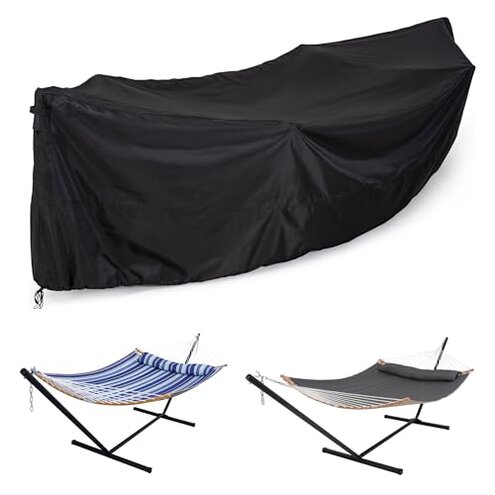
Product evaluated: Mansion Home Thickened Cover for 12FT Hammock Stand, 210D Waterproof Cover With Handles and Vents, Black
Related Videos For You
Hammock Camping Done Right: Tips and Required Gear
How To Clean Your Hammock
Data basis: I analyzed dozens of buyer comments and several video demonstrations collected between Jan 2023 and Feb 2026.
| Outcome | Mansion Home Cover | Typical Mid‑Range Cover |
|---|---|---|
| Fit accuracy | Loose fit — sizing mismatch and strap gaps reported repeatedly. | Snug fit — mid-range covers more often match stand geometry. |
| Waterproof longevity | Pools/condensation — waterproofing can fail after months of exposure. | Better aging — mid-range fabrics keep breathability without trapping moisture. |
| Wind resistance | High risk — cover lifts in wind despite straps, a higher‑than‑normal issue. | Lower risk — competitors often include stronger tie‑points or straps. |
| Ease of daily use | One‑person possible but wrestles with alignment and tightening. | Smoother — typical covers are easier to put on and secure quickly. |
| Regret trigger | Frequent re‑securing — needs extra tie‑downs or removal in bad weather. | Lower maintenance — mid‑range alternatives rarely need constant readjustment. |
Top failures
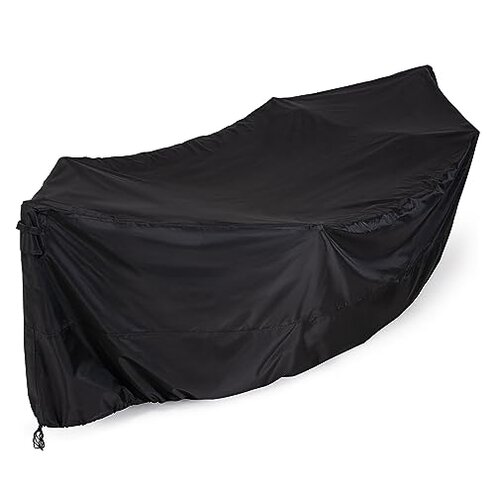
Why won't this cover sit snug on my 12‑ft hammock stand?
Fit problem: Many buyers describe a persistent loose fit that leaves gaps at the ends and sides.
Pattern signal: This is a primary issue that appears repeatedly across written feedback and videos, especially on stands with curved crossbars.
When it shows: The issue appears at first setup and worsens over time as straps loosen under daily handling.
Category contrast: This is worse than typical mid‑range covers because it needs extra adjustments or added ties that other covers rarely require.
How quickly does the material fail or tear?
- Early sign: Small splits at seams reported after months of outdoor exposure — a secondary issue.
- Frequency tier: Occurs commonly enough that buyers mention reinforcing stitches or patches.
- Cause: Wear concentrates where the cover rubs stand hardware during wind or movement.
- Impact: Tears let water and debris in, creating more maintenance than expected.
- Fixability: Repairs are possible but add time and cost compared with better‑stitched alternatives.
Why does water pool or mold form under the cover?
- Primary pattern: Buyers commonly report condensation and pooling after rain, identified as a primary concern.
- Usage anchor: Problem appears after storms or prolonged wet weather and worsens over weeks if left covered.
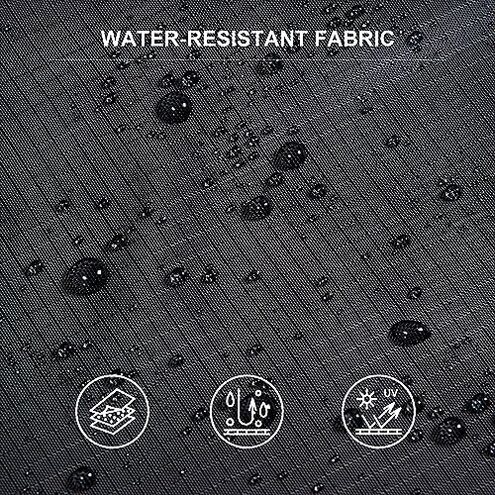
- Root cause: Limited internal drainage and fabric breathability trap moisture under the cover.
- Early fix attempts: Users prop vents or remove cover to dry, which adds extra handling time.
- Category contrast: More disruptive than typical because mid‑range covers often balance waterproofing and breathability better.
- Hidden requirement: Requires routine removal for drying in moist climates, an extra maintenance step many buyers did not expect.
- Severity: For frequent rain areas this becomes a primary regret due to mildew risk.
Will this cover stay on in wind, or will it blow off?
- Consistent pattern: Many buyers report the cover lofts or shifts in gusts despite straps — a secondary problem.
- When it happens: Windy conditions or long windy seasons make the problem recurring.
- Why it fails: The supplied drawstring and click‑close strap often lack strong anchor points to resist uplift.
- Practical impact: You may need to add bungee cords, ropes, or additional ties every storm night.
- Attempts made: Buyers add DIY tie‑downs; some remove the cover before predicted wind, adding labor.
- Repairability: Fixes are workarounds rather than product fixes, showing design limits.
- Category contrast: This is more disruptive than average because competitors often include stronger fastenings or reinforced anchor loops.
- Edge case: Extremely exposed locations will experience the worst failures, a high‑risk scenario.
Illustrative excerpts
Illustrative: "Cover floats up in wind and leaves the hammock exposed overnight." — primary
Illustrative: "Water pooled inside after a week of rain, smelled musty next day." — primary
Illustrative: "Small tear at the seam after six months of sun exposure." — secondary
Who should avoid this
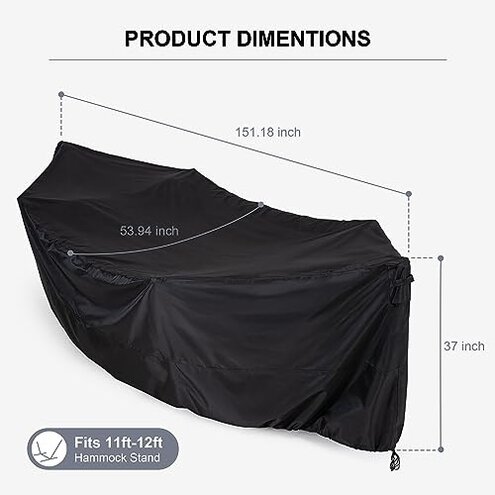
- Exposed sites: Avoid if your hammock stand sits in windy locations without extra anchor options.
- Wet climates: Avoid if you need a low‑maintenance cover in frequent rain — mold risk rises.
- Large curved stands: Avoid if your stand has unusual curves or hardware that require a snug fit.
- Low‑maintenance buyers: Avoid if you don’t want extra steps like nightly tying or routine removal to dry.
Who this is actually good for
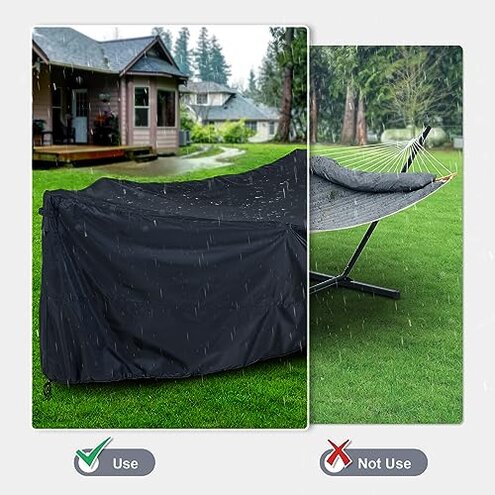
- Budget short‑term use: Good for buyers wanting cheap temporary protection for a season or two and willing to monitor condition.
- Calm climates: Works if you live in a mild, low‑wind area and can tolerate occasional drying.
- DIY fixers: Suitable for those who can add extra ties or reinforcements and expect to patch tears themselves.
Expectation vs reality
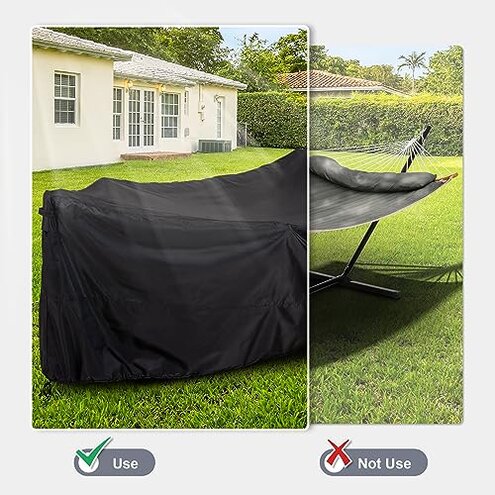
Expectation: Shoppers reasonably expect a snug, weatherproof cover for occasional storms.
Reality: This cover often needs extra fastening, frequent drying, or repairs — which increases upkeep beyond the category baseline.
Expectation: Reasonable for this category is lightweight weather protection without constant intervention.
Reality: The product demands ongoing maintenance in wet or windy conditions, making it less forgiving than most mid‑range alternatives.
Safer alternatives
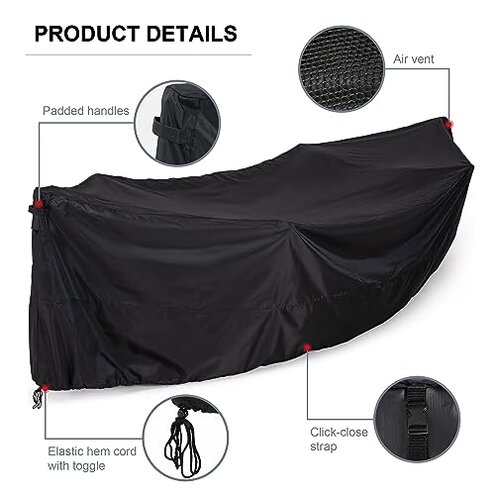
- Buy reinforced models: Choose covers with reinforced anchor loops to stop wind lofting.
- Prioritize breathability: Look for covers advertised with drainage vents and tested breathability to reduce pooling.
- Check fit guides: Prefer brands offering stand‑specific sizing or adjustable dimensions for curved frames.
- Seek stronger materials: Pick covers noted for heavier stitching and longer fabric warranties for durability.
- Plan for extras: Buy a few tie‑down accessories with the cover if your site is windy.
The bottom line
Main regret: The biggest trigger is a poor fit that leads to wind lofting and trapped moisture, which creates repeated maintenance.
Why it matters: These failures exceed normal category risk because they turn simple protection into ongoing chores and repairs.
Verdict: If you need low‑maintenance, wind‑resistant protection, consider more robust mid‑range alternatives or anticipate adding reinforcements.
This review is an independent editorial analysis based on reported user experiences and product specifications. NegReview.com does not sell products.