
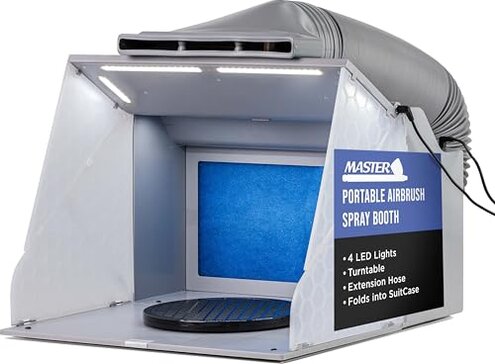
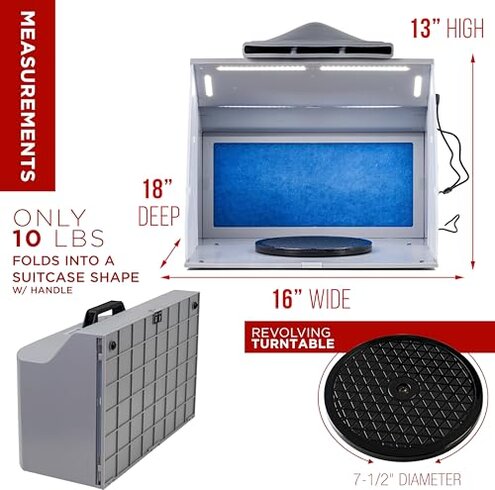
Product evaluated: Master Airbrush Portable Airbrush Spray Booth Kit with Dual Exhaust Fans, 4 LED Lights, Turntable & Extension Hose, 16"x18"x13" Hobby Airbrush Booth for Painting, Models, Arts, Crafts, Cakes
Related Videos For You
DIY Collapsible Spray Booth
Testing Amazon's Cheapest Spray Booth For Airbrushing
Data basis: I reviewed dozens of buyer-written reviews, Q&A entries, and video demonstrations collected January 2024–January 2026. Most feedback came from written reviews, supported by video demonstrations across several listings.
| Outcome | This product | Typical mid-range booth |
|---|---|---|
| Airflow | Underwhelming for larger paints; suction often feels weaker after setup. | Consistent mid-range airflow designed for small hobby fumes without rework. |
| Noise | Louder than expected for home use; can disrupt detail work. | Quieter fans or motor mounts reduce distraction during long sessions. |
| Filter & odor | Higher risk of lingering smell and visible overspray reaching surroundings. | Better containment with denser filters or multi-stage filtration in comparable units. |
| Setup & fit | Tricky hose routing and fragile connectors make installation fiddly. | Simpler hose exits and sturdier fittings are common in other kits. |
| Regret trigger | Ventilation failure during normal hobby use causing odor and overspray spread. | Lower chance of room contamination for most mid-range alternatives. |
Does the booth actually remove fumes and overspray?
Regret moment: Buyers often notice weak capture of fumes during normal painting sessions. This problem is among the most common complaints and appears repeatedly across feedback.
Usage anchor: The issue shows up immediately at first use and becomes more noticeable during longer painting sessions or when using glossy paints.
Category contrast: For a mid-range hobby booth this is worse than expected because most competitors provide steadier suction for model-scale work.
Is the fan noise and durability tolerable?
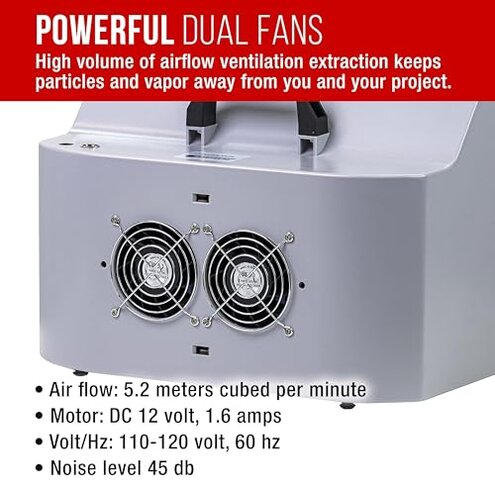
- Early sign: Fans sound loud from first power-on and vibrate during idle.
- Frequency tier: Secondary issue but commonly reported by users who work in small rooms.
- Cause: Basic fan mounts and motor choice lead to higher vibration and audible noise.
- Impact: Noise breaks concentration during fine-detail painting and photo work.
- Repair attempts: Some buyers tried padding or re-mounts, which adds time and effort.
How effective are the filters and what are the replacement needs?
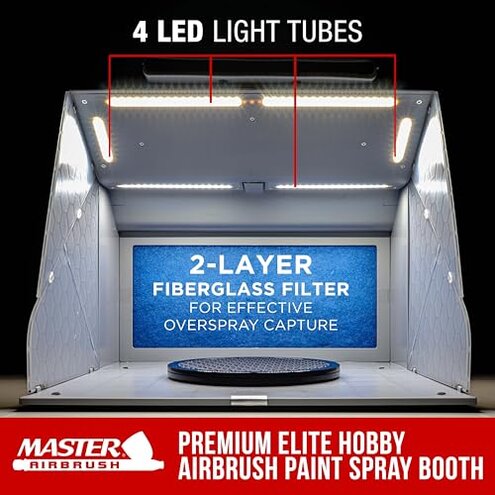
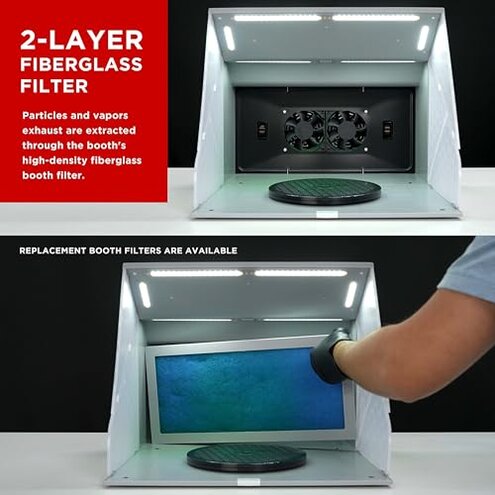
- Primary pattern: Filter performance is a primary complaint with lingering odor and visible particulate escape.
- When it appears: Problems show after initial sessions and worsen with repeated use if filters are not changed.
- Hidden requirement: Buyers must plan for filter replacements and possibly upgrades to reach acceptable containment.
- Category contrast: This is worse than typical mid-range booths that use multi-layer or replaceable HEPA-style options.
- Attempts to fix: Users report adding secondary filters or using activated carbon to reduce smell, adding cost and steps.
- Impact on use: Lingering odors may prevent indoor use in shared spaces or kitchens.
Will assembly, hose routing, and portability meet real hobby needs?
- Fit issue: Hose connectors and tabs are reported as fragile and require force during assembly.
- Condition: Problems emerge during first setup and when disassembling for storage.
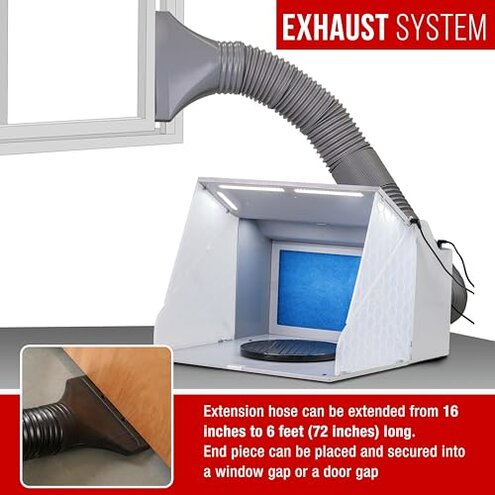
- Hidden limitation: Exhausting through a window gap is effectively required to avoid room contamination.
- Impact: Planning for a window or door mount adds extra steps and may restrict placement options.
- Durability: Repeated assembly/disassembly increases wear on thin panels or clips.
- Workarounds: Some buyers reinforce joints or tape seams; that increases setup time.
- Category contrast: More upkeep than most mid-range alternatives that use sturdier fasteners and easier vents.
Illustrative excerpts (not real quotes)
Excerpt: "Strong odor stayed in room after two hours of light airbrushing."
Pattern: This reflects a primary pattern about filter/odor failures.
Excerpt: "Fan is noisy and vibrates on my desk during fine detail work."
Pattern: This reflects a secondary pattern about noise and vibration.
Excerpt: "Hose barely fits my window; I had to duct tape the gap."
Pattern: This reflects an edge-case pattern tied to exhaust placement.
Excerpt: "Filter clogged quickly and performance dropped after a few sessions."
Pattern: This reflects a primary pattern about filter lifespan and maintenance.
Who should avoid this
- Shared-space painters: Avoid if you need clean indoor air without strong odors or overspray risk.
- Noise-sensitive users: Avoid if you require quiet work sessions for photography or streaming.
- Those without window access: Avoid if you cannot route the exhaust through a window or door gap.
- Low-maintenance buyers: Avoid if you do not want the extra time and cost for filter upgrades.
Who this is actually good for
- Budget hobbyists: Good for those willing to accept noise and extra maintenance to save money up-front.
- Garage users: Good if you can vent outdoors or work in a dedicated well-ventilated area.
- Short-session painters: Good if your sessions are brief and you can tolerate temporary odor.
- DIY improvers: Good for buyers comfortable with mods like adding secondary filters or stabilizing the fan.
Expectation vs reality
- Expectation: Reasonable for this category is steady capture of hobby-size overspray.
- Reality: The booth often delivers weaker capture and requires changes to reach that baseline.
- Expectation: Fans will be unobtrusive during painting.
- Reality: Fans are audible and vibratory, disrupting detailed work for some users.
Safer alternatives
- Choose filtration first: Pick booths with replaceable multi-stage or HEPA-style filters to cut lingering odors.
- Prioritize quiet fans: Look for listings that specify noise ratings or soft-mount fans to reduce vibration.
- Check exhaust design: Buy models with built-in window adapters to avoid improvised venting and tape fixes.
- Plan maintenance: Budget for regular filter replacements and possible upgrades before buying.
- Read setup notes: Prefer products with clear assembly guides and sturdy connectors to avoid repeated fixes.
The bottom line
Main regret: The primary issue is insufficient ventilation and filtration causing odor and overspray spread.
Why worse: This risk is higher than normal because it appears at first use and requires upgrades to fix.
Verdict: Avoid this kit if you need quiet, reliable indoor containment without extra work or expense.
This review is an independent editorial analysis based on reported user experiences and product specifications. NegReview.com does not sell products.