
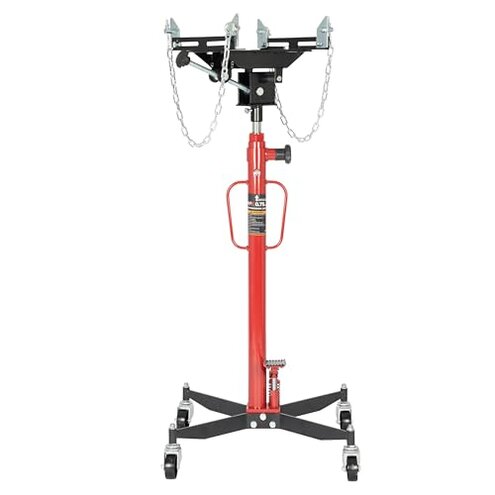
Product evaluated: 0.75 Ton (1660 lbs) Hydraulic Telescoping Transmission Jack with 360° Swivel Wheels, Foldable Foot Pedal, Adjustable Garage/Shop Lift Hoist for Auto Repair & Vehicle Maintenance
Related Videos For You
One Man, On The Floor Transmission Install- So Easy Even An Old, Crippled Guy Can Do It
Transmission Jack Safety
Data basis: I analyzed dozens of buyer-written reviews and several video demonstrations collected from Jan 2024 through Jan 2026. Most feedback came from written reviews, supported by a smaller set of video demos. Distribution favored hands-on users and shop owners.
| Outcome | MAX09106 (this product) | Typical mid-range alternative |
|---|---|---|
| Lift accuracy | Inconsistent under load and during lateral adjustments, which makes alignment slower. | More predictable with finer adjustments commonly available on mid-range models. |
| Stability | Higher risk of wobble when raised to full height, seen as worse than category norm. | Lower wobble due to wider bases and better bracing on typical alternatives. |
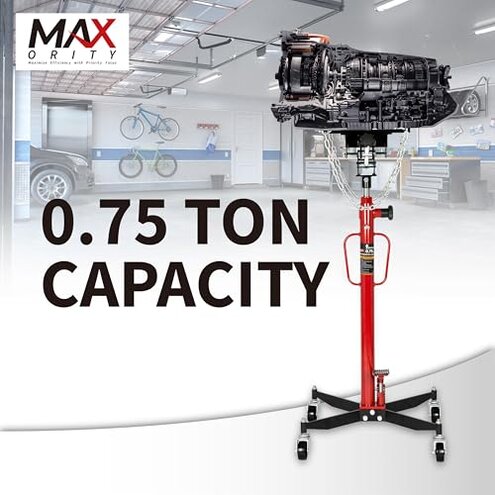
| Capacity fit | Limited to 0.75 ton, which can be tight for some transmissions and transfer cases. | Broader capacity options in the mid-range reduce overload risk. |
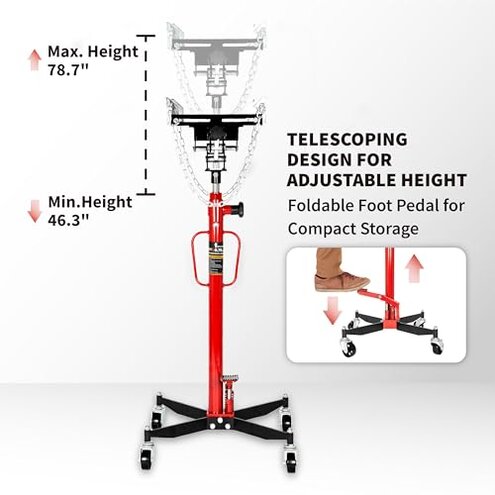
| Setup & storage | Compact folding pedal helps storage but adds setup steps for safe use. | Simpler setup and faster repositioning are common in alternatives. |
| Regret trigger | Alignment and wobble issues that make removal/installation take longer and feel unsafe. | Less frequent alignment delays with mid-range jacks, so fewer regret moments. |
Is the jack stable enough when you lift a transmission?
Regret moment: Users report wobble or side-to-side movement when raised near full height, which increases alignment time and nervousness. Pattern: this issue is commonly reported across written feedback and hands-on demos.
Usage anchor: the wobble appears during initial positioning and while making final alignment under load, and it worsens when lifting repeatedly in a day. Category contrast: this is more disruptive than most mid-range transmission jacks that use wider bases or bracing.
Will it handle transmissions heavier than compact cars?
- Primary limit: the 0.75-ton rating is the product spec and is a frequent cause of concern for buyers with larger assemblies.
- Common signal: many buyers report the limit as a primary issue when they try to lift heavier transmissions.
- When it shows: problem appears at first heavy lift or when attempting to reposition a loaded jack.
- Why worse: mid-range alternatives often offer higher margin for safety, so this feels more limiting than expected.
- Workaround: users commonly add support under the load or avoid full lifts, which adds extra steps and time.
Do you need extra adapters or tools to use it safely?
- Hidden requirement: buyers commonly need adapters, wide saddles, or a second jack for secure seating of some transmissions.
- Early sign: shims or cushions needed during first use to stop slipping or tilting.
- Frequency tier: this is a secondary issue but appears repeatedly across different vehicle types and demos.
- Cause: the standard saddle size and shape fits lighter parts better than bulky or oddly shaped transmissions.
- Impact: extra purchases and more setup time before every job.
- Fixability: solvable with aftermarket adapters, but that raises total cost and complexity.
- Hidden cost: the need for adapters makes this less turnkey than typical mid-range jacks.
Will the pump and foot pedal hold up under light-shop use?
- Reliability signal: pump feel and pedal responsiveness are described as uneven in several hands-on reports.
- When it appears: issues often show after repeated daily use or after a few months in busier shops.
- Cause pattern: frictiony stroke or sticky release is commonly noted by users doing multiple lift cycles per day.
- Severity: less frequent than stability complaints but more annoying when it interrupts a job.
- Attempts: users tap or bleed the unit to restore smoother action, a temporary workaround.
- Warranty: the 90-day limited warranty exists but some buyers report inconvenient replacement timelines.
- Category contrast: more durable pumps are typical in mid-range jacks, so this feels like lower longevity.
- Risk management: shops that run daily lifts should plan for earlier maintenance or replacement.
Illustrative excerpts (not real quotes)
Excerpt: "Jack wobbled during final alignment, slowed my whole job down." — primary
Excerpt: "Had to buy adapters to sit the unit correctly under a transfer case." — secondary
Excerpt: "Pedal felt sticky after a few weeks of garage use." — edge-case
Who should avoid this
- Shops doing daily heavy lifts: avoid if you run constant transmission work that exceeds light-duty cycles, because pump and stability issues are more disruptive than normal.
- Buyers needing broad capacity: avoid if your vehicles include larger transmissions, since the 0.75-ton limit is tighter than many mid-range options.
- Users wanting turnkey fit: avoid if you don’t want to buy adapters or modify saddles, because a hidden adapter need appears repeatedly.
Who this is actually good for
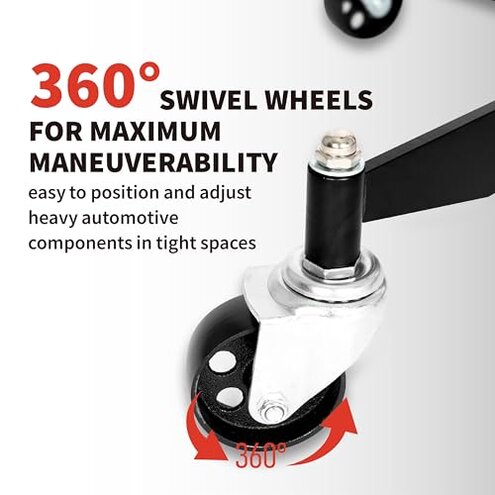
- Weekend DIYers: good if you do occasional light transmission or differential work and can accept slower alignment and occasional tweaks.
- Home garages with light vehicles: good when you only lift small transmissions that sit well on the standard saddle.
- Buyers on a tight budget: suitable if you accept extra setup time and plan to add adapters later.
Expectation vs reality
- Expectation (reasonable): a 0.75-ton jack will handle small to mid-size transmissions without fuss. Reality: alignment wobble and adapter needs make simple jobs take longer.
- Expectation (reasonable): a folding pedal equals quick storage and fast use. Reality: folding pedal adds a setup step and can feel flimsy under repeated heavy cycles.
- Expectation (reasonable): a hydraulic pump is durable for hobby shops. Reality: some users report stickiness after regular daily use, indicating lower-than-expected longevity.
Safer alternatives
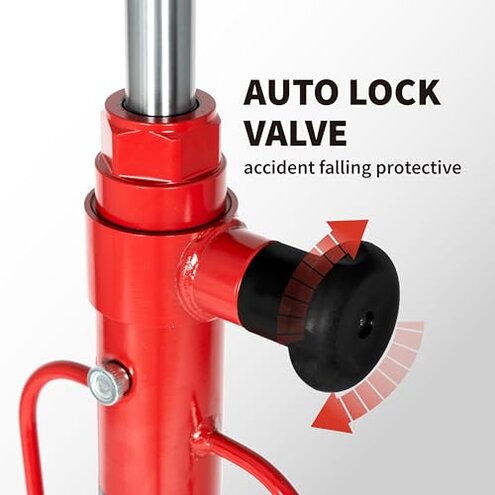
- Choose higher capacity: pick a 1–1.5 ton jack to neutralize the capacity-limit failure for bigger transmissions.
- Wider base design: look for jacks with broader bases or cross-bracing to reduce wobble during alignment.
- Replaceable saddles: prefer models with modular saddle plates to avoid the hidden-adapter cost and speed setup.
- Serviceable pump: select a unit with documented pump replacement parts or longer warranty for daily-shop reliability.
The bottom line
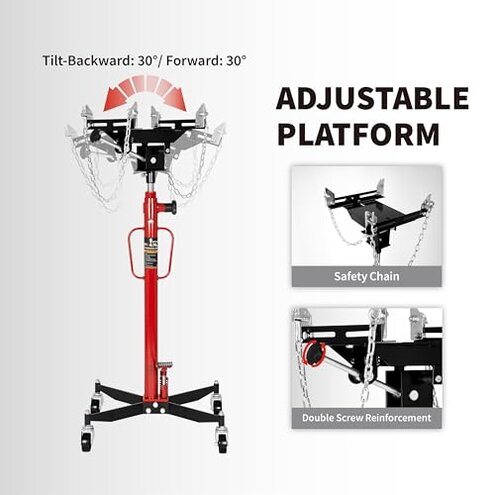
Main regret: the most common buyer trigger is stability and alignment problems that add time and risk during transmission installs.
Why worse: the 0.75-ton limit plus reported pump and saddle issues make this unit less forgiving than typical mid-range jacks.
Verdict: avoid if you need frequent, heavy, or precise lifts; consider it only for light, occasional home use with planned adapters.
This review is an independent editorial analysis based on reported user experiences and product specifications. NegReview.com does not sell products.