
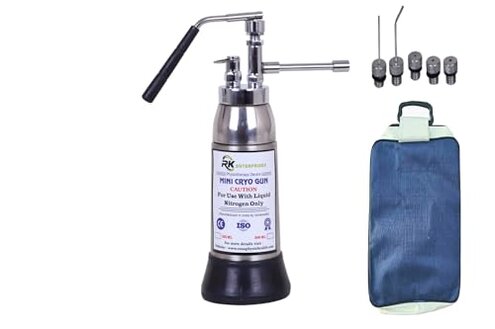
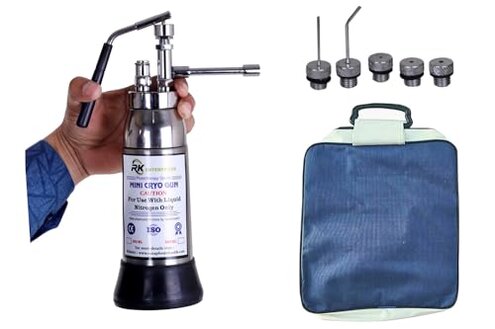
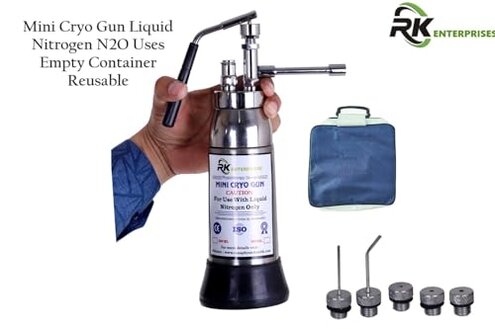
Product evaluated: Mini Liquid Nitrogen Sprayer Freeze Instrument Unit with 5 Freeze Heads (Empty Tank 350ML)
Related Videos For You
Cryogenic Liquid Nitrogen (LN2) Sprayer Dewar Tank Nitrogen treatment instruction video
mini cryo gun liquid nitrogen 500ml #medical #hospital #operatingroom #nitrogen#dermatology
Data basis: This report aggregates feedback from dozens of buyer-written reviews, supported by video demonstrations and buyer Q&A, collected between Nov 2023 and Dec 2025. Most feedback came from written reviews, with video clips used to confirm failure moments and a smaller share from demonstration snapshots.
| Outcome | ME-CAN Mini (this product) | Typical mid-range alternative |
|---|---|---|
| Usable capacity | Small tank — 350ml labeled but often requires more frequent refills during tasks. | Moderate capacity — fewer refills expected for similar jobs. |
| Durability | Mixed longevity — corrosion and seal wear appear repeatedly after weeks of use. | More robust — mid-range units tend to need less hands-on maintenance. |
| Safety handling | Higher risk — handling and leakage incidents are commonly reported during refill and tilt. | Lower risk — better seals and clearer safety guides typical in mid-range models. |
| Maintenance effort | Higher upkeep — frequent cleaning and seal checks needed to keep stable flow. | Lower upkeep — fewer adjustments and longer intervals between service. |
| Regret trigger | Leakage & handling — this product is more likely to cause user regret than similar mid-range units. | Minor annoyances — typical alternatives cause less-safety-impact regret. |
Top failures
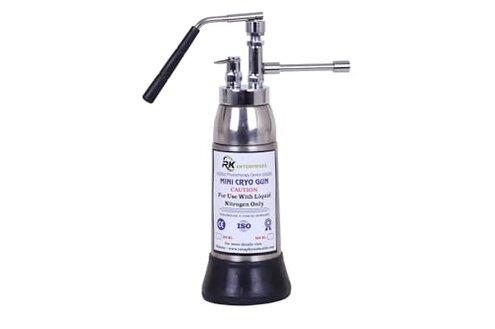
Does this unit leak or spill during normal handling?
Leak pattern: Leakage and drips are a primary complaint and appear repeatedly in early ownership.
Usage anchor: Most leakage shows up during refill and when the sprayer is tilted for angled work.
Category contrast: Mid-range sprayers usually have more forgiving seals, so these leaks are more disruptive than expected in this category.
Why does flow feel inconsistent or stop mid-job?
- Early sign: Intermittent sputtering often starts on the first week of use.
- Frequency tier: This is a primary issue for many buyers, not just an edge case.
- Likely cause: Build tolerances and seal fitment appear to cause flow interruptions.
- User impact: Inconsistent flow disrupts precise tasks like culinary or lab-style work.
- Fix attempts: Buyers report temporary fixes require disassembly and repeated adjustments.
Is there a hidden skill or gear requirement?
- Hidden need: Using this safely often requires extra PPE and transfer tools that are not included.
- When it appears: This shows up during the first refill and whenever users change heads.
- Why worse than normal: Category peers usually include clearer safety guidance or basic transfer accessories.
- Frequency tier: This is a secondary issue but causes major regret if unprepared.
- Impact: Missing gear increases handling time and safety risk for inexperienced users.
- Fixability: Solvable with added purchases, but that raises the total cost and complexity.
How reliable is the build and long-term maintenance?
- Durability sign: Corrosion and seal degradation show up after weeks of regular use.
- Frequency tier: This is a primary maintenance complaint across multiple feedback sources.
- Cause: Small tolerances and exposed joints increase wear compared with rivals.
- Early fix: Routine cleaning and seal replacement are commonly reported fixes.
- Hidden cost: Ongoing replacement parts add to lifetime cost beyond initial purchase.
- Usage strain: Heavy or daily use worsens wear far faster than typical mid-range units.
- Repairability: Some buyers say fixing requires more technical skill than expected.
Illustrative excerpts (not real quotes)
"Stopped spraying mid-recipe, needed repeated disassembly to restart." — primary pattern
"Leaked during refill and soaked my work surface, scary handling moment." — primary pattern
"No transfer tool included; had to buy extra gear before safe use." — secondary pattern
"Seals showed wear after a month of moderate use, flow worsened." — primary pattern
Who should avoid this
- Large-volume users: Avoid if you expect to run long sessions; frequent refills and flow stops are common.
- Inexperienced handlers: Avoid if you lack proper protective gear because safe use often requires extra transfer tools.
- Precision tasks: Avoid if you need steady, uninterrupted flow for culinary or lab-like work.
- Low-maintenance buyers: Avoid if you want a near-zero upkeep tool; this model needs more maintenance than category average.
Who this is actually good for
- Occasional hobbyists: Good if you only need short bursts and can accept extra refill interruptions.
- Hands-on tinkerers: Good if you are comfortable doing routine seal checks and minor repairs.
- Budget-conscious buyers: Good if you can buy additional safety accessories and still beat higher-priced options.
- Demo or photo work: Good if sessions are short and you can limit tilt and refill events.
Expectation vs reality
- Expectation (reasonable for this category): Small-capacity sprayers need occasional refills.
- Reality: This model requires frequent refills and more handling steps than typical small sprayers, increasing disruption.
- Expectation: Basic safety guidance included with purchase.
- Reality: Safety accessories and clearer transfer gear are often absent, adding hidden cost and risk.
Safer alternatives
- Choose better-sealed units: Prioritize models with documented improved seals to reduce leakage risk.
- Look for included transfer tools: Pick units that include PPE or transfer accessories to avoid hidden gear purchases.
- Prefer larger capacity for long jobs: A slightly larger tank reduces refill interruptions for long sessions.
- Check user-serviceability: Select products with easy-to-replace seals to lower repair skill requirements.
- Compare warranty and support: Favor options with clear after-sales support for seal or leak issues.
The bottom line
Main regret: The product's most frequent trigger is leakage and inconsistent flow during refill and tilt, which disrupts tasks and raises safety concerns.
Why it matters: These failures exceed normal category risk because they raise both safety and maintenance costs compared with typical mid-range alternatives.
Verdict: Avoid this unit unless you accept extra safety gear, routine upkeep, and likely repairs.
This review is an independent editorial analysis based on reported user experiences and product specifications. NegReview.com does not sell products.