
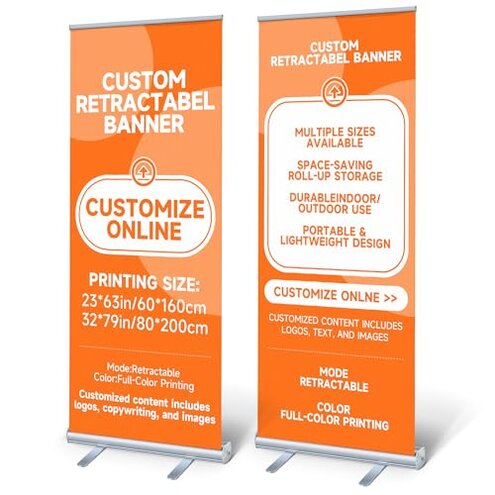
Product evaluated: METAPRINT Custom Retractable Banner Stand 33"x81" – Personalized Roll Up Display with Carry Bag, Adjustable Height, Portable Stand for Trade Shows, Events, Business Promotions
Related Videos For You
How to Setup Retractable Banners in 8 Easy Steps
Data basis: Aggregated feedback from dozens of buyer reviews, product Q&A entries, and video demonstrations collected between Jan 2024 and Jan 2026. Most feedback came from written reviews, supported by buyer photos and short setup videos.
| Outcome | METAPRINT 33x81 | Typical mid-range stand |
|---|---|---|
| Print fit | Mismatch risk — customization often needs extra file edits; commonly reported sizing or cropping problems. | Safer fit — most mid-range alternatives include clearer print templates and pre-checks. |
| Retract reliability | Higher jam risk — retract mechanism shows failures more often than expected for this category. | More dependable — many competitors use smoother tension systems at this price point. |
| Stability | Wobble prone — base and pole can feel unstable in busy or windy settings. | Steadier baseline — typical stands offer better weight distribution for public spaces. |
| Durability | Wear signs — visible wear appears after repeated transport and daily setup. | Moderate longevity — comparable stands usually hold up longer under frequent use. |
| Regret trigger | Customization friction — buyers face unexpected file and setup work that triggers returns. | Lower regret — mid-range alternatives usually require less post-purchase adjustment. |
Why does my custom graphic arrive mis-sized or cropped?
Regret moment: You open the banner and the graphic is shifted or parts are cut off, which feels like a wasted print job.
Pattern: This is a commonly reported problem across written reviews and buyer photos.
When it happens: It appears at first use after installation and during the initial setup of custom prints.
Category contrast: This is worse than typical because most mid-range competitors provide clearer template guidance or preflight checks.
Will the retract mechanism jam or stop working?
- Primary issue: Retract jams are a recurring complaint during first few uses.
- Usage anchor: Jams show up during setup or after repeated roll/unroll cycles.
- Cause signal: Reports point to uneven tension or sticky edges as the likely cause.
- Impact: A stuck banner adds extra time and can force returns or refunds.
- Fixability: Temporary fixes are patchy, and many buyers needed replacement parts or a new unit.
Is the stand stable in busy venues or outdoors?
- Stability concern: Wobble and tipping are commonly reported in crowded or breezy settings.
- When it matters: The problem appears during events with foot traffic or light wind.
- Frequency tier: This is a primary issue for event users but a secondary annoyance for low-traffic displays.
- Cause: Buyers note the telescopic pole and base weight feel under-engineered compared with peers.
- Impact: Instability increases the need for extra anchors or double-checking at every setup.
- Category contrast: This stand is less forgiving than typical mid-range models, which often include wider, heavier bases.
- Attempts: Users commonly add sandbags or tape as a workaround, which reduces portability.
Will the stand show wear or loosen after repeated use?
- Durability pattern: Wear and loosening are persistently mentioned after several uses and transports.
- Usage anchor: Problems increase after repeated setups and frequent packing.
- Early signs: Buyers see scratches, loose screws, and reduced tension within weeks.
- Cause: Frequent transport without protective handling accelerates the issues.
- Impact: This leads to more maintenance and occasional replacement parts.
- Fixability: Some buyers say re-tightening helps, but others report permanent stretch or bent poles.
- Hidden requirement: The stand often needs regular retensioning, which many buyers did not expect.
- Category contrast: This is more upkeep than most mid-range alternatives require.
Illustrative excerpts (not real quotes)
"Graphic printed off-center despite uploading full-size file." — Primary pattern: shows the print-alignment problem at first use.
"Retract stuck half-way; had to force it out manually." — Secondary pattern: illustrates retract mechanism failures after setup.
"Stand wobbled during event and needed sandbags." — Primary pattern: reflects venue stability problems under light wind or traffic.
"Screws loosened after two shows; now it creaks when moved." — Secondary pattern: indicates wear from repeated transport.
Who should avoid this
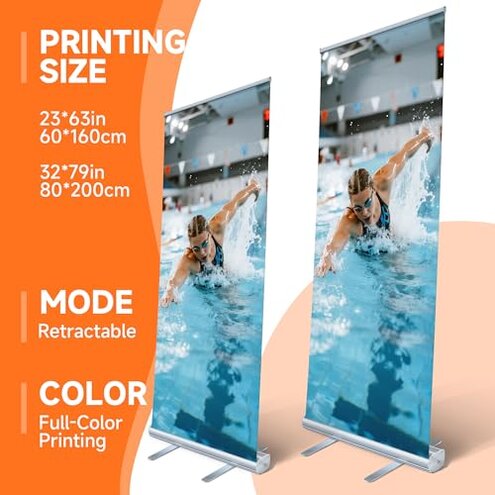
- Event pros who need a plug-and-play, stable display. The wobble and setup fixes exceed normal tolerance.
- Buyers wanting turnkey printing who lack design skills. The print alignment requires extra file work.
- Daily users who pack and unpack frequently. The durability concerns mean more maintenance than usual.
Who this is actually good for
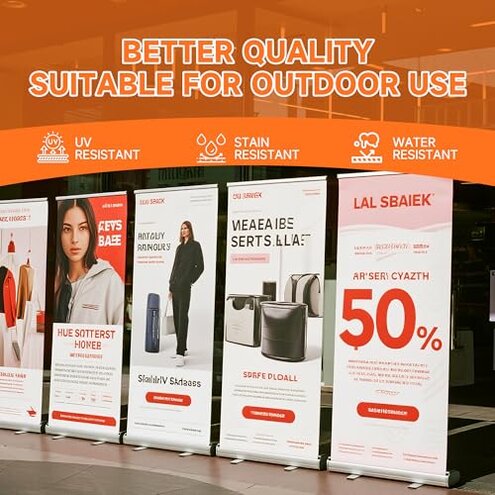
- Low-frequency exhibitors who use it occasionally and can double-check prints; they can tolerate occasional retensioning.
- Small businesses that need a low-cost custom graphic and can edit artwork to exact sizes to avoid cropping.
- Budget-conscious users who value portability over heavy-duty steadiness and accept adding anchors for events.
Expectation vs reality
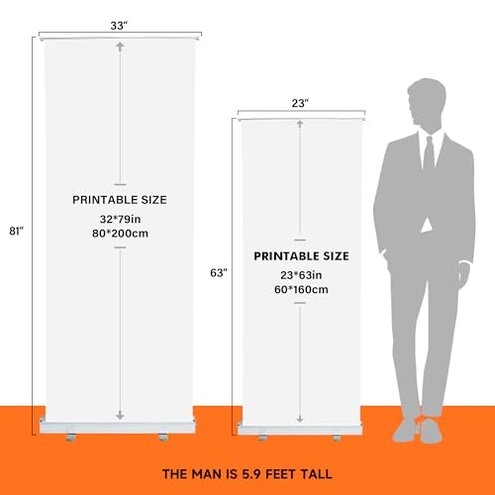
Expectation: Reasonable for this category is a banner that installs cleanly with minimal file prep.
Reality: METAPRINT often requires extra file edits and setup checks, which is worse than expected for a mid-range price.
Expectation: A retractable stand should roll smoothly for dozens of uses.
Reality: Retract jams or decreased tension appear earlier than buyers expect, increasing downtime.
Safer alternatives
- Choose stands with template checks — look for sellers that provide clear print templates and preflight support to neutralize print alignment.
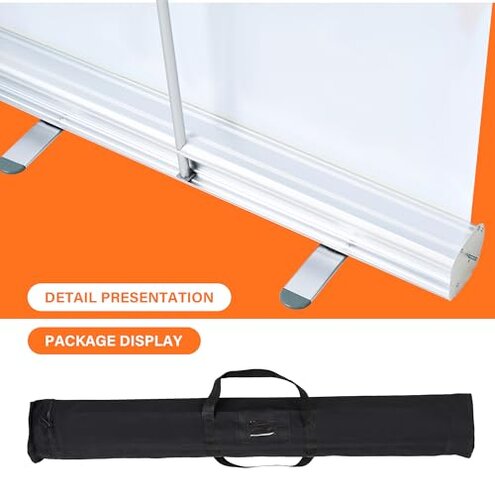
- Prefer heavier bases — select models marketed with weighted or wider bases to avoid the wobble problem.
- Look for rated retract systems — choose stands that advertise tested tension systems to reduce retract jams.
- Buy protective cases — if you must use this unit, add a hard or padded case to limit the wear from shipping and frequent use.
- Request proofs — ask for a print proof or mockup before full production to prevent cropping surprises.
The bottom line
Main regret: The biggest triggers are print alignment and stability/retract issues that surface at first use or after repeated setups.
Why it matters: These problems are more disruptive than expected for mid-range stands and often require extra fixes or replacements.
Verdict: Avoid this model if you need a plug-and-play, event-grade stand; consider sturdier mid-range alternatives or confirm print proofs first.
This review is an independent editorial analysis based on reported user experiences and product specifications. NegReview.com does not sell products.