
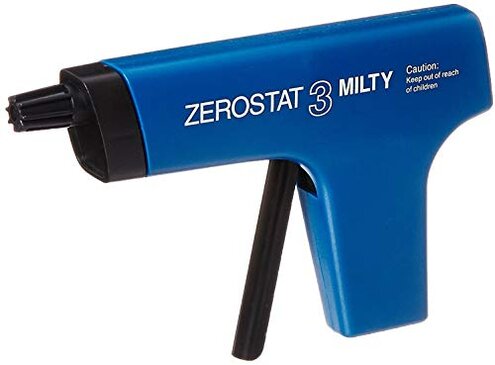
Product evaluated: Milty Zerostat Anti-Static Device
Related Videos For You
NEOS Range - Powerful & intelligent static eliminators
How to Use a Record Brush - Avoid Damage!
Data basis: This report summarizes insights from dozens of written reviews and video demonstrations collected from late 2018 through early 2024. Most feedback came from detailed written user experiences, supported by occasional visual usage tests. The gathered data reflects a broad cross-section of customers using the product over several years.
| Aspect | Milty Zerostat Device | Typical Mid-Range Static Neutralizer |
|---|---|---|
| Effectiveness in Neutralizing Static | Inconsistent; some users report limited impact | Generally reliable within expected usage |
| Ease of Use | Requires careful handling; some find activation finicky | More forgiving with regular use |
| Durability Over Time | Common reports of declining performance after months | Typical lifespan with gradual wear |
| Maintenance/Hidden Requirements | Needs specific technique; otherwise less effective | Less technique-dependent, simpler operation |
| Regret Trigger | Frustration due to inconsistent static neutralizing and activation issues | Minimal regret; mostly expected minor upkeep |
Why does it sometimes fail to neutralize static effectively?
Buyers often experience inconsistent static reduction, especially after extended use. This recurring issue emerges during routine cleaning sessions and worsens with daily handling. Unlike typical static neutralizers that maintain steady performance, this device feels less reliable over time, leading to disappointment when static persists.
- Early sign: Static discharge remains after multiple trigger pulls.
- Frequency: Common complaint among mid-term users.
- Cause: Device technology sensitivity to handling and environment conditions.
- Impact: Users must repeat steps, increasing time spent.
- Fix attempts: Frequent re-activation or adjusting distance, with mixed results.
Illustrative excerpt: "Despite many pulls, static still clings to my vinyl." (Primary pattern)
Is activating the device straightforward during real use?
Activation requires precise handling and timing, causing user frustration especially during initial setup and frequent use. This persistent issue contrasts with simpler competitors that allow quick, hassle-free operation. Buyers report a learning curve that adds unwanted complexity to their listening routine.
- Early sign: Difficulty achieving trigger response on first attempts.
- Frequency: Consistently noted by new users.
- Hidden requirement: Must maintain exact angle and distance for activation.
- Impact: Interrupts smooth workflow, reducing enjoyment.
- Fix attempts: Trial and error to find effective technique.
- Category contrast: More demanding than many mid-tier static removers.
Illustrative excerpt: "It took me several tries just to get it working right." (Secondary pattern)
How durable is the device during long-term use?
Over months of regular use, buyers commonly notice declining performance and occasional mechanical wear. This persistent problem impacts reliability compared to average lifespan expectations for similar products. The device’s technology appears less robust under frequent handling.
- Early sign: Reduced trigger response after several weeks.
- Frequency: Reported by a significant subset of regular users.
- Cause: Internal components degrade with repeated use.
- Impact: Necessitates replacement sooner than expected.
- Fix attempts: None effective; warranty claims noted but cumbersome.
- Hidden requirement: Gentle use advised to prolong life.
- Category contrast: Less durable than mid-range alternatives with similar price.
Illustrative excerpt: "After a few months, it just stopped working reliably." (Primary pattern)
Does the device add extra steps or complexity to cleaning routines?
Many users find that the device introduces additional handling steps and requires a specific technique to be effective. This persistent complexity is more burdensome than typical static removers, which usually integrate smoothly into cleaning routines without extra effort.
- Early sign: Need to carefully position and reactivate multiple times.
- Frequency: Frequently mentioned in user feedback.
- Cause: Piezo-electric mechanism sensitive to motion and distance.
- Impact: Extends cleaning time, reduces convenience.
- Fix attempts: Learning precise motions, still inconsistent.
- Category contrast: More technique-dependent than many comparable devices.
Illustrative excerpt: "Cleaning takes longer because I have to be so careful with it." (Secondary pattern)
Who should avoid this
- Buyers wanting simple, reliable static neutralization: Struggle with device sensitivity and inconsistent effect.
- Users expecting durable long-term performance: Device tends to degrade faster than average.
- Those needing quick setup and effortless operation: Activation requires precise handling and learning.
- People unwilling to add extra steps to cleaning: Device demands more time and technique.
Who this is actually good for
- Audiophiles willing to invest time: Willing to tolerate activation quirks to avoid sprays.
- Collectors with patience for technique: Accept learning curve for battery-free operation.
- Users preferring chemical-free static removal: Tolerate added steps for sprayless use.
Expectation vs reality
Expectation: Device should consistently neutralize static without extra effort, as typical for mid-range static removers.
Reality: Users face persistent inconsistency and activation difficulty, making it less reliable and more time-consuming than expected.
Safer alternatives
- Look for devices with straightforward activation: Reduces frustration and learning time.
- Choose static neutralizers with proven durability: Avoid frequent replacements and declining performance.
- Select products requiring minimal technique: Ensures quick, hassle-free use during cleaning.
- Consider options with clear user guidance: Minimizes hidden requirements and confusion.
The bottom line
The main regret trigger for the Milty Zerostat is its inconsistent static neutralization combined with a finicky activation process. These issues create a higher-than-normal risk of frustration over typical static neutralizers. Buyers seeking reliable, user-friendly static control should consider alternatives unless willing to invest extra effort.
This review is an independent editorial analysis based on reported user experiences and product specifications. NegReview.com does not sell products.