
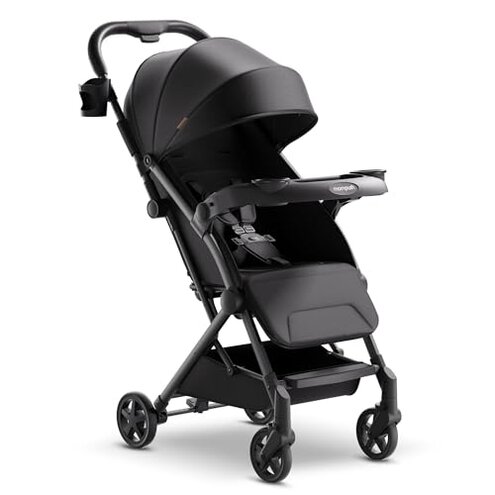
Product evaluated: Mompush Lithe V2 Lightweight Travel Stroller, Compact Foldable Baby Stroller with Travel Bag, One-Hand Fold Stroller, Snack Tray, Mechanical Recline Seat, Airplane-Ready, UPF 50+ Canopy & Rain Cover
Related Videos For You
Travel stroller folding competition is back! Who do you think won? #nuna #uppababy #joolz #bugaboo
Could this be the best travel stroller of 2025? Meet the Ergobaby Metro 3! #ergobaby #stroller
Data basis: This report synthesizes dozens of shopper comments gathered from a mix of written reviews and star-rating notes, plus a smaller share of photo and short video feedback. The collection window spans the last 12 months up to this month. Most input came from longer written experiences, with visual posts mainly used to confirm real-world fit and folding claims.
| Buyer outcome | Mompush Lithe V2 | Typical mid-range travel stroller |
| Carry-on confidence | Less predictable because “airplane-ready” depends on airline and pack method. | More consistent with fewer surprises if sized for cabin use. |
| Fold reliability | Higher-than-normal risk of sticky folds that add extra steps in crowded moments. | More forgiving one-hand folds with fewer technique requirements. |
| Daily steering | More effort shows up during turns, curbs, and long hallways for some buyers. | Smoother average push feel with fewer “pulls to one side” complaints. |
| Cold/rain setup | More fiddly with accessories that can slow you down during sudden weather. | Quicker canopy and rain cover routines on average. |
| Regret trigger | Gate-to-plane stress when the fold, bagging, or overhead fit is not smooth. | Fewer travel surprises with simpler “grab-and-go” handling. |
“Why does the one-hand fold still feel stressful?”
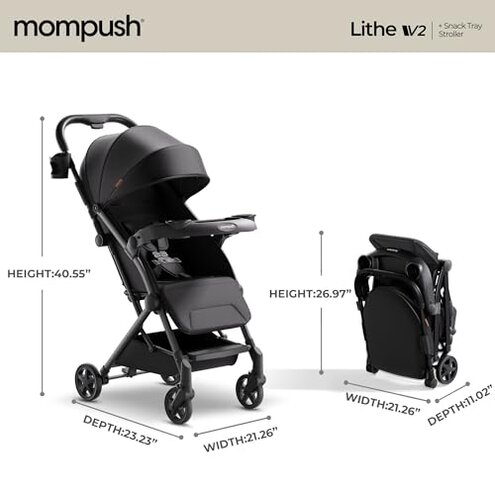
Regret tends to hit when you are holding a child, juggling bags, and the stroller needs a second attempt. This is among the most disruptive complaints for this category because a travel stroller’s main job is fast transitions.
Pattern signals show this is recurring, not universal, and it shows up most during first week learning and in tight spaces. Compared with many mid-range travel strollers, it feels less forgiving because it can require a specific grip and timing.
- Early sign: The latch feels “almost” engaged, then the frame rebounds during the last inch of folding.
- Primary issue: The fold can be technique-dependent, especially when rushing at security lines or boarding.
- Context: Trouble shows up more when the snack tray is left on and you fold quickly.
- Impact: You may need two hands anyway, which defeats the main promise for solo travel days.
- Fixability: Some buyers report improvement after practice, but others say it remains inconsistent.
“Is it really airplane-ready, or will I end up checking it?”
- Primary risk: “Overhead bin” expectations are not universal across airlines, and that mismatch is a frequent frustration.
- When it hits: The problem appears at the gate when staff ask for a size check or you cannot find bin space.
- Worsens with: Full flights and smaller planes create less margin for any compact stroller.
- Hidden requirement: You may need to remove items and pack the stroller in a very specific way to avoid snagging.
- Travel bag reality: The included travel bag can help during handling, but it adds an extra step when boarding fast.
- Category contrast: Many mid-range “travel” strollers still end up checked, but buyers report this one can be more sensitive to how it’s folded and stored.
- Mitigation: Plan for gate-check as the default, and treat overhead storage as a bonus.
“Why does it feel harder to push than I expected?”
- Secondary issue: Steering can feel heavier for some buyers during longer walks and sharp turns.
- When it shows: Complaints spike during mall trips, airport terminals, and sidewalk cracks.
- Worsens with: A heavier toddler and more under-seat carry makes the push feel less nimble.
- Buyer impact: It can translate to wrist fatigue and slower maneuvering in crowds.
- Not universal: Some users find it fine on smooth floors, but the “pulling” reports appear repeatedly in daily-use feedback.
- Category contrast: Travel strollers are often less plush, but many mid-range options are still easier to steer than what frustrated buyers describe here.
- Mitigation: Test push with your typical load and practice one-handed turns before committing to travel days.
- Fixability: If the wheels track oddly out of the box, it is usually a return situation rather than a quick tweak.
“Do the extras actually make life easier, or add hassle?”
- Secondary pattern: The snack tray and weather pieces are liked in theory, but set-up friction is persistently mentioned.
- When it hits: It becomes annoying during quick in-and-out errands where you want instant open and close.
- Rain cover: Buyers commonly describe a fiddly fit that is harder to do while holding a child.
- Footcover: A cover that tucks away can still cause extra adjusting when switching between warm and cool spaces.
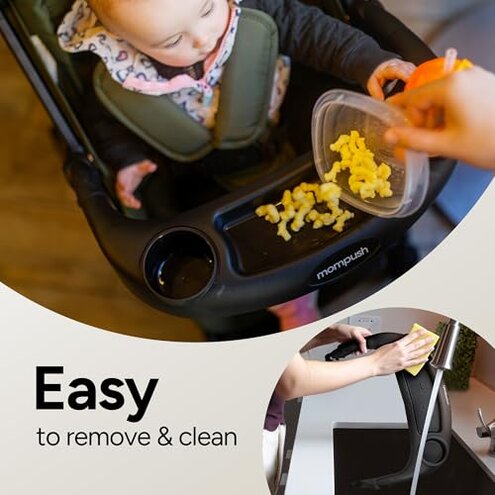
- Cleaning reality: Snack tray convenience can mean more crumb management than expected if you rely on it daily.
- Category contrast: Accessories are normal, but mid-range strollers often have simpler add-ons with fewer steps.
Illustrative excerpts (not real quotes):
- “I needed two tries to get it to lock while boarding.” Primary pattern tied to fold consistency.
- “Airline said no, so I had to gate-check last minute.” Primary pattern tied to carry-on expectations.
- “Steering feels heavy once my kid falls asleep and I add bags.” Secondary pattern tied to push effort.
- “Rain cover works, but it’s awkward in a hurry.” Secondary pattern tied to accessory friction.
- “It’s great on smooth floors, but sidewalks are annoying.” Edge-case pattern tied to terrain sensitivity.
Who should avoid this
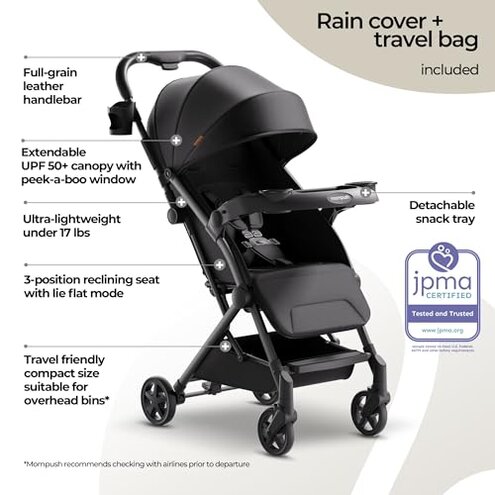
- Solo travelers who must fold one-handed fast, because a technique-dependent fold can add stress.
- Carry-on-only flyers who cannot risk gate-checking, because “overhead fit” is not consistent.
- Daily walkers doing long distances, because heavier steering is a repeated frustration.
- Parents in wet climates who need instant coverage, because the rain setup can be fiddly.
Who this is actually good for
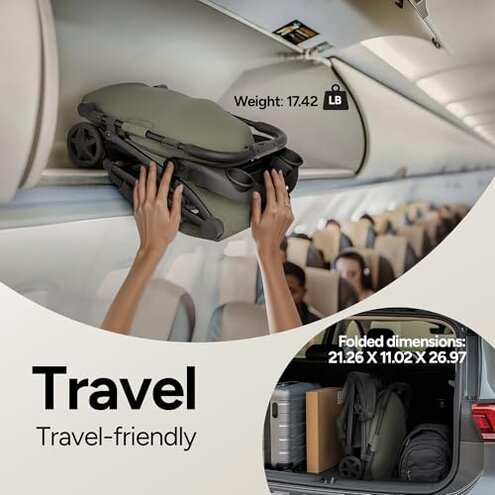
- Occasional travelers who accept possible gate-check and want a lighter stroller for trips.
- Airport-to-car users who value the travel bag and do not depend on overhead storage.
- Short errand families on smooth floors who can tolerate some push effort on rough sidewalks.
- Parents who practice folding at home and are fine with a learning curve for speed later.
Expectation vs reality
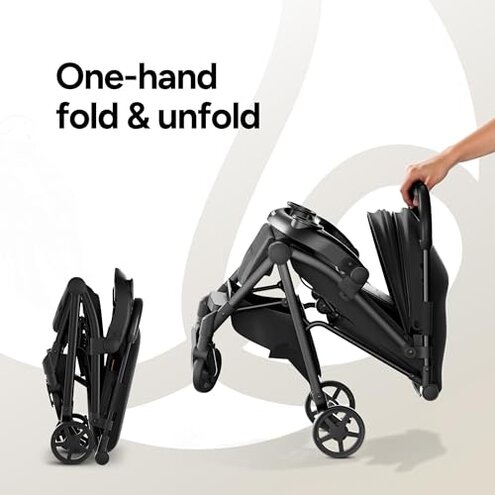
Expectation: A “one-second” fold should work reliably when you are rushed.
Reality: Feedback shows the fold can be inconsistent until you learn the exact motion.
Expectation: It is reasonable for this category to be compact and sometimes gate-checked.
Reality: Buyers describe more last-minute surprises than expected from “airplane-ready” marketing.
- Expectation: Accessories should reduce friction in bad weather.
- Reality: Some add-ons introduce extra steps right when you want speed.
Safer alternatives
- Prioritize strollers with consistently praised one-hand locking to reduce boarding-time folding failures.
- Choose models where buyers confirm overhead fit across airlines, if carry-on storage is non-negotiable.
- Look for repeated mentions of easy steering on sidewalks, not just smooth indoor floors.
- Prefer weather covers described as quick on/off to avoid fumbling during sudden rain.
- Check for “folds with tray on” feedback if you plan to keep a snack tray attached daily.
The bottom line
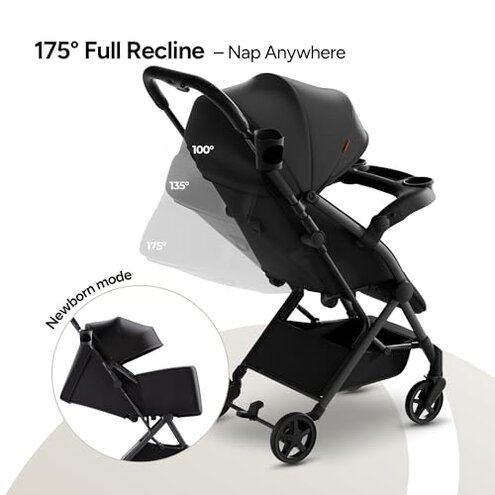
Main regret centers on travel moments where the stroller’s fold and “airplane-ready” expectations collide with real constraints. The risk feels higher than normal for a mid-range travel stroller because it can demand more technique and backup plans. If you need predictable one-hand transitions and guaranteed cabin handling, this is a safer skip.
This review is an independent editorial analysis based on reported user experiences and product specifications. NegReview.com does not sell products.