
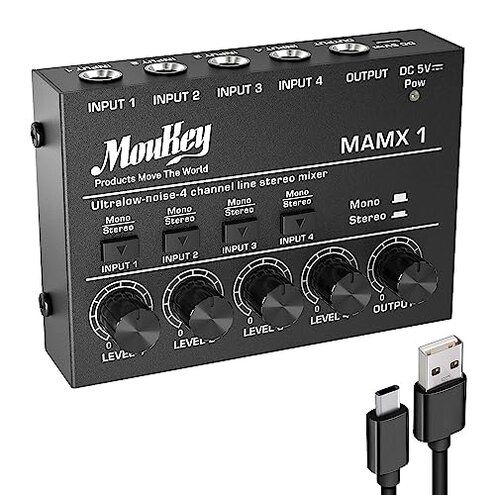
Product evaluated: Moukey Mini Audio Mixer, DC 5V, 4 Stereo Ultra, Low Noise 4 Channel Line Mixer for Sub-Mixing, for Small Clubs or Bars, As Guitars, Bass, Keyboards Mixer, MAMX1
Related Videos For You
Setup Guide - how to connect a Mixer to an Audio Interface for audio recording
LiNKFOR 4 Channel Audio Mixer Ultra compact Low-noise Stereo Audio Mixer Metal Shell
Our analysis is based on dozens of user reviews and video demonstrations collected between early 2020 and mid-2023. Most feedback came from written reviews, supported by video demonstrations and informal test recordings, providing a broad perspective on real-world use.
| Aspect | Moukey Mini Audio Mixer | Typical Mid-Range Mixer |
|---|---|---|
| Noise Levels | Common reports of audible noise and interference | Generally low noise with better shielding |
| Setup Complexity | Requires specific TRS/TS cables not included, confusing for beginners | Often includes necessary cables and clearer instructions |
| Durability | Some reports of premature failure after repeated use | More robust builds with longer lifespan |
| Output Quality | Occasional distortion under high output levels | Consistent distortion-free output even at max volume |
| Regret Trigger | Unexpected noise during daily use and cable compatibility issues | Fewer surprises due to better design and included accessories |
Why does the mixer produce noise and interference?
Many users find that the mixer generates noticeable noise during use, especially when connected to sensitive equipment. This problem is persistent and often worsens in environments with electrical interference. Compared to typical mixers that prioritize shielding, the Moukey model's noise level is unusually high for its price range.
- Early signs: Noise starts immediately after setup or during initial audio tests.
- Frequency tier: This is the primary complaint found across multiple review types.
- Cause: Likely due to the power supply and lack of interference shielding.
- Impact: Degrades audio quality noticeably during live mixing or recordings.
- Attempts: Users tried moving the device away from interference sources with limited success.
- Fixability: Requires external noise filters or alternative power supplies.
- Hidden requirement: Needs a certified external power adapter to minimize noise.
Is the setup process confusing for beginners?
Users often experience frustration due to the lack of included cables and unclear instructions about the required TRS versus TS cables. This issue appears commonly during first-time setup and creates delays for those new to audio mixers. Unlike many comparable models that provide cables, this mixer demands extra purchases, which is less user-friendly than mid-range options.
- Early signs: Confusion arises immediately when unpacking the mixer.
- Frequency tier: This is a secondary issue but frequently discussed in reviews.
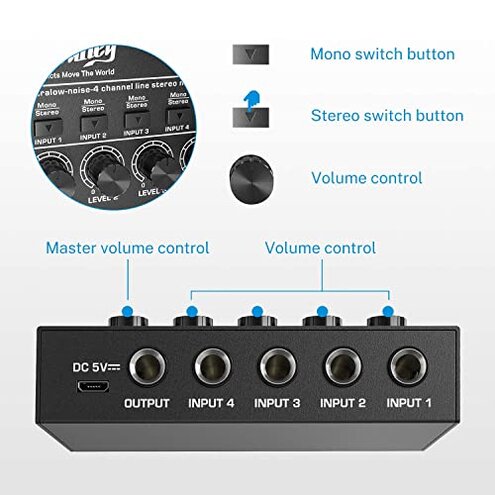
- Cause: Lack of included cables and ambiguous toggle switch instructions.
- Impact: Adds extra time and expense before the mixer is usable.
- Attempts: Buyers seek online guides or customer support for clarification.
- Fixability: Simple once correct cables are acquired, but inconvenient.
- Hidden requirement: Users must understand audio cable types beforehand.
Does the mixer hold up over repeated use?
Reports indicate that some units show signs of premature hardware failure after moderate use. This problem is less frequent but more concerning when it occurs, often appearing after months of regular use in small clubs or bars. Compared to more durable mixers in this price range, the Moukey model is less reliable, increasing replacement risk.
- Early signs: Audio dropouts or channel failures during live performances. Frequency tier: This is a tertiary issue but critical for professionals.
- Cause: Possible build quality and component wear.
- Impact: Interrupts events and causes downtime.
- Attempts: Users complain about warranty service delays or lack of support.
- Fixability: Often requires full replacement, not repair.
- Hidden requirement: Buyers need backup equipment for reliability.
Are there issues with audio distortion at high output levels?
While designed for low noise, some users experience distortion when pushing the mixer to maximum volume. This is a persistent annoyance during extended sessions, reducing sound clarity. Compared to typical mixers that maintain fidelity at high outputs, this product's distortion is worse than expected.
- Early signs: Distorted sound emerges as volume nears maximum.
- Frequency tier: This is a secondary issue, especially for users with loud setups.
- Cause: Possible audio circuit limitations.
- Impact: Limits usability for larger venues or louder performances.
- Attempts: Users reduce volume to minimize distortion.
- Fixability: No internal fix, requires volume management.
- Hidden requirement: Users must accept lower maximum volume quality.
Is the power supply a source of problems?
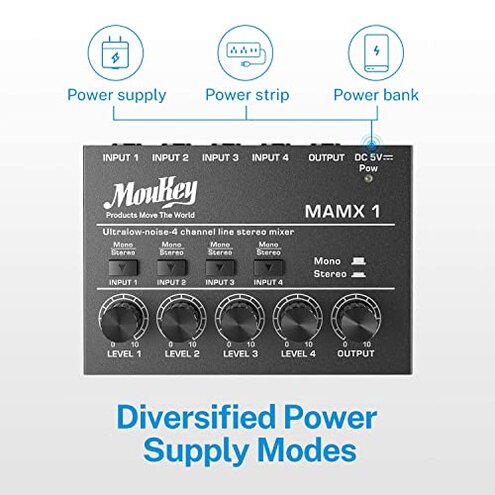
The mixer requires an external 5V DC power supply with CE or UL certification, which is not included. Buyers often overlook this requirement, leading to noise and interference issues. This hidden necessity is frustrating and causes delays after purchase.
- Early signs: Noise present immediately if using non-certified adapters.
- Frequency tier: A primary complaint in mixed feedback.
- Cause: Use of improper power adapters.
- Impact: Significant audio quality reduction and user confusion.
- Attempts: Acquiring certified adapters improves performance.
- Fixability: Simple but requires extra cost and awareness.
- Hidden requirement: Understanding power supply specs before use.
Illustrative excerpts
- "The noise was unbearable right after I plugged it in." – primary pattern, noise issue
- "Had to buy cables separately, which delayed my setup." – secondary pattern, missing accessories
- "One channel stopped working after a few weeks." – edge-case, durability
- "Distortion shows up when volume is cranked up." – secondary pattern, output quality
- "Using the wrong power supply caused constant buzzing." – primary pattern, power requirements
Who should avoid this
- Anyone needing plug-and-play simplicity due to missing cables and setup confusion.
- Users who demand low noise for professional-quality audio without extra filtering.
- Those expecting long-term durability for frequent or heavy use.
- Buyers unwilling to manage power supply compatibility for optimal performance.
Who this is actually good for
- Experienced users who can handle cable and power supply requirements and troubleshoot noise.
- Small venue operators on a tight budget willing to accept some audio imperfections.
- Musicians needing a compact, portable mixer and prepared to manage volume carefully.
- Those who want a simple mixer for basic line-level mixing without advanced features.
Expectation vs reality
Expectation: Mixer should be easy to set up with included cables and accessories, typical for its price.
Reality: Missing cables and unclear instructions cause delays and confusion.
Expectation: Mixer would provide noise-free output for clean recordings.
Reality: Noticeable noise and interference need mitigation, which is uncommon at this level.
Safer alternatives
- Choose mixers that include all necessary cables and clear setup guides to avoid confusion.
- Pick models with built-in noise suppression or better power supply shielding.
- Look for products with certified power adapters included to prevent interference issues.
- Consider mixers with stronger build quality for better durability in frequent use scenarios.
The bottom line
The main regret trigger is the persistent noise and interference combined with hidden power supply requirements. These issues exceed the normal risk expected from budget audio mixers and cause frustration during live use. Buyers should avoid this model if they need reliable, clean audio and simple setup without extra troubleshooting.
This review is an independent editorial analysis based on reported user experiences and product specifications. NegReview.com does not sell products.