
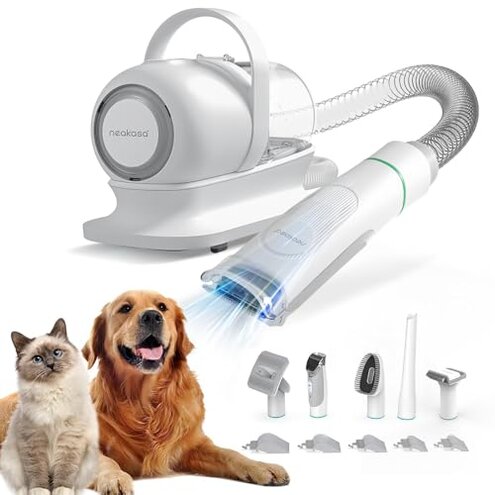
Product evaluated: Neakasa P1 Pro Pet Grooming Kit & Vacuum Suction 99% Pet Hair, Professional Clippers with 5 Proven Grooming Tools for Dog and Cat
Related Videos For You
How to use the Pet grooming kit on your Dyson cordless vacuum
Dog Grooming Steps for Dummies
Data basis: This report is based on hundreds of feedback points collected from written reviews and video demonstrations between 2021 and 2026. Most input came from written owner experiences, with added context from demo-style clips showing real grooming sessions, setup steps, and cleanup results.
| Buyer outcome | Neakasa P1 Pro | Typical mid-range alternative |
|---|---|---|
| Pet tolerance | Higher risk if your pet reacts badly to vacuum noise during first use. | Moderate risk because standard clippers are noisy, but they usually do not add constant suction sound. |
| Mess control | Better cleanup when the vacuum works as expected during brushing or clipping. | More shedding around the room because loose fur usually falls outside the tool. |
| Setup friction | More steps because attachments, hose handling, and container emptying add effort. | Usually simpler because basic clipper kits need less switching and less bin management. |
| Long-session comfort | More awkward when moving around a nervous pet with hose drag and tool changes. | Often easier for quick trims because there is less attached bulk. |
| Regret trigger | Main trigger is buying it for stress-free grooming, then learning your pet still fears the sound and setup. | Main trigger is accepting more mess, not usually a full refusal from the pet. |
Does your pet freeze or fight the noise?
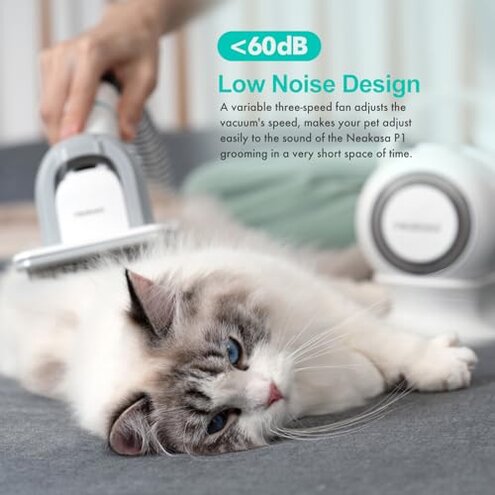
This is a primary issue. The biggest regret moment appears during first use, when buyers expect calmer grooming because the listing highlights a low-noise design. A recurring pattern is that some pets still react badly once the vacuum starts.
During real grooming, the problem worsens if your dog or cat is already sensitive to clippers, dryers, or household vacuums. That makes this feel more disruptive than expected for a mid-range pet grooming kit, because the whole value depends on the pet accepting both trimming and suction together.
Illustrative excerpt: “My dog tolerated clippers before, but the suction sound changed everything.” Primary pattern.
What buyers notice early is backing away, shaking, pawing, or refusing to stay still once the unit turns on. That often leads to shorter sessions, uneven trims, or giving up before finishing.
Mitigation exists, but it adds work. The product itself suggests gradual introduction and treats, which means the hidden requirement is training time, not just plugging it in and grooming.
Do the hose and tool changes make grooming harder?
- Secondary issue: Setup friction appears repeatedly after unboxing and again during each grooming session.
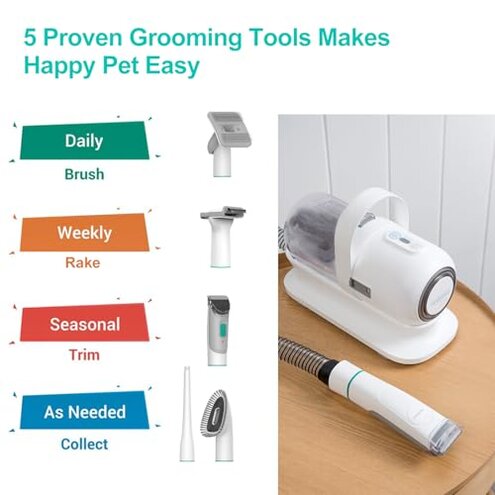
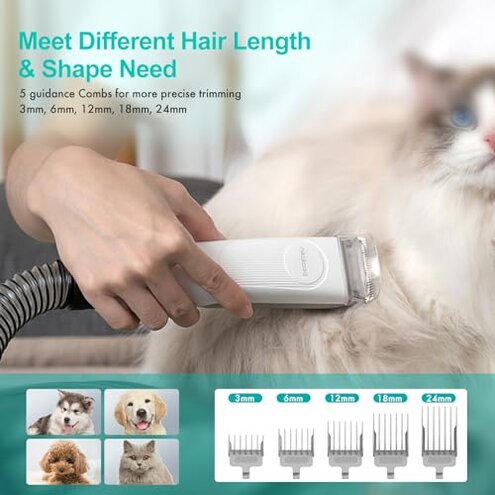
- Real moment: It shows up when you switch between brush, rake, clippers, and cleanup heads around a moving pet.
- Why it frustrates: The all-in-one design saves floor cleanup, but adds extra handling compared with a plain clipper set.
- Category contrast: That makes it less forgiving than most mid-range alternatives for quick touch-ups.
- Early sign: Buyers often realize the session takes longer because the hose changes how freely they can move around legs, belly, and tail areas.
- Impact: If the pet is restless, those added seconds and movements can turn a manageable trim into a stop-and-start job.
- Fixability: This is not a defect-style problem for most people; it is a design trade-off that improves cleanup but reduces simplicity.
Illustrative excerpt: “Cleaner than regular grooming, but much clumsier around a wiggly dog.” Secondary pattern.
Is the suction promise better on paper than in daily use?
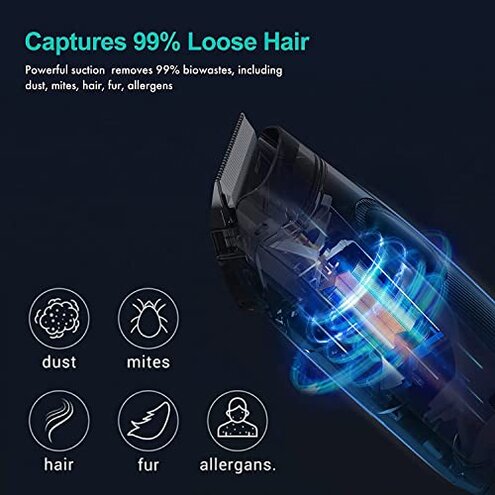
- Primary concern: The product promises 99% hair collection, so disappointment is stronger when some fur still escapes.
- Pattern: This issue is not universal, but it appears persistently in feedback from buyers who expected near-zero cleanup.
- When it happens: It shows up during brushing heavy coats, trimming active pets, or working around awkward body angles.
- Why it feels worse: In this category, some stray hair is normal, but the marketing sets a higher expectation than a typical mid-range kit.
- Buyer impact: The result is not usually a total failure, but a mismatch between “almost no mess” and “still need some cleanup.”
- Hidden requirement: To get the cleanest result, you may need slower passes, better pet positioning, and more frequent bin checks.
- Relative intensity: This is less frequent than noise complaints, but more frustrating when the main reason for buying was mess control.
Illustrative excerpt: “It catches a lot, just not enough to skip cleanup entirely.” Secondary pattern.
Does the kit ask more patience than casual owners expect?
- Primary friction: The product works best when owners accept a learning curve rather than instant convenience.
- Pattern statement: This appears commonly across feedback from first-time home groomers, especially after the first few sessions.
- Usage context: The burden grows during full-body trims, not quick paw or face maintenance.
- What causes regret: Buyers often expect one device to simplify everything, but the combined vacuum-plus-clippers setup can feel like managing a small grooming station.
- Category contrast: That is more upkeep than most mid-range alternatives, which usually trade more mess for less process.
- Attempts people make: They try slower introductions, shorter sessions, or separate brushing before clipping to keep the pet calmer.
- Fixability: Patience can improve results, but it does not remove the time cost for owners wanting fast, low-effort grooming.
- Edge-case effect: In small homes, the machine footprint and stored accessories can feel like more gear than expected for occasional use.
Illustrative excerpt: “I wanted simple home grooming, but this became a whole routine.” Primary pattern.
Who should avoid this
- Avoid it if your pet already fears vacuums, dryers, or loud grooming tools, because the main risk shows up immediately during first use.
- Skip it if you want fast touch-ups, since hose management and attachment switching add more steps than a basic clipper kit.
- Pass on it if “almost no cleanup” is your main goal, because the suction claim can feel worse-than-normal when reality is only partial mess reduction.
- Not ideal for impatient first-time groomers who want plug-and-go results without training, practice, and session planning.
Who this is actually good for
- Good fit if your pet already tolerates appliance noise and you care more about reducing loose fur than having the simplest tool.
- Works better for owners willing to trade extra setup for cleaner floors, sofa areas, and grooming space.
- Reasonable choice if you expect a learning curve and can introduce the vacuum slowly over several short sessions.
- Better match for routine coat maintenance than for buyers hoping one purchase will instantly solve a difficult grooming temperament.
Expectation vs reality

- Expectation: Low-noise grooming means a nervous pet will stay calm.
Reality: The vacuum sound is still a primary trigger for sensitive animals, especially on first use. - Expectation: A 5-tool kit will make home grooming easier.
Reality: It can feel more involved because switching heads and managing the hose adds time. - Expectation: Reasonable for this category is some stray fur, but noticeably less mess than normal.
Reality: The 99% claim can create a worse-than-expected disappointment if you still need follow-up cleanup. - Expectation: One machine replaces separate grooming tools with less hassle.
Reality: For casual owners, it may replace mess with a more demanding routine.
Safer alternatives
- Choose basic clippers if your pet is noise-sensitive, because removing the constant suction directly reduces the main acceptance risk.
- Look for simpler kits with fewer attachments if you mainly do quick trims and want less setup friction.
- Prioritize cord and hose freedom if your pet squirms a lot, since maneuverability matters more than max fur capture.
- Set lower mess promises when shopping, and prefer products described as reducing cleanup rather than nearly eliminating it.
- Consider separate tools if you groom only occasionally, because a clipper plus standard brush can be easier to store, learn, and use.
The bottom line
Main regret trigger is expecting calmer, easier home grooming, then discovering the vacuum sound and extra handling still upset the pet or slow the session down. That risk feels higher than normal for this category because the product’s main selling points create bigger disappointment when they do not fully land.
Verdict: Avoid it if your pet is noise-sensitive or if you want the simplest grooming setup. Consider it only if you are willing to trade convenience and training time for cleaner grooming sessions.
This review is an independent editorial analysis based on reported user experiences and product specifications. NegReview.com does not sell products.