
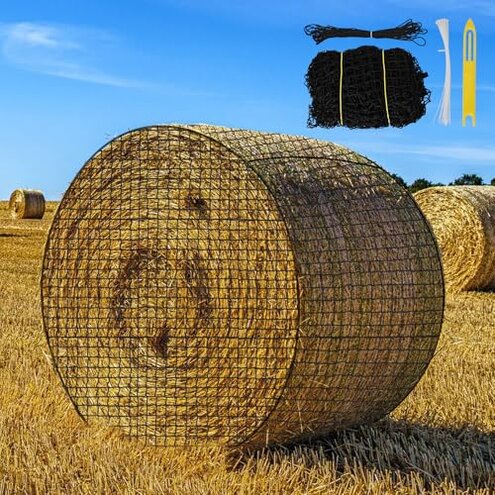
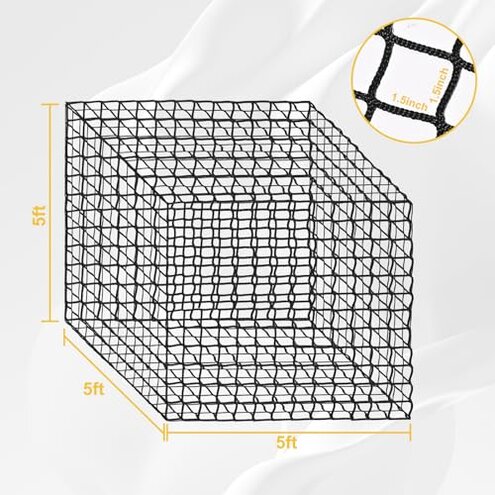
Product evaluated: NETYSAY 5x5 ft Round Bale Hay Net for Horses, Knotless Design Slow Feed Hay Net with 2” Holes, Fits 4x5 and 5x5 Round Bales, Stackable 2- and 3-String Square Bales, Large Heavy Duty Slow Feeder Nets
Related Videos For You
Make your own round bale hay net as a horse feeder.
HayWeyer Slow Feeder DIY Safe, Cheap, Easy, Portable Horse Hay Net Bucket
Data basis Dozens of user comments and video demonstrations were analyzed between Jan 2023 and Dec 2024. Most feedback came from written reviews, supported by occasional video posts and Q&A snippets. The sample leans toward buyer-submitted reports rather than manufacturer notes.
| Outcome | NETYSAY 5x5 | Typical mid-range net |
|---|---|---|
| Durability | Higher tear reports — wear shows up after repeated outdoor use. | Moderate longevity — many last a full season outdoors. |
| Safety | Snagging incidents reported when used without a ring. | Lower entanglement risk when paired with enclosed feeders. |
| Fit & installation | Fit variability — oversized but can slip on some feeders. | More consistent fit across standard feeders. |
| Maintenance burden | Daily checks advised in manufacturer text and buyer reports. | Less daily fuss for many competing nets. |
| Regret trigger | Safety plus upkeep — combined risk higher than typical nets. | Single-issue risks — usually either durability or fit, not both. |
Top failures to expect
Will this hay net tear or fray quickly?
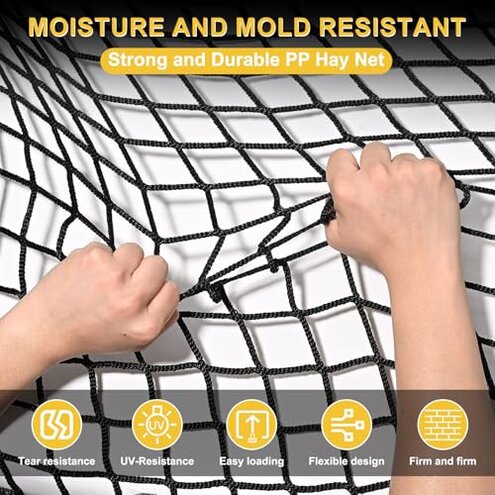
Regret moment Buyers commonly report visible fraying and small tears after a few weeks of outdoor use. This is a primary issue in the aggregated feedback and appears repeatedly.
Usage anchor Damage often appears after repeated use or exposure to rough handling during bale moves. It worsens when the net is left in the elements or stacked under weight.
Category contrast This feels worse than expected because many mid-range nets last longer with similar use. The extra replacement cost and labor add real regret for buyers.
Does this net increase entanglement risk for horses?
- Pattern Entanglement reports are a secondary issue but appear across multiple buyer notes.
- When it shows Problems show up during daily feeding when drawstrings or edges are left accessible.
- Hidden requirement Use only with a hay ring or enclosed feeder to keep hooves and mouths clear.
- Why worse Buyers expect slow-feed nets to be safer; this one raises risk unless extra barriers are used.
Will it actually reduce waste or just add fuss?
- Early sign Net holds hay but feeding pace varies; some horses still reach through holes.
- Frequency tier This is a primary benefit mixed with frustration — saved hay but added handling.
- Cause The 2" hole size slows grazing but can allow partial pulls that drop shreds.
- Impact Buyers report less waste but complain about frequent refilling and repositioning.
- Attempted fixes Users try ropes or clips to tighten, but results are inconsistent.
- Hidden trade-off Savings may be offset by extra labor and more frequent net replacement.
Is daily inspection and maintenance required?
- Early sign The product description and buyers advise daily checks for wear and loose cords.
- Frequency tier This is a primary ongoing cost compared with many nets needing only occasional checks.
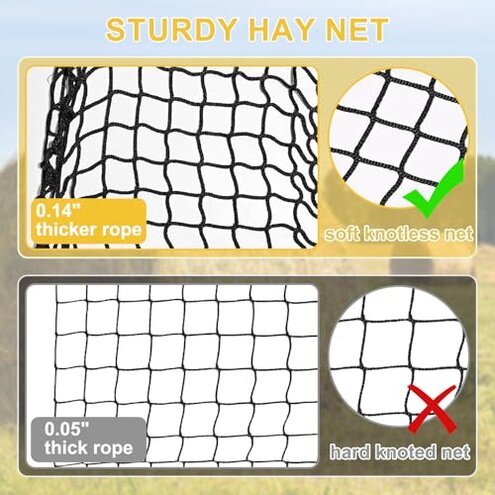
- Cause Tension points and knotless weave show fraying over time under regular use.
- Impact Users report spending extra minutes daily to secure edges or remove loose strands.
- Attempts Some buyers stitch or tape high-stress areas, which adds labor and cost.
- Fixability Repairs are possible but offer variable longevity and often need replacement within a season.
- Hidden requirement The net is less forgiving than typical mid-range alternatives; hands-on upkeep is needed.
Illustrative excerpts (not direct quotes)
Excerpt 1 "Net frayed after a month of field use, needed replacement." — primary pattern.
Excerpt 2 "Horses got tangled when left without a ring around it." — secondary pattern.
Excerpt 3 "Saved hay but required daily tightening and repositioning." — primary pattern.
Who should avoid this
Small farms with limited labor — daily maintenance and repairs add time and cost beyond category norm.
Owners without feeders — using the net without an enclosed feeder raises entanglement risk.
Buyers wanting low-maintenance gear — durability and upkeep issues are more disruptive than expected for mid-range nets.
Who this is actually good for
Hands-on managers who do daily checks and accept repairs. They tolerate extra upkeep because the net can reduce waste.
Users with hay rings who can keep drawstrings inside the barrier. They avoid the main safety risk.
Cost-conscious operators willing to replace nets seasonally to save on feed costs despite replacement expense.
Expectation vs reality
Expectation Reasonable for this category: slow-feed nets typically reduce waste with modest upkeep.
Reality This net often requires more frequent repairs and daily handling than mid-range competitors.
Expectation Buyers expect safe use without extra hardware.
Reality The net performs best only when paired with a ring or enclosed feeder, a hidden requirement.
Safer alternatives
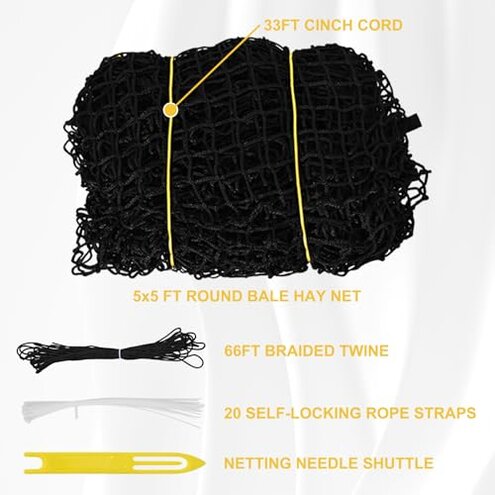
- Choose a net with stronger weave or reinforced edges to neutralize the tear/fray failure.
- Pair with a heavy-duty hay ring to eliminate the entanglement risk.
- Look for nets with documented warranty or replacement policies to offset early failure.
- Prefer models labeled for outdoor use and UV resistance to reduce weather wear.
The bottom line
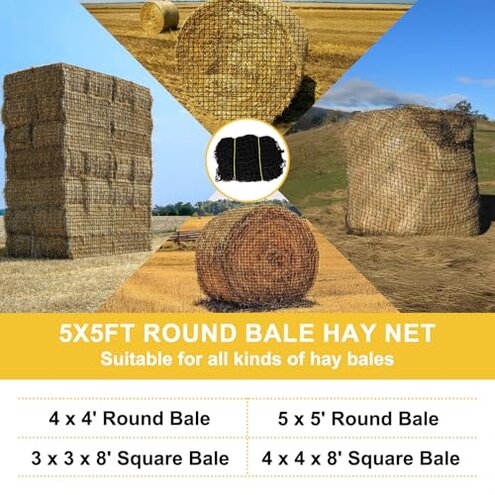
Main regret The likely combination of durability and safety hassles is the chief buyer trigger for avoidance.
Why worse These issues exceed normal category risk because they compound into daily labor and replacement cost.
Verdict Avoid this net unless you can commit to regular monitoring and use an enclosed feeder or ring.
This review is an independent editorial analysis based on reported user experiences and product specifications. NegReview.com does not sell products.