
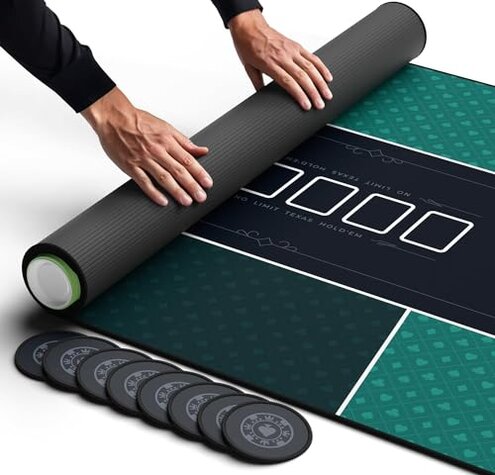
Product evaluated: Newverest Poker Table Top 70" x 35", Texas Hold'em Poker Mat for Home Game Nights Up to 10 Players, Blackjack, Casino | Poker Topper for Tables in Zipper Storage Bag with 8 Coasters in Gift-Ready Box
Related Videos For You
Poker Table Set-up | Poker Tutorial with @Spraggy | PokerStars Learn
How to maintain and upkeep your BBO Poker Table
Data basis for this report comes from analyzing dozens of aggregated buyer notes pulled from a mix of written ratings, Q&A threads, and some photo/video feedback collected over a recent 12-month window. Most signals came from short written complaints, supported by occasional visuals showing real table setups and how the mat behaved after unrolling.
| Buyer outcome | This Newverest topper | Typical mid-range topper |
|---|---|---|
| Flatness after unroll | Higher risk of edge curl and waves during play | Lower risk if shipped/packed flatter or heavier |
| Fit on common tables | More finicky because 70" x 35" can overhang | More forgiving with slightly smaller footprints |
| Surface feel for cards | Mixed, some report drag or inconsistent slide | More consistent felt-style glide expectations |
| Storage convenience | Better bag and tube help, but add steps | Similar, often simpler roll-up without tube |
| Regret trigger | Interruptions from shifting/curling during hands | Less likely to disrupt play once laid down |
Why does the mat not lay flat when the game starts?
Regret tends to hit in the first session, when you unroll it and the edges keep lifting. Severity is higher than expected because the problem shows up while dealing, not just when you store it.
Pattern shows up repeatedly in feedback, though it is not universal. Trade-off is portability, since tight rolling and shipping can make flattening harder than many mid-range toppers.
When it appears is right after setup and again if it gets re-rolled between game nights. Worsens in longer sessions as elbows, chips, and drinks keep nudging the lifted edge.
Category contrast: most mid-range table toppers still have some curl risk, but buyers describe this one as more disruptive because it affects gameplay space and chip stability.
- Early sign is corners that won’t stay down even after a few minutes.
- Primary issue is persistent waves that make the playing area feel uneven.
- Trigger moment happens when you try to square it on the table and it “springs” back.
- Workarounds often involve weighting edges, which adds extra setup time.
- Fixability is limited if you frequently pack it away after each use.
- Hidden cost is needing extra clips/weights if your table surface is slick.
- Illustrative: “It looks great, but the edge keeps popping up.” Primary pattern reflecting repeated flatness complaints.
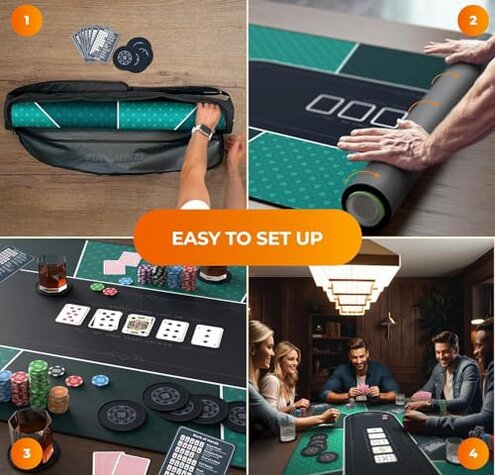
Will the 70 x 35 size actually fit my table?
- Secondary issue is fit friction on smaller dining tables, especially in tighter rooms.
- When it shows is during setup, when you realize there is overhang or cramped seating.
- Worsens in 8–10 player games because elbow space becomes the limiting factor.
- Category contrast: many mid-range toppers choose a more standard footprint, so they tolerate “average” home tables better.
- Practical impact includes players bumping the edge, which can make chips creep.
- Hidden requirement is measuring your table and chair clearance before buying, not after it arrives.
- Attempted fix is rotating the mat, which can block drawers or table leaves.
- Illustrative: “It technically fits, but everyone feels squeezed.” Secondary pattern tied to real-world table sizes.
Does the playing surface feel slower than expected for dealing?
- Pattern appears repeatedly, but it is less frequent than flatness complaints.
- When it appears is mid-hand when you slide cards and they don’t glide consistently.
- Worsens if the table underneath has texture, because bumps telegraph through.
- Category contrast: most mid-range poker toppers aim for predictable slide, so inconsistency feels worse than normal.
- User impact is more “two-finger” pushes and occasional card flips when the edge catches.
- Mitigation is using a very smooth table or adding a thin underlayer, which adds extra steps.
- Expectation gap is that “casino style” visuals don’t guarantee casino-like glide.
- Illustrative: “Cards drag in some spots, then slide too fast.” Secondary pattern about inconsistent feel.
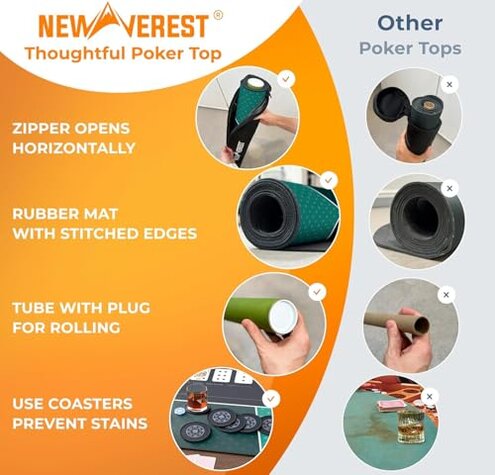
Is the included bag and tube as easy as it sounds?
- Edge-case issue is storage being fussier than expected if you want it to stay flat.
- When it shows is after the session, when you rush cleanup and re-roll too tight.
- Worsens with frequent pack-up because the mat “remembers” the roll direction.
- Category contrast: many mid-range toppers still roll up, but buyers expect less sensitivity to how you roll.
- Hidden step is rolling it evenly onto the tube, not just rolling and stuffing.
- Real impact is next-day setup time spent trying to flatten it again.
- Mitigation is storing it unrolled when possible, which not every home can do.
- Illustrative: “The bag is nice, but storing it wrong makes it wavy.” Edge-case pattern tied to handling habits.
Who should avoid this

Avoid if you hate setup fiddling, because curling edges are a primary complaint during first use and long sessions.
Avoid if your table is borderline small, because the 70" x 35" footprint can create overhang and cramped seating.
Avoid if your group deals fast and expects smooth slides, because inconsistent glide appears repeatedly and is more annoying mid-hand.
Avoid if you pack up every time, because careful rolling discipline becomes a hidden requirement to keep it flatter.
Who this is actually good for
Good fit if you have a large, smooth table and can leave the mat out, since you can tolerate the storage sensitivity that worsens waves.
Good fit if your priority is an organized layout for casual nights, and you can accept minor fussing to keep edges down.
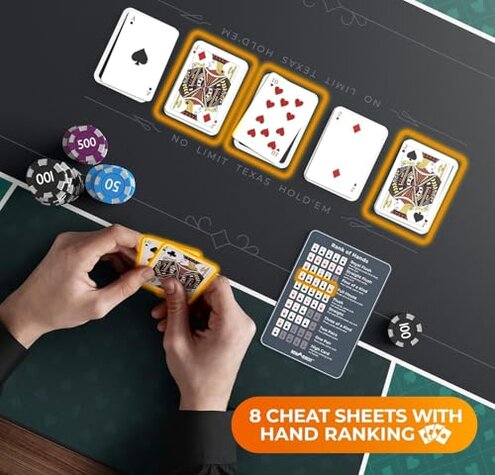
Good fit if you value included extras like coasters and reference cards, and you can tolerate non-perfect flatness as the trade-off.
Expectation vs reality

- Expectation (reasonable for this category): a topper may arrive rolled but settles flat quickly. Reality: flattening can take extra effort, and the lift can return after re-rolling.
- Expectation: “fits up to 10” means comfortable spacing for most homes. Reality: table size and chair clearance can be the limiting factor.
- Expectation: a premium-looking print implies smooth play. Reality: some buyers report uneven slide depending on table underneath.
Safer alternatives
- Choose a topper that ships flatter or is known for low curl, if setup-time regret is your main risk.
- Measure your table and seating clearance first, then pick a smaller footprint if you’re near the edge.
- Look for consistent card glide notes and avoid surfaces flagged for spotty slide if you host serious dealing.
- Prioritize storage that matches your habits, like mats that tolerate quick roll-up without careful rolling.
The bottom line
Main regret is edge curl and waves that show up at first setup and can interrupt play during long hands. Category risk is higher than normal because this isn’t just cosmetic; it can change how stable and smooth the table feels. Verdict: avoid if you want a topper that behaves “set and forget” on typical home tables.
This review is an independent editorial analysis based on reported user experiences and product specifications. NegReview.com does not sell products.