
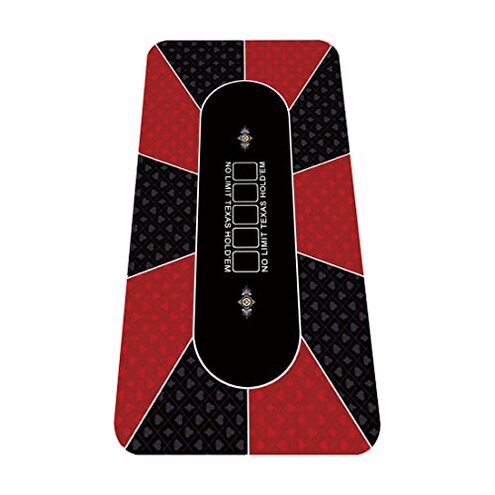
Product evaluated: nuveti Poker Mat - 55 x 28inch Non-Slip Poker Table Game Mat - Portable Rubber Waterproof Poker mat for Table 6-8 Player Card Game Anti-Slip Rubber Poker Table Top Layout
Related Videos For You
Poker Table Set-up | Poker Tutorial with @Spraggy | PokerStars Learn
How to maintain and upkeep your BBO Poker Table
Data basis: This report is based on dozens of buyer comments gathered from written feedback and short video-style demonstrations collected from 2023 to 2026. Most usable signals came from written reviews, with supporting detail from image and usage posts that helped confirm setup and table-fit complaints.
| Buyer outcome | nuveti mat | Typical mid-range alternative |
|---|---|---|
| First-use setup | Higher risk of arriving curled or needing time to flatten before play. | Usually easier to lay flat with less adjustment. |
| Card handling | Mixed glide and edge response if the mat keeps waves after unpacking. | More consistent surface feel during longer sessions. |
| Table fit | More limiting if your table size does not closely match the listed footprint. | Often similar, but many alternatives offer clearer fit expectations. |
| Cleanup confidence | Good at first, but less reassuring if edges lift or the surface is not fully flat. | More predictable when the mat lies flat from day one. |
| Regret trigger | Most likely when buyers expect instant casino-style play without extra setup steps. | Lower if expectations are basic and table size is standard. |
Does it ruin game night if the mat won’t lay flat?
This is the primary issue. The biggest regret moment shows up right after unrolling, when buyers expect a ready-to-play surface and get curling or raised areas instead. That is more disruptive than expected for this category because a poker mat only works well when it stays flat without babysitting.
The pattern appears repeatedly. It shows up during first setup and can feel worse on smaller tables or after being stored rolled up again. A typical mid-range poker mat may need brief settling, but this type of complaint feels more persistent here because it affects every hand dealt.
Illustrative: “I spent more time flattening it than actually playing.” Primary pattern.
Illustrative: “The corners kept fighting the table all night.” Primary pattern.
Will cards and chips feel less smooth than the listing suggests?
- Pattern: This is a secondary issue that commonly follows flatness problems rather than appearing alone.
- When: It shows up during play, especially in longer sessions when cards hit a raised edge or ripple.
- Severity: It is less frequent than curling but more frustrating when it affects dealing rhythm.
- Buyer notice: The mat can feel uneven instead of clean and casino-like, which is the main reason people buy one.
- Why worse: A reasonable category baseline is smooth card travel, but any waviness makes this mat less forgiving than typical alternatives.
- Workarounds: Buyers often try weighting the corners or leaving it out longer, which adds extra time before use.
Is the size more restrictive than it looks?
- Scope: This is a secondary issue seen across multiple feedback styles whenever buyers use mixed table sizes.
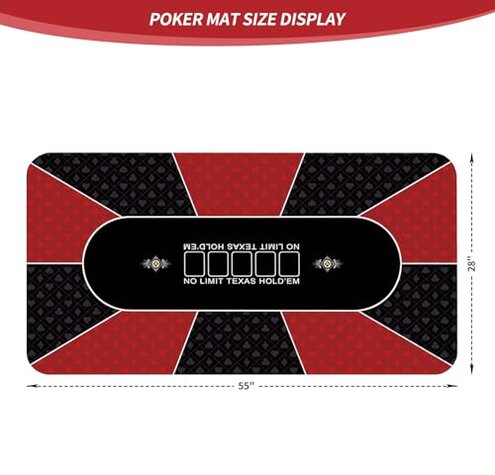
- When: The problem appears after setup when the listed 55 x 28 inch footprint meets a table that is smaller, narrower, or crowded.
- Impact: The mat can feel awkwardly fitted, leaving less room than expected for chips, drinks, or elbows.
- Hidden requirement: You need a good table match, not just enough space to physically place it.
- Why worse: Many buyers expect flexible use from portable mats, but this becomes more limiting than normal if your table is not close to ideal.
- Trade-off: It may support casual play, yet the comfort drops once several players crowd around.
- Fixability: There is no real fix beyond changing tables or accepting a tighter setup.
- Illustrative: “It fit my table, but not my full game setup.” Secondary pattern.
Is “portable” actually code for extra upkeep and reset time?
- Frequency tier: This is an edge-case issue for occasional users, but it becomes more noticeable with frequent storage.
- When: It tends to show up after repeated use if the mat is rolled, moved, and unrolled for every game night.
- Cause: Portability can create a reset cycle where each setup risks new curling or repositioning.
- User impact: That adds extra steps before play, which matters if you wanted a quick casual setup.
- Category contrast: Some portable mats recover faster, so this feels higher-maintenance than expected for a simple tabletop accessory.
- Best attempt: Keeping it stored flat may help, but that reduces the convenience buyers wanted.
- Long-session effect: If the mat shifts or keeps memory from storage, the annoyance becomes more visible as games run longer.
- Illustrative: “Portable, yes, but it needed too much fuss each time.” Edge-case pattern.
Who should avoid this
Avoid it if you want a mat that works straight out of the box with no flattening routine.
Skip it if your games are sensitive to smooth dealing, because minor waves feel worse here than on a typical mid-range mat.
Pass if your table size is borderline, since fit and comfort can become a bigger issue than expected.
Look elsewhere if you store the mat after every session, because repeated rolling can turn portability into extra upkeep.
Who this is actually good for
It fits buyers who have a dedicated table and can leave the mat out long enough to settle.
It works for casual players who care more about basic table coverage than perfect card glide.
It suits shoppers willing to trade some setup fuss for a lower-cost way to make a plain table feel more game-ready.
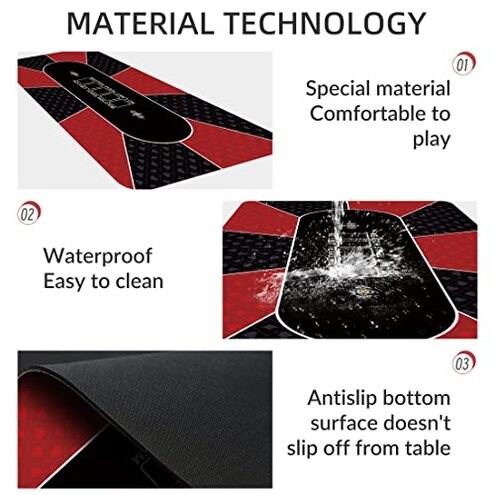
It makes sense if spills are your main concern and you can tolerate the flatness risk.
Expectation vs reality
- Expectation: A portable poker mat should unroll and play with minimal prep.
- Reality: Here, the more common regret is extra flattening time before the first hand.
- Expectation: Reasonable for this category is mostly smooth dealing even on a basic mat.
- Reality: If this one keeps ripples, card movement can feel worse than expected during real play.
- Expectation: The listed size should feel flexible enough for many home tables.
- Reality: In practice, comfort depends on a closer table match than some buyers expect.
Safer alternatives
- Choose flat-shipping or mats described as easier to settle if you want to neutralize the main curling risk.
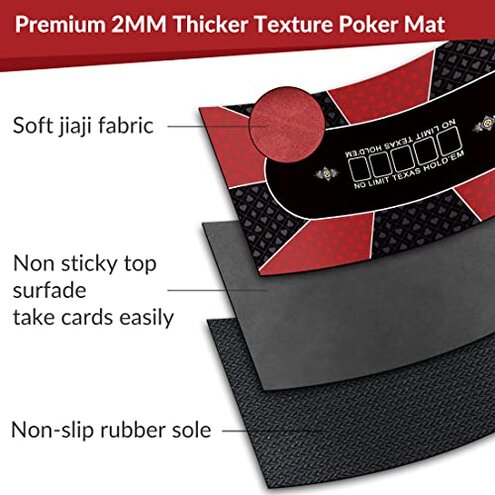
- Prioritize thickness and flatness feedback over color or print if smooth dealing matters most.
- Measure your full play area, including chips and drink space, to avoid the hidden table-fit problem.
- Consider a fold-free storage plan if you want portability without repeated reset frustration.
The bottom line
The main regret trigger is simple: buyers expect an instant poker surface and instead may get a mat that needs time, weight, or patience to behave. That exceeds normal category risk because even small flatness issues affect every hand, every chip move, and every setup. Avoid it if low-fuss setup is non-negotiable; consider it only if you can tolerate some prep and your table is a close size match.
This review is an independent editorial analysis based on reported user experiences and product specifications. NegReview.com does not sell products.