
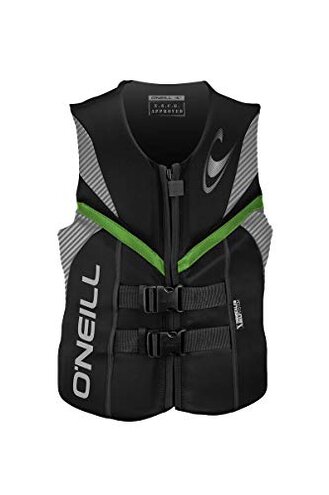
Product evaluated: O'Neill Men's Reactor USCG Life Vest, Black/Lunar/Day-Glo,X-Large
Related Videos For You
Life Jacket Safety
Proper Care of Your PFD 2.4
Data basis Dozens of buyer comments and demo videos were reviewed between 2016–2025, with most feedback coming from written reviews and supported by video demonstrations.
| Outcome | This vest | Typical mid-range |
|---|---|---|
| Fit predictability | Unreliable — sizing often requires ordering tighter; fit changes when wet. | More forgiving — many mid-range vests fit closer to labeled size when wet. |
| Closure reliability | Higher risk — zipper and buckle complaints appear repeatedly and can fail under stress. | Lower risk — mid-range alternatives show fewer hardware failures. |
| Comfort vs mobility | Mixed — relaxed fit claims conflict with need for snug dry fit. | Balanced — competitors manage snug wet fit with similar mobility. |
| Regret trigger | Fit + hardware — sizing issues combined with buckle/zipper problems cause the most buyer regret. | Single issues — mid-range models usually have either fit or hardware issues, not both. |
Why does the vest fit feel wrong when I try it on?
Regret moment You try the vest dry and it feels snug, but it loosens noticeably when wet or after short use.
Pattern This is a commonly reported problem, appearing repeatedly across written feedback and video try-ons.
Usage context It shows up at first wear and during water sessions, especially after getting wet when neoprene expands.
Category contrast This is more finicky than typical mid-range vests that keep a predictable wet fit.
Are the zipper and buckles reliable over time?
- Failure pattern Recurring zipper stiffness and occasional buckle slips reported after light use.
- When Problems appear within the first uses or after a few sessions in salt or chlorinated water.
- Cause Hardware seems stressed by the snug wet fit and repeated flexing during activity.
- Impact A stuck zipper or failing buckle is more disruptive than a cosmetic flaw; it affects safety and convenience.
Will this vest stay comfortable during long sessions?
- Early signs Tightness felt when dry then looseness when wet can cause chafing or shifting during long rides.
- Frequency tier This is a secondary issue for many users but becomes primary on extended outings.
- Cause The design trades minimal bulk for a relaxed fit that conflicts with the need for a snug dry fit.
- Attempts Buyers report adding layers or tightening straps as a workaround, which reduces mobility.
- Fixability Returns or exchanges often required; resizing is the most common fix.
- Hidden need You must size down intentionally because neoprene expands when wet.
Does ownership add hidden chores or trade-offs?
- Care Neoprene requires rinsing and drying to avoid odor, a routine mentioned by multiple buyers.
- Replacement Wear at seams or hardware may demand earlier replacement than expected for this category.
- Storage Needs flat, ventilated storage to prevent misshaping, which some owners overlooked.
- Cost impact Extra exchanges or replacements add time and shipping costs compared with typical mid-range vests.
- Usage limit Not ideal for heavy daily use; issues appear faster with frequent sessions.
- Optional fixes Aftermarket buckles or zipper lubrication are stopgaps, not guaranteed solutions.
- Overall These hidden needs make ownership more maintenance-heavy than many alternatives.
Illustrative buyer phrasing (not real quotes)
"Felt snug dry, floated loose after the first swim; had to size down." — Primary pattern reflecting repeated fit complaints.
"Zipper jammed on my second outing; lucky I wasn't far from shore." — Secondary pattern about hardware reliability under stress.
"After a month of regular use it started rubbing under the arm during wakeboarding." — Edge-case about comfort on heavy use.
Who should avoid this
- Competitive riders Avoid if you need a predictable fit for performance and quick on/off between runs.
- Frequent users Avoid if you plan daily sessions; wear and hardware concerns appear faster with frequent use.
- Buyers needing low-maintenance Avoid if you want minimal care; this vest needs extra maintenance to prevent odor and wear.
Who this is actually good for
- Casual weekend users Good if you accept occasional resizing and limited sessions; you can tolerate the fit trade-off.
- Budget-conscious buyers Good if you want the brand styling and can handle extra maintenance or simple fixes.
- Non-critical safety use Suitable if you prioritize mobility over perfect hardware reliability and can avoid heavy salt exposure.
Expectation vs reality
Expectation Reasonable for this category: buyers expect a labeled size to stay similar when wet.
Reality This vest often expands when wet, forcing many buyers to size down, which is worse than expected.
Expectation Reasonable: zippers and buckles should work reliably out of the box.
Reality Hardware issues are more disruptive than cosmetic faults and have safety implications.
Safer alternatives
- Size strategy Try models with adjustable panels or buy from sellers with easy exchanges to neutralize the fit problem.
- Hardware focus Choose vests with reinforced zippers and rated buckles to avoid the buckle/zipper failures noted here.
- Activity match For frequent riders, prioritize vests marketed for heavy use and salt resistance to reduce wear.
- Maintenance routine Rinse, dry, and store ventilated to mitigate the vest's care demands and odor risk.
The bottom line
Main trigger The combined risk of unpredictable fit and recurring hardware issues is the top regret for buyers.
Why it matters These two problems together exceed normal category risk because they affect safety, comfort, and ownership cost.
Verdict Avoid this vest if you need consistent fit and durable closures; consider alternatives with adjustable fit and stronger hardware.
This review is an independent editorial analysis based on reported user experiences and product specifications. NegReview.com does not sell products.