
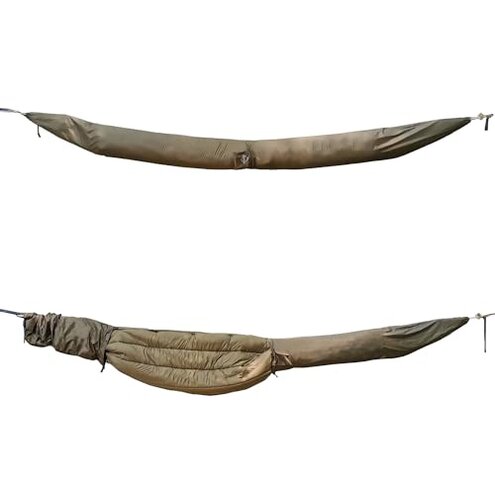
Product evaluated: Onewind Hammock Sleeve 12ft, Lightweight and Compact Camping Hammock Storage and Cover 12' Large for Hammock, Underquilt Combo, Topquilt, OD Green
Related Videos For You
Hammock Accessories - Hammock Sleeve Setup
Protect Your Hammock With The Wise Owl Defender Sleeve
Data basis: This report summarizes dozens of buyer comments gathered from written feedback and video-style demonstrations collected from 2024 to 2026. Most input came from short written ownership notes, with lighter support from setup clips and photo-backed impressions, so the strongest signals are about real-use fit, packing effort, and whether the sleeve adds convenience or extra hassle.
| Buyer outcome | Onewind sleeve | Typical mid-range alternative |
| Pack speed | Can be fast once sized right, but setup becomes slower if the hammock system is bulky. | Usually moderate, with fewer fit-sensitive steps. |
| Fit tolerance | Higher risk than normal if your underquilt and topquilt stay attached. | Usually more forgiving for mixed hammock setups. |
| Storage convenience | Good for compact systems, but less smooth with larger insulation combos. | Typically consistent across common camping loads. |
| Weather cover use | Works as a basic shield, but not every buyer treats it like true all-weather protection. | Usually sold with clearer limits on storage-only protection. |
| Regret trigger | Buying it for one-step storage and finding it still needs careful packing. | Buying for basic protection and getting roughly what you expected. |
Want a quick pack-up, but it turns into wrestling?
Primary issue: The biggest regret moment appears during pack-up after use, when buyers expect a fast slide-in sleeve and instead need extra arranging. That trade-off feels more disruptive than expected for this category because the whole point is saving time.
Pattern: This appears repeatedly in fit-sensitive setups, especially when quilts stay attached and the load gets puffy. A normal mid-range sleeve is expected to be somewhat forgiving, but this one seems less tolerant of bulk.
Illustrative excerpt: “I thought it would slide over everything, but I still have to compress and fuss.” Primary pattern.
Why it stings: The product promise centers on seconds-fast packing. When that only works with a neatly dialed-in setup, buyers feel the convenience was oversold.
Thinking the large size solves every hammock combo?
- Fit mismatch: A secondary issue is that “large” can still feel tight during first setup if your hammock system is fuller than expected.
- When it shows: The problem gets worse after setup when underquilt and topquilt are both left attached for grab-and-go storage.
- Hidden requirement: Buyers may need a very specific load shape, not just the right hammock length, to get easy use.
- Category contrast: That is more frustrating than a typical mid-range option, because shoppers reasonably expect some extra tolerance from a combo-focused sleeve.
- Early sign: If the sleeve bunches or stops halfway, that is often the first warning sign that your insulation stack is near its limit.
- Impact: Instead of quick storage, you add extra steps like smoothing, compressing, and refeeding fabric.
- Fixability: Some buyers can improve results with a leaner setup, but that reduces the all-in-one benefit that attracted them.
Illustrative excerpt: “It fits my hammock, just not the whole sleep system the easy way.” Secondary pattern.
Buying it as outdoor protection, then expecting too much weather defense?
- Use limit: A secondary issue is expectation drift during storage or travel, where buyers may treat it like heavy-duty weather protection.
- What happens: It appears persistently that the sleeve works better as a dirt and light-weather barrier than a full neglect-it-outside solution.
- Worse conditions: This concern matters more in damp conditions or longer outdoor exposure, where shoppers expect stronger peace of mind.
- Category baseline: Basic sleeves usually have limits, but frustration rises here because the product framing can make buyers expect broader protection than a simple cover provides.
- User impact: If you leave your hammock out between trips, this can create false confidence rather than true set-it-and-forget-it coverage.
- Attempted workaround: Buyers often respond by adding a second storage step or moving the setup indoors anyway.
Illustrative excerpt: “Fine for keeping it cleaner, not something I trust outside for long.” Secondary pattern.
Hoping it simplifies camp life, but it adds one more thing to manage?
- Primary frustration: Among the most common complaints is workflow friction, not outright failure, during repeated camping use.
- When it hits: The annoyance shows up before setup and after teardown, especially for buyers who already had a workable packing routine.
- Why it matters: A sleeve should remove decisions, but this can add handling steps if you need to align fabric and insulation carefully.
- Not universal: This is not universal, because minimalist hammock users tend to have fewer problems than bulky-system users.
- Category contrast: That split makes it riskier than a normal mid-range buy, since the convenience benefit depends more heavily on how exact your setup is.
- Hidden cost: The real cost is time and fuss, not weight, because the sleeve is light but can still complicate camp rhythm.
- Best-case fix: The easiest mitigation is using it with a simple hammock load, but that narrows who gets the advertised benefit.
- Regret moment: Buyers feel it most when breaking camp fast in the morning and the “quick” system becomes slower than stuffing.
Illustrative excerpt: “Light to carry, but not as simple as just stuffing and moving on.” Primary pattern.
Who should avoid this

- Avoid it if you keep a bulky underquilt and topquilt attached and expect one-motion storage every trip.
- Skip it if you camp in damp conditions and want a true leave-it-outside cover instead of a lighter storage sleeve.
- Pass if your main goal is shaving minutes off teardown, because fit-sensitive packing can exceed normal category hassle.
- Look elsewhere if you dislike gear that works only when your setup is carefully matched and neatly arranged.
Who this is actually good for

- Good fit for minimalist hammock users who carry a lean setup and can tolerate some sizing sensitivity.
- Works better for buyers who want cleaner storage in transit and do not need full-weather outdoor protection.
- Reasonable choice if you already know your hammock system packs slim and you value lower carry weight over forgiveness.
- Better match for organized campers willing to adjust their routine to get smoother sleeve use.
Expectation vs reality
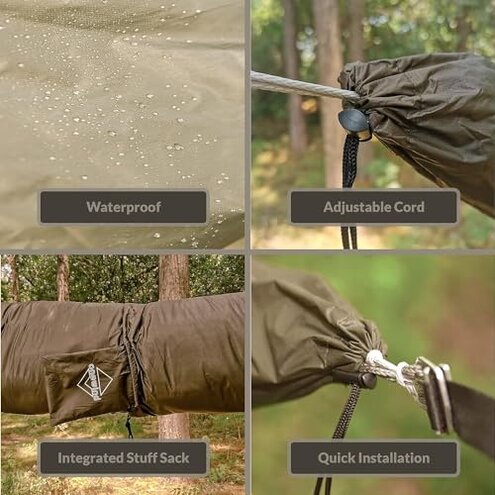
Expectation: A combo sleeve should let you store the whole sleep system with very little effort.
Reality: That is reasonable for this category, but here it can be worse than expected if your quilts add bulk or odd shape.
Expectation: A water-resistant cover should handle outdoor exposure with little worry.
Reality: The safer assumption is basic protection, not long unattended weather defense.
Expectation: Adding a sleeve should simplify camp routine.
Reality: For some setups, the sleeve adds management steps instead of removing them.
Safer alternatives
- Choose sizing by volume, not just hammock length, if you store quilts attached and want to avoid tight-pack frustration.
- Prefer a wider-tolerance sleeve if your insulation stays on the hammock, because that directly reduces the fit mismatch risk.
- Buy for storage use first, not weather exposure, unless the product clearly promises stronger outdoor cover performance.
- Keep your current sack system if fast teardown matters more than tidy suspended storage, since it avoids sleeve-handling friction.
The bottom line
Main regret: Buyers most often get disappointed when quick storage depends on a slimmer, more exact hammock setup than expected. That makes the risk higher than normal for this category, because the convenience benefit is less forgiving than many mid-range shoppers assume. Verdict: Avoid it if your hammock system is bulky or if you want low-effort, all-condition protection without careful packing.
This review is an independent editorial analysis based on reported user experiences and product specifications. NegReview.com does not sell products.