
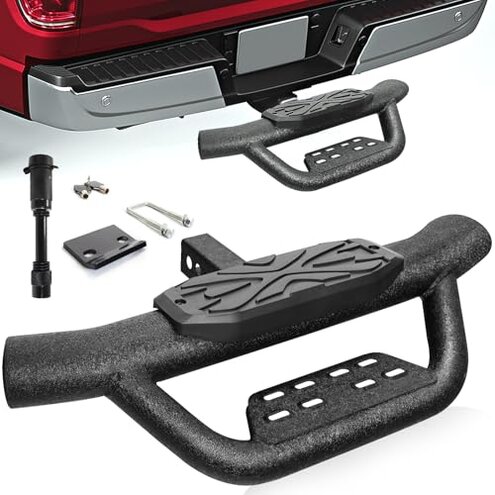
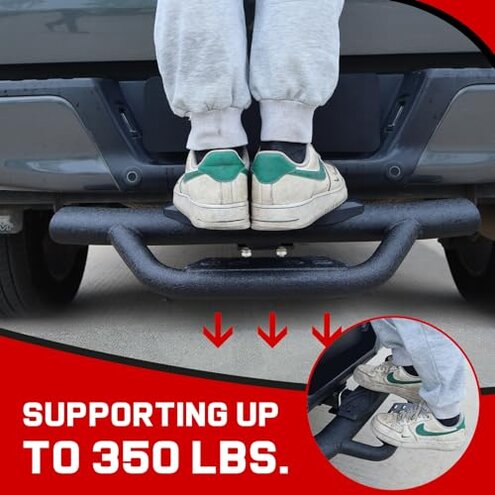
Product evaluated: OTHOWE Double Layer Tow Hitch Step for 2" Hitch Receiver, Carbon Steel with Dual-Stage Black Powder Anti-Slip Trailer Hitch Step Universal Fit for Trucks SUV Car Van
Related Videos For You
Easy Hitch Step - Access Your truck bed easily - Best Hitch Step for Truck Beds and Trailers
Data basis: This report is based on dozens of recent buyer comments and product feedback collected from written ratings, short video impressions, and image-supported posts from 2024 to 2026. Most feedback came from written comments, with added context from visual demonstrations that helped confirm setup, fit, and day-to-day clearance problems.
| Buyer outcome | OTHOWE hitch step | Typical mid-range alternative |
|---|---|---|
| Fit confidence | Lower; vehicle-specific surprises appear more often because pin length, plate position, and sensor clearance can change by vehicle. | More predictable; still universal-fit, but usually has fewer hidden fit checks before install. |
| Install effort | Higher; plug-in setup sounds simple, but some buyers face extra steps if the included lock pin does not suit their receiver depth. | Moderate; usually insert and pin with less follow-up. |
| Daily convenience | Mixed; the step can help reach the cargo area, but it may block the license plate or interfere with reverse features on some vehicles. | More forgiving; fewer visibility or sensor compromises in normal use. |
| Category risk | Higher-than-normal; universal hitch steps often need some adjustment, but this one carries more hidden compatibility checks than many mid-range options. | Expected; some wobble or clearance checking is normal, but not as many vehicle-specific catches. |
| Regret trigger | Strong; regret starts when buyers expect a simple fit and then discover they need a longer pin, plate repositioning, or sensor workarounds. | Lower; regret usually comes from normal bulk, not from multiple compatibility surprises. |
Will it actually fit your vehicle without extra hassle?
This is the primary issue. The regret moment usually starts during first install, when a buyer expects a universal fit and then runs into receiver-depth or vehicle-layout problems.
This pattern appears repeatedly in compatibility notes, and it feels more disruptive than expected for this category because many mid-range hitch steps need checking, but not this many separate checks.
- Early sign: Trouble often shows up before driving, when the lock pin does not line up as expected or feels too short for certain newer vehicles.
- Frequency tier: This is a primary pattern, because fitment warnings span receiver size, plate position, and sensor behavior rather than just one isolated concern.
- Usage moment: The problem is easiest to notice during setup, especially on newer SUVs and trucks where receiver placement can sit close to plates or sensors.
- Hidden requirement: Some buyers may need a longer lock pin, which adds an extra step that many shoppers would not expect from a plug-and-play product.
- Impact: What should be a fast install can turn into checking clearances, contacting support, and deciding whether the step can stay mounted full time.
- Why it feels worse: A typical hitch step may ask for basic fit checking, but this one is less forgiving because several vehicle-specific conflicts can happen at once.
- Fixability: Some of these issues are fixable with a replacement pin or a different step position, but that still means extra time after purchase.
Illustrative: “I thought it was universal, but my setup needed a different pin.”
Pattern: This reflects a primary compatibility issue.
Could it block the plate or annoy your backup system?
This is a secondary issue, but it becomes more frustrating during daily use than buyers expect. The step may sit right where the license plate or reverse sensor zone needs clear space.
The pattern is persistent rather than universal. It worsens on vehicles where the hitch receiver sits level with the plate or near factory parking sensors.
That matters because many buyers leave a hitch step installed all the time. In this category, some sensor sensitivity is normal, but plate blocking is a more practical hassle because it can force removal.
The trade-off is simple: easier access to the rear can come with more day-to-day compromises than a typical mid-range alternative. If you rely on backup alerts or want zero plate interference, this can feel worse than expected.
Illustrative: “The step worked, but it sat right in front of what I needed clear.”
Pattern: This reflects a secondary daily-use conflict.
Does the ‘universal’ design still need too much adjustment?
- Adjustment burden: The step has five holes for position changes, but that flexibility also means buyers may spend extra time testing what clears the vehicle best.
- Recurring pattern: This shows up as a secondary pattern, especially after install when buyers try to reduce interference with the bumper, plate, or sensors.
- Real-world moment: The hassle appears when you step back after mounting and realize the first position is not the one you can actually live with.
- Impact on use: Instead of install-once convenience, some buyers get a trial-and-error process before the step feels usable.
- Category contrast: Adjustable hitch steps are common, but this one can demand more fine-tuning than most mid-range choices because the fit compromises are broader.
Illustrative: “It fit the hitch, but not my vehicle layout on the first try.”
Pattern: This reflects a secondary setup-friction problem.
Is the size and weight more awkward than you expect?
- Bulk factor: At 13.2 pounds and 27 inches long, this is not a tiny accessory, so handling it during install can feel clumsier than a simple hitch insert.
- When it shows up: The awkwardness is most noticeable on first install and whenever you remove or reposition it.
- Frequency tier: This is an edge-case issue compared with fit problems, but it becomes more frustrating for buyers who expected a quick one-person setup.
- Practical effect: The larger shape can make alignment and pin insertion feel more tedious when working low to the ground.
- Why it exceeds baseline: Hitch steps are rarely feather-light, but this one is less convenient than many buyers picture from the listing style and plug-in promise.
- Mitigation: If you plan to leave it installed most of the time, the weight matters less than if you remove accessories often.
Illustrative: “It is sturdy, but not as quick to handle as I expected.”
Pattern: This reflects an edge-case convenience complaint.
Who should avoid this
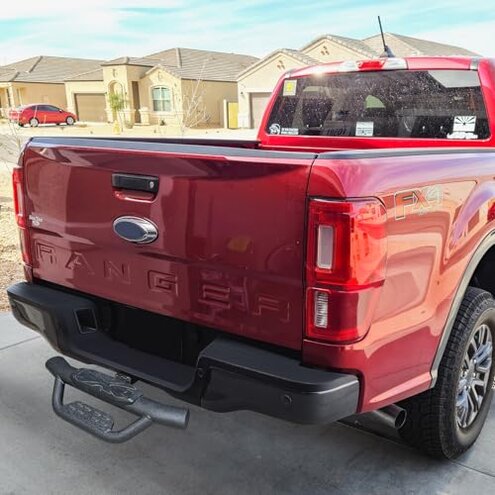
- Avoid it if you want a true no-surprise install, because the hidden pin-length and clearance checks exceed normal category tolerance.
- Avoid it if your hitch sits close to the license plate, since plate blocking is a practical daily-use issue rather than a minor cosmetic concern.
- Avoid it if you depend heavily on reverse sensors, because sensor interference is less frequent than fit issues but more annoying when it happens.
- Avoid it if you often swap hitch accessories, because the size and setup trial-and-error add more effort than a simpler step design.
Who this is actually good for
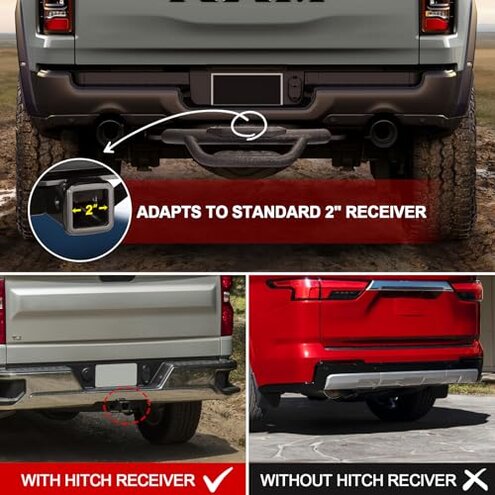
- Good fit for buyers who already measured receiver depth and rear clearance, because they are less likely to be surprised by the compatibility checks.
- Good fit for trucks or SUVs with generous rear spacing, where the plate and sensor conflicts are less likely to matter.
- Good fit for buyers who plan to leave the step installed, since the weight and handling inconvenience matter less after setup.
- Good fit for shoppers willing to tolerate some adjustment time in exchange for a larger rear step platform.
Expectation vs reality
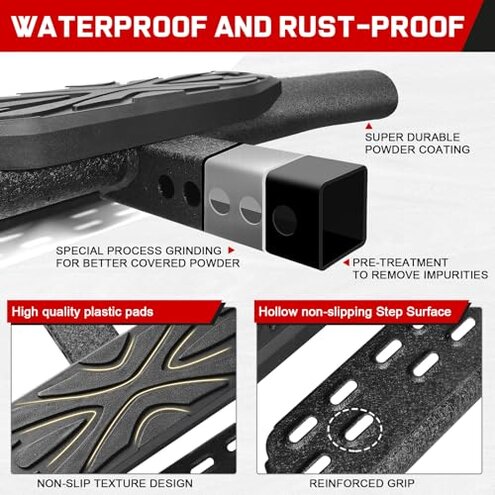
- Expectation: A universal 2-inch hitch step should be close to install-and-go.
Reality: Here, buyers may need extra checks for pin length, plate clearance, and sensor behavior before it feels settled. - Expectation: Adjustable mounting should make fit easier.
Reality: The adjustment can also mean more trial and error after setup, not less. - Expectation: Reasonable for this category is minor clearance checking.
Reality: This product brings a worse-than-expected stack of compatibility risks that can trigger regret faster than normal. - Expectation: A rear step mainly adds convenience.
Reality: On some vehicles, convenience comes with everyday compromises like blocked visibility areas or reverse-system annoyance.
Safer alternatives
- Measure first: Choose a hitch step that clearly lists receiver-depth and pin-length guidance, which helps avoid the hidden hardware mismatch seen here.
- Check rear layout: If your plate sits near hitch height, look for a more compact step profile to reduce the plate-blocking risk.
- Prioritize sensor clearance: For vehicles with factory reverse sensors, pick a design marketed for sensor-friendly spacing or a narrower footprint.
- Prefer simpler hardware: If you want fast install and frequent removal, a lighter single-step design can reduce setup frustration and handling awkwardness.
- Look for vehicle-specific notes: Products with more explicit fit exclusions are often safer buys than vague universal-fit claims.
The bottom line
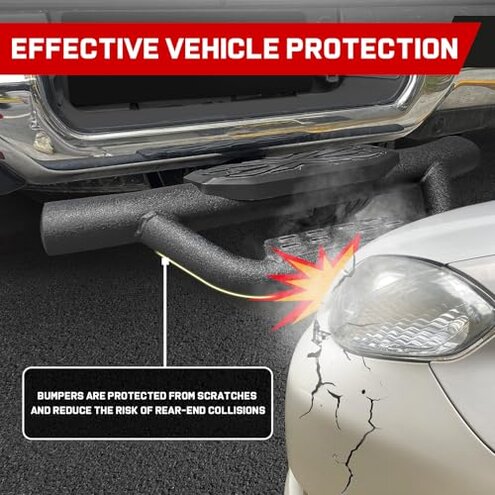
Main regret trigger is not strength or looks. It is the gap between the simple universal-fit promise and the real-world compatibility work some buyers must do.
That risk is higher than normal for this category because the problems can stack: pin length, plate blocking, sensor conflict, and extra adjustment. Avoid this one if you want a low-effort hitch step and do not want to troubleshoot fit after it arrives.
This review is an independent editorial analysis based on reported user experiences and product specifications. NegReview.com does not sell products.