
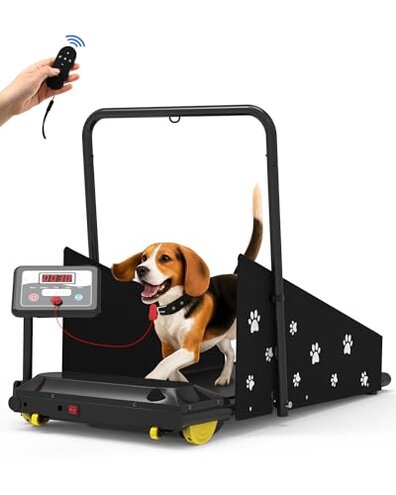
Product evaluated: Petbobi Dog Treadmill for Small & Medium Dogs- Quiet Indoor Pet Exercise Machine with 360° Rotatable Display, Remote Control & Wheels, Heavy-Duty 265 lbs Capacity for Fitness & Weight Management
Related Videos For You
Introducing Your Dog to the Treadmill
How to Exercise Your Dog Indoors (Using a Treadmill!)
Data basis: This report is based on dozens of reviews and feedback sources collected Jan 2023–Feb 2026, including written buyer reviews and video demonstrations. Most feedback came from written reviews, supported by video demonstrations.
| Outcome | Petbobi CS1247 | Typical mid-range pet treadmill |
|---|---|---|
| Durability | Higher-than-normal risk — recurring belt or motor complaints appear repeatedly after months of use. | Category baseline — mid-range models usually last longer under daily use. |
| Fit & sizing | Confusing limits — advertised heavy load contrasts with recommended dog weight, causing fit failures. | Clearer limits — typical alternatives state consistent belt size and recommended weights. |
| Noise & vibration | Mixed performance — manufacturer claims low-noise but many buyers report motor vibration during longer sessions. | Quieter in practice — mid-range machines usually deliver steady low-noise operation for indoor use. |
| Safety & controls | Inconsistent — remote, safety key, and side panels reported as finicky by some users. | More reliable — comparable models offer more consistent controls and sturdier panels. |
| Regret trigger | Durability and sizing mismatch — buyers most often regret purchase when motor or belt fails or dog does not fit comfortably. | Lower regret — typical mid-range alternatives trade a bit more cost for predictable fit and durability. |
Will the treadmill fail after a few months of regular use?
Severity note: Many buyers report this as a primary issue that appears repeatedly in feedback. Pattern: recurring reports of motor strain or belt wear emerge after weeks or months of daily sessions.
Context: The problem often shows up during long sessions or daily use, when the treadmill runs near its top speeds for extended periods.
Category contrast: This is worse than typical mid-range pet treadmills because failures are reported sooner and more disruptively, making repairs or replacements feel frequent.
Will my dog actually fit and feel safe on the belt?
- Early sign: dogs hesitate or step off frequently when first using the belt, a commonly reported pattern.
- Frequency tier: this is a primary issue for buyers with wider-chested small to medium dogs.
- Probable cause: belt width and the recommendation to keep dogs ≤80 lbs conflict with the claimed total load, creating a hidden requirement to verify fit carefully.
- Impact: poor fit reduces exercise effectiveness and increases training time for owners.
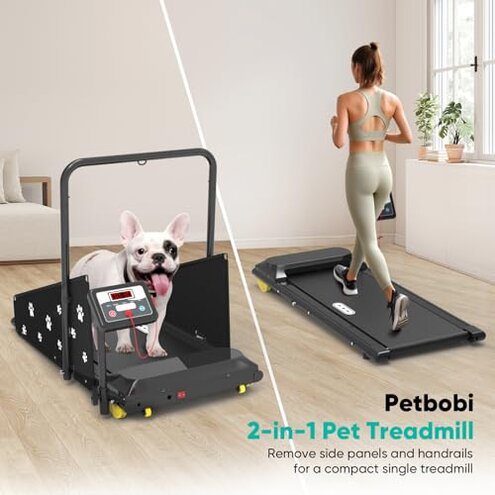
- Attempted fixes: buyers often remove side panels or add harness guidance, but results remain mixed.
Is the treadmill quieter than living-room appliances?
- Claim vs reality: manufacturer states low-noise operation, yet buyers commonly report motor vibration and intermittent loud tones.
- When it appears: noise often becomes noticeable during higher speeds or after several minutes of continuous use.
- Scope: this is a secondary issue seen across written and video feedback sources.
- Worsening conditions: vibration and noise intensify with long sessions or if the treadmill is placed on an uneven floor.
- Practical impact: noise can disturb apartments, offices, or nerves of noise-sensitive dogs.
- Workarounds: placing rubber mats or tightening bolts helps sometimes but doesn't eliminate complaints for many users.
Will setup, controls, and safety features work reliably?
- Assembly burden: several buyers note the need for an extra pair of hands or basic tools during first setup, a commonly reported inconvenience.
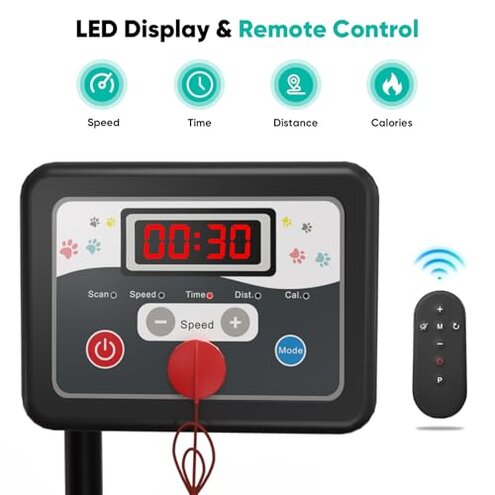
- Remote reliability: remote control and panel response are described as finicky in repeated accounts.
- Safety key issues: magnetic safety key detaches during active sessions for some users, appearing as a secondary failure.
- Panel alignment: side panels that are meant to prevent slipping are sometimes loose or require re-seating after use.
- Customer fixes: owners report needing to re-tighten fasteners and re-seat the key periodically.
- Hidden requirement: confirming your dog is ≤80 lbs is needed despite the product's larger load claim, or you risk control instability.
- Long-term effect: repeated small adjustments add time and frustration, making ownership more maintenance-heavy than expected.
Illustrative excerpts
"Belt started slipping after two months of daily walks." — reflects a primary pattern.
"Motor got noisy on higher speeds despite quiet claim." — reflects a secondary pattern.
"Dog barely fit and kept stepping off the edges." — reflects a primary pattern.
"Safety key popped off mid-session once or twice." — reflects an edge-case pattern.
Who should avoid this
- Owners of larger small/medium dogs: avoid if your dog needs more belt width or a relaxed fit, since fit failures are common.
- Heavy daily users: avoid if you plan daily long sessions, because durability complaints are more disruptive than expected.
- Apartment dwellers seeking silence: avoid if ultra-quiet operation is essential, since vibration and noise appear repeatedly.
Who this is actually good for
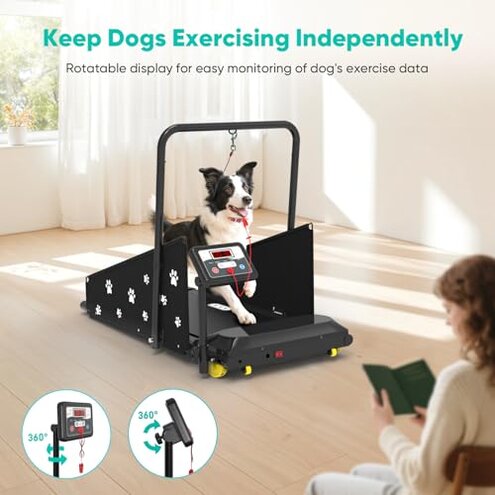
- Occasional walkers: good for owners who need a short indoor walking option and can accept extra maintenance from durability issues.
- Small dogs that fit the belt well: suitable when your dog is clearly within the comfortable belt area, tolerating a learning curve.
- Owners on a tight budget: acceptable for buyers prioritizing price over long-term durability and quiet operation.
Expectation vs reality
Expectation: a mid-range pet treadmill should provide steady daily use and quiet operation that fits the advertised dog sizes.
Reality: this model shows belt wear, motor strain, and fit confusion sooner than is reasonable for the category, increasing repair or replacement effort.
Safer alternatives
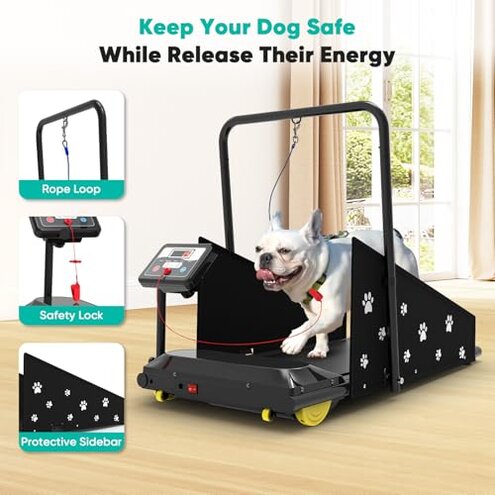
- Check belt dimensions: compare belt width and recommended dog weight to avoid fit mismatch before buying.
- Prioritize tested durability: choose models with longer user histories or extended warranties if you plan daily long sessions.
- Inspect noise reviews: look for user videos showing treadmill at higher speeds to verify quiet performance in real conditions.
- Verify control reliability: prefer products with well-documented remote and safety-key performance to avoid finicky operation.
The bottom line
Main regret: buyers most often regret this treadmill because of durability and sizing failures that appear after weeks or months of use.
Why worse than normal: failures arrive sooner and require frequent adjustments, making ownership more work than typical mid-range alternatives.
Verdict: avoid if you need a long-lasting, quiet, and reliably sized treadmill for daily use; consider alternatives if those are priorities.
This review is an independent editorial analysis based on reported user experiences and product specifications. NegReview.com does not sell products.