
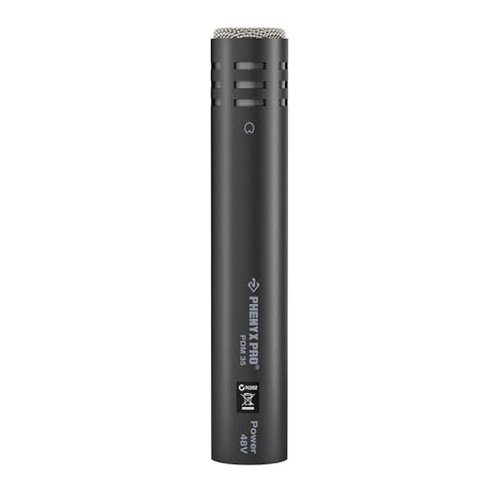
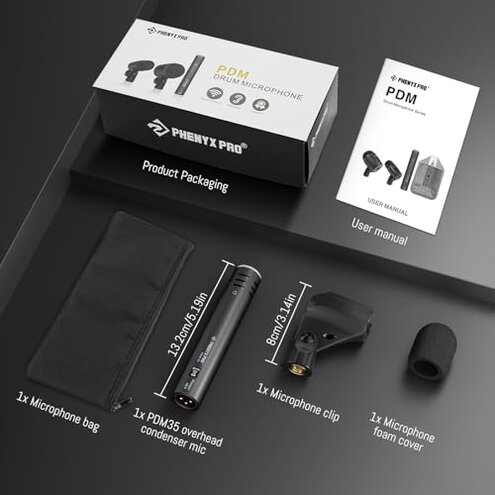
Product evaluated: Phenyx Pro PDM35 Overhead Condenser Microphone, Cardioid Microphone with Wide Frequency Response Range, XLR Connector, Pencil Stick Condenser Mic for Hi-Hat, Percussions, and String Instruments
Related Videos For You
How to Set Up an Overhead Boom Mic
Does Phantom Power Improve Your Condenser Mics Audio?
Data basis I analyzed dozens of buyer reviews and several video demonstrations collected between Jan 2023 and Dec 2025, with most feedback from written reviews and supported by video tests.
| Comparison | Phenyx Pro PDM35 | Typical mid-range condenser |
|---|---|---|
| Sound consistency | Variable — several buyers report inconsistent tone between units and setups. | Consistent — most mid-range options deliver predictable tone across units. |
| Power requirement | Hidden need — often requires good phantom power and preamp to perform well. | Standard — many mid-range condensers behave acceptably on basic interfaces. |
| Build & mounting | Mixed — reports of flimsy clips and loose XLR fit are more common than expected. | Robust — mid-range mics usually have sturdier clips and connections. |
| Setup friction | Higher-than-normal risk — more time and gear needed to reach decent sound. | Lower — typically plug-and-play with minor EQ tweaks. |
| Regret trigger | Requires better interface — buyers without phantom power or clean preamps report dissatisfaction. | Less likely — fewer buyers hit this regret with mid-range picks. |
Why does the mic sound thin or noisy on first use?
Phantom-power surprise Many users find the mic needs a proper phantom power source and a clean preamp to sound correct. This pattern is commonly reported and appears across both written and video feedback.
Usage anchor The problem appears during first setup when users plug the mic into entry-level interfaces or mixers without strong phantom power. Compared to a reasonable category baseline, this is worse than expected because typical mid-range condensers usually give usable sound on basic interfaces.
Is the tone inconsistent between units?
- Pattern Unit-to-unit variation is recurring and seen across multiple feedback sources.
- Early sign Noticeable differences in high-frequency response on first recordings.
- Frequency tier This is a secondary issue — not everyone sees it but it's common enough to matter.
- Cause Likely manufacturing variance or capsule calibration differences reported by buyers and video tests.
- Impact Requires EQ work or exchange to reach expected tone.
Will mounting and connection feel sturdy for live or repeated use?
- Build complaint Several buyers report flimsy clips and loose thread fit during setup.
- When it shows Problems show up during live setups and repeated handling.
- Frequency tier This is a primary issue for gigging or school use where gear is moved often.
- Cause Clip and connector tolerances appear less robust than many mid-range competitors.
- Impact Adds extra setup time and increases risk of mic shifting or falling during sessions.
- Attempted fixes Users replace clips or add tape; those are temporary, not ideal long-term solutions.
- Hidden requirement You may need spare mounts or a better mic clip to avoid mid-session problems.
How often do units fail or produce hiss and dropouts?
- Failure pattern Persistent reports of self-noise and intermittent output exist but are less frequent than other complaints.
- Usage anchor Noise and dropouts often appear after extended sessions or when paired with weak preamps.
- Frequency tier This is an edge-case issue by frequency but highly disruptive when it occurs.
- Cause Likely sensitivity to poor phantom power stability or marginal internal shielding.
- Impact Can ruin recordings and force mid-session swaps or re-takes.
- Fixability Some buyers improved the issue with a higher-quality interface or inline preamp.
- Hidden cost Fixes add expense and time, reducing the product's low-cost appeal.
- Scope signal These problems appear across written feedback and technical test videos.
Illustrative excerpts (not real quotes)
- Excerpt "Sounds thin until I used my studio preamp and real phantom power." — primary
- Excerpt "Clip felt loose during setup; I tightened and taped it." — secondary
- Excerpt "Worked fine, then hiss started after an hour of tracking." — edge-case
Who should avoid this
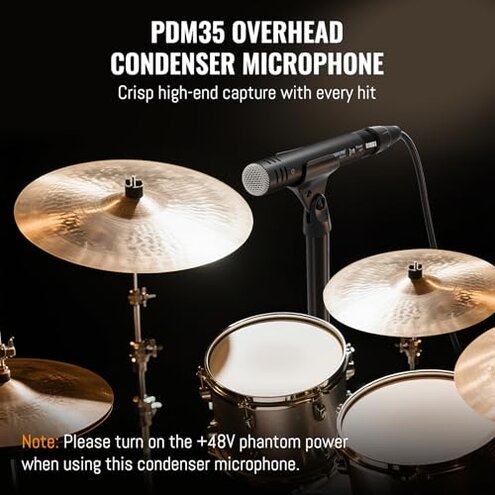
- Beginners without phantom Buyers using USB interfaces or no dedicated phantom power should avoid this mic.
- Gigging musicians Users who move gear often should avoid due to mounting and clip fragility.
- Tight-deadline recorders Avoid if you cannot tolerate unit variation or possible mid-session failures.
Who this is actually good for
- Budget setups with good preamps Small studios with a reliable phantom-power interface can tune the mic to acceptable sound.
- Home hobbyists willing to EQ Home recordists who accept extra EQ work for cheaper hardware may tolerate the tone variance.
- Backup or casual use Users who need a spare mic for basic overhead duties and expect occasional swapping can accept the risks.
Expectation vs reality
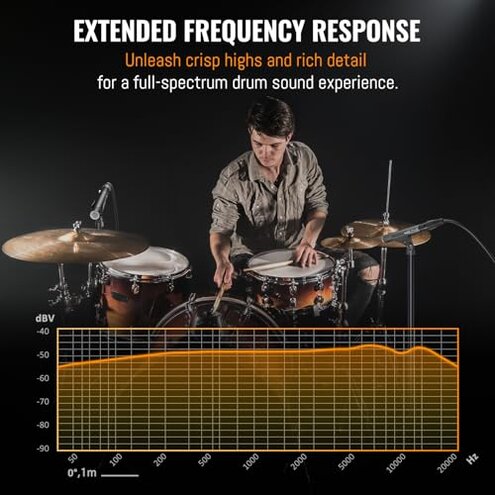
- Expectation Reasonable for this category: a pencil condenser should work on basic interfaces with minor EQ.
- Reality This unit often needs stronger phantom power and a clean preamp to reach that baseline.
- Expectation Typical mid-range mics are plug-and-play for simple overhead tasks.
- Reality Buyers report extra setup time, part swaps, or gear upgrades to get usable sound.
Safer alternatives

- Choose mics labeled with clear low-noise specs and known phantom stability to neutralize power-sensitivity problems.
- Buy kits that include reliable clips and cables to avoid mounting and connector surprises.
- Opt for tested brands with documented unit consistency if you can't tolerate tone variation.
- Invest in an interface with stable phantom power to eliminate hiss and dropout risks.
- Check return policy and test immediately to catch unit defects before long-term use.
The bottom line
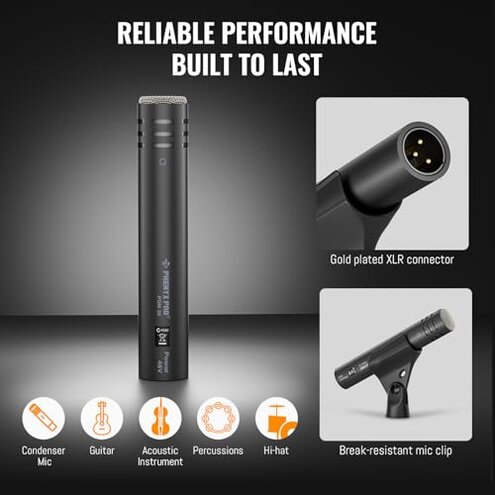
Main regret The most frequent regret is the mic's hidden need for solid phantom power and clean preamps to sound decent.
Verdict This raises setup risk above a typical mid-range condenser, so avoid if you expect plug-and-play reliability or gig-ready durability.
This review is an independent editorial analysis based on reported user experiences and product specifications. NegReview.com does not sell products.