
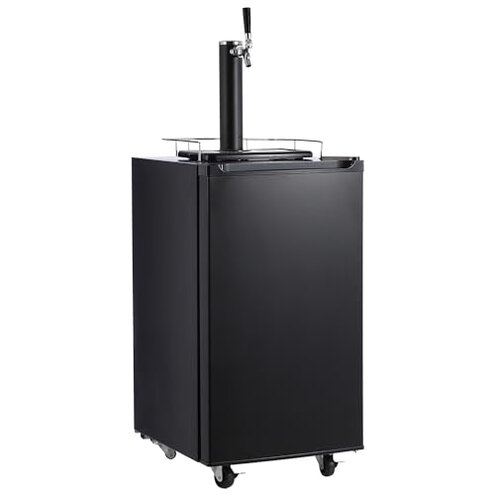
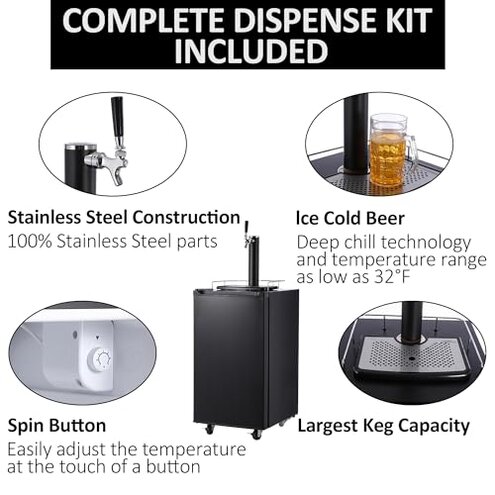
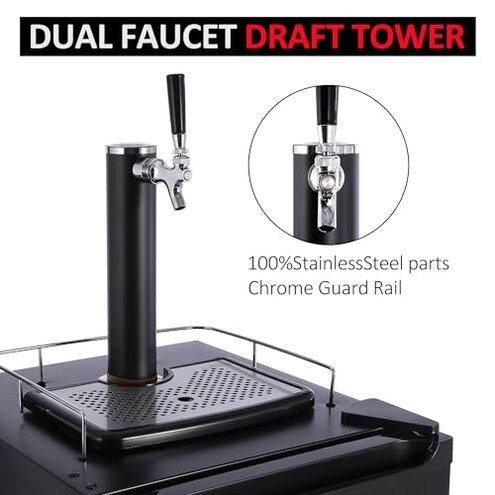
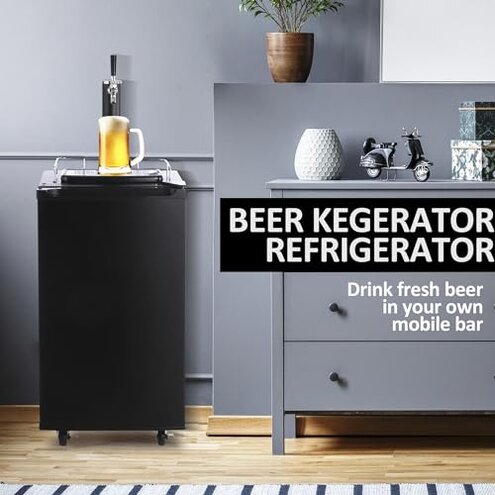
Product evaluated: PioneerWorks Beer Kegerator, Single Tap Draft Beer Dispenser, Full Size Stainless Steel Keg Refrigerator With Drip Tray, CO2 Cylinder, 32°F- 50°F Temperature Control
Related Videos For You
How to Tap a Keg for Your Kegerator in Your Bar or Home
One Trick Could Solve Your Foamy Beer Issues! Kegerator Quick Fix | Draft | Draught
Data basis: This report reflects analysis of dozens of buyer feedback items collected from written reviews and star-rating notes across a recent 12-month window. Most feedback came from short written comments, supported by a smaller set of longer, step-by-step setup descriptions. Signals were weighted toward repeat complaints about day-one setup and early ownership, since that is where regret tends to appear fastest for kegerators.
| Buyer outcome | PioneerWorks kegerator | Typical mid-range kegerator |
|---|---|---|
| First-week success | Higher risk of extra troubleshooting after setup | Moderate risk but usually straightforward with included parts |
| Pour consistency | More variable results reported during early pours | More predictable once pressure is set |
| Hidden requirements | More likely to need extra parts or tweaks to stabilize use | Less likely beyond standard beer-line and CO2 basics |
| Daily living | Higher-than-normal annoyance risk from small fit and cleanup details | Normal upkeep for this category |
| Regret trigger | “I just wanted it to pour right without tinkering” | “Takes a bit to dial in” but settles faster |
Top failures
“Why is setup taking so much longer than expected?”
Regret moment tends to hit right after unboxing, when you expect a quick install and the first pour becomes a mini project. Severity is medium, but it is more disruptive than expected because it blocks the main job on day one.
Pattern is recurring but not universal, and it shows up most during first setup and the first keg load. In this category, some dialing-in is normal, but buyers describe this unit as less forgiving than typical mid-range options.
- Early sign: You keep re-reading the steps because something feels unclear during initial assembly.
- Primary pattern: Setup friction appears repeatedly in feedback, especially around first-use readiness.
- Time cost: The “quick install” expectation turns into extra back-and-forth adjustments.
- Hidden need: Some owners report needing extra basic kegging know-how to avoid beginner mistakes.
- Category contrast: Most mid-range units still require tuning, but they tend to reach a drinkable pour with fewer retries.
- Mitigation: Plan for a slower first day and treat it like a setup session, not a plug-and-play appliance.
- Fixability: Many issues are solvable, but the frustration is the extra effort up front.
“Why is the beer pouring foamy or inconsistent?”
- Regret moment: After you finally hook everything up, the first glasses can feel like wasted time and wasted beer.
- Recurring signal: Pour quality complaints appear repeatedly, most often during first pours and early adjustments.
- When it shows: It commonly shows up right after pressure changes or when switching from “testing” to real serving.
- Worsens with: Longer serving sessions can amplify frustration because you keep chasing a stable pour.
- Cause feel: Buyers often describe it as needing more fine tuning than expected for a single-tap setup.
- Category baseline: Some foam is normal at the start, but this seems more persistent than many mid-range competitors.
- Workarounds: Extra time chilling the keg and slower adjustments can help, but it adds babysitting during use.
- Fixability: Usually fixable with process changes, but it is a poor fit if you want easy hosting.
“Why does it feel harder to live with day-to-day?”
- Annoyance: Small usability details become bigger because you interact with them during every pour.
- Secondary pattern: Buyers mention minor fit and convenience issues less than pouring problems, but they are sticky irritants.
- When it shows: It tends to show up after a few days, when you are no longer in setup mode.
- Worsens with: Frequent use makes small inconveniences feel like constant friction.
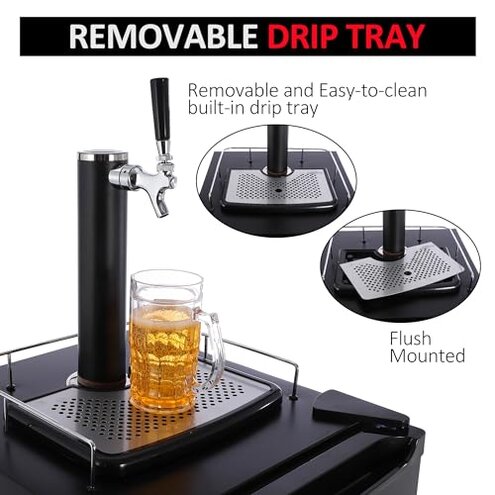
- Cleanup reality: A drip tray helps, but feedback suggests the mess control still requires attention during busy use.
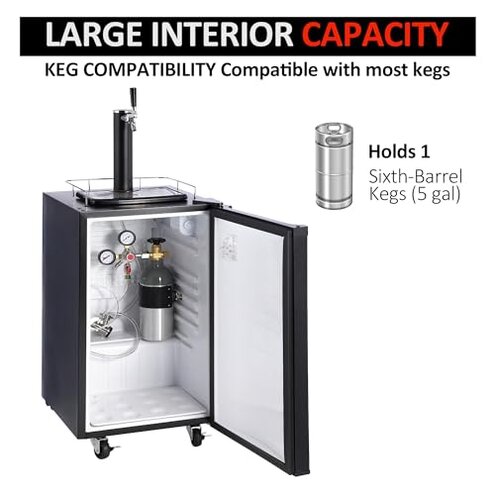
- Space planning: Fit and access can feel tighter than expected once you add a keg and want easy loading.
- Category contrast: Mid-range alternatives often have fewer “nuisance” moments once dialed in, while this can stay hands-on.
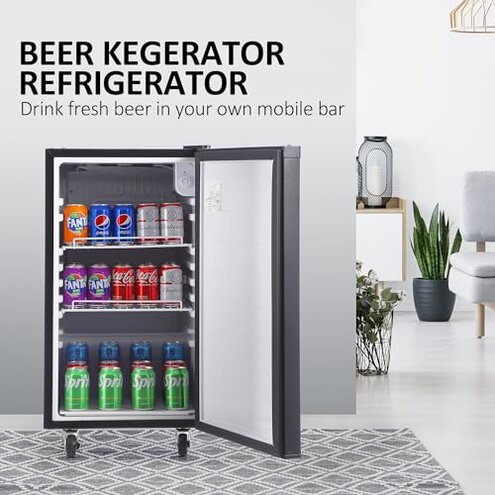
“What if I bought it expecting a simple fridge too?”
Regret moment shows up when buyers try the two-in-one idea and realize switching roles can add extra steps. Severity is usually lower than pour issues, but it can be more disappointing because it undermines the “bonus” use case.
Pattern is less frequent but persistent among people who planned to alternate between keg mode and fridge mode. Many mid-range units can do this, but owners describe this one as requiring more reconfiguring effort than expected.
- Expectation gap: The convertible idea sounds simple, but it can mean more moving parts in real life.
- When it hits: It shows up when you remove the keg and try to use shelves for food storage.
- Hidden requirement: You may need dedicated space and time to store parts so the swap is not annoying.
- Category contrast: Mid-range competitors often make “fridge mode” feel like a true backup, not a project.
- Mitigation: Treat it as a kegerator first, and only use fridge mode if you can tolerate rearranging.
Illustrative excerpt: “I expected a quick setup, but it turned into constant tweaking.” Explanation: This reflects a primary pattern about setup friction.
Illustrative excerpt: “The first pours were so foamy that serving guests felt stressful.” Explanation: This reflects a primary pattern about pour consistency.
Illustrative excerpt: “It works, but I’m still babysitting it more than my old one.” Explanation: This reflects a secondary pattern about ongoing usability.
Illustrative excerpt: “The ‘fridge mode’ sounded great, but swapping configs is a hassle.” Explanation: This reflects an edge-case pattern tied to the two-in-one goal.
Who should avoid this
- First-time owners who want a near plug-and-play kegerator, because setup friction is a primary complaint during first use.
- Party hosts who need reliable pours fast, because early foam and inconsistency can be more disruptive than typical mid-range units.
- Low-maintenance buyers who dislike ongoing tweaking, because “hands-on” use shows up as a secondary frustration over time.
- Dual-purpose shoppers counting on frequent fridge/keg swaps, because the conversion can feel like a hassle in practice.
Who this is actually good for
- Hobbyists who enjoy dialing in pour behavior, because they can tolerate the setup learning curve.
- Patient tinkerers who already know basic keg handling, because they will spend less time stuck in trial-and-error.
- Occasional users who set it up once and leave it, because they are less exposed to day-to-day friction.
- Single-keg households focused on one style at a time, because fewer changes can reduce re-tuning events.
Expectation vs reality
- Expectation: Reasonable for this category is a bit of dialing-in, then stable pours. Reality: Feedback suggests stability can take more tweaking than many mid-range options.
- Expectation: A drip tray keeps things tidy with minimal effort. Reality: Owners still report needing attention during regular serving.
| What you want | What tends to happen |
|---|---|
| Fast first pour | More setup time and retries for some buyers |
| Guest-ready serving | Foam risk during early sessions |
Safer alternatives
- Shop for models praised for “easy first setup,” which directly reduces the day-one friction reported here.
- Prioritize units with consistently strong feedback on “stable pours,” to avoid the early foam pattern.
- Choose a dedicated beverage fridge if you truly need storage flexibility, to sidestep the conversion hassle edge-case.
- Look for clearer setup guidance and better out-of-box usability, which lowers the hidden know-how requirement.
The bottom line
Main regret tends to come from needing more troubleshooting than expected before you get a clean, consistent pour. This exceeds normal category risk because it hits during first use, when most buyers expect a mid-range kegerator to be mostly straightforward.
Verdict: Avoid if you want quick, reliable serving without tinkering, and consider it only if you are comfortable with a hands-on setup and tuning process.
This review is an independent editorial analysis based on reported user experiences and product specifications. NegReview.com does not sell products.